Lost by Dawid Theron
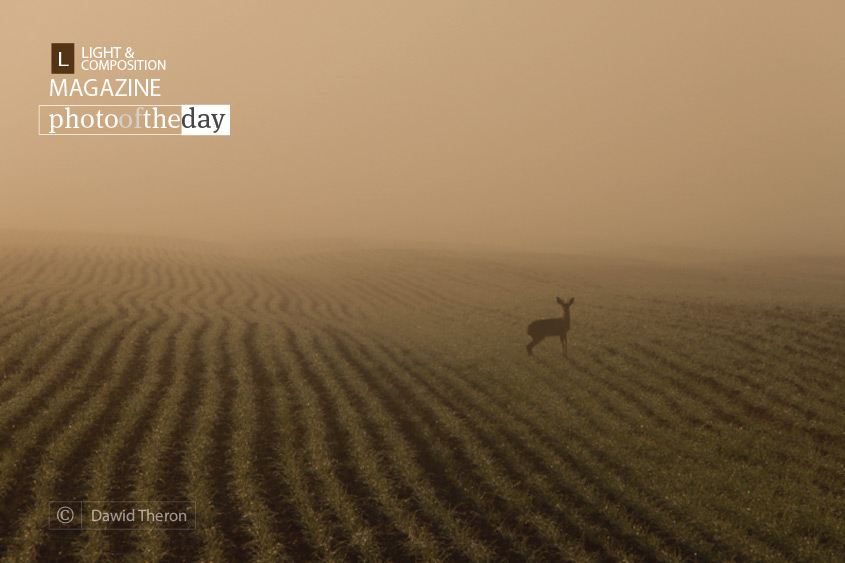
Captured in a fleeting moment of serendipity, this photograph depicts a Duiker standing amidst a crop field in the Western Cape. The photographer, having just departed from a personal errand, seized the opportunity when the small antelope paused to meet his gaze. By reacting quickly with his camera, he managed to secure this singular, evocative frame before the creature vanished into the landscape. The image is award-worthy for its raw, unposed intimacy and the photographer's ability to transform a chance encounter into a compelling portrait of wildlife, highlighting the quiet, often overlooked beauty found within the natural environment.
Dawid Theron
Based in Tulbagh, South Africa, Dawid Theron approaches photography as an artist who views the world as his canvas and the camera as his primary instrument. He is particularly drawn to the intricate details of nature, often focusing on the smaller, overlooked elements like flora or the textures of water over stone. Beyond the natural world, Theron explores the aesthetic potential of architecture, finding beauty in the lines, shapes, and colors of man-made structures. His work consistently reflects a vision dedicated to uncovering the hidden artistry within his surroundings.
Resonance Score Breakdown
Transparency Note: The resonance score (12.6/20) is calculated based on social engagement metrics collected before the award announcement.
Expert Photography Reviews · 6
The Weight of a Glance
To be seen is not the same as being known. We move through the tall, dry stalks of our own lives, heads down, intent on the next step, the next harvest, the next shelter. Then, a sudden stillness.
Read the reflection →The Witness in the Tall Grass
If we were to disappear tomorrow, would the earth notice our absence, or would it simply continue its quiet, rhythmic breathing without us? We often move through the world as if we are the primary observers, the ones who define the meaning of the landscape.
Read the reflection →Reviews & Comments
Share your thoughts about this award-winning photograph. Your reviews contribute to the community engagement score.
The Duiker doesn’t merely stand; it anchors the field, a fragile pulse against the encroaching grain. I’m struck by how the shadows here aren’t just absences, but a heavy, velvet silence that swallows the horizon. Theron hasn’t just captured a creature; he’s trapped a moment of ontological hesitation. It’s haunting. When I look at those dark, unyielding stalks, I feel the weight of a world that doesn’t want to be seen, only endured.
The field stretches. It’s vast, golden, and indifferent. A Duiker breaks the horizon. It’s a small, fragile anchor in the expanse. I’ve spent minutes staring at the stalks surrounding the creature. They aren’t just background. They are the silence. The animal’s gaze holds the weight of the entire Western Cape. Nothing here is accidental. The empty corner is not empty. It’s a breath held. I feel a sudden, sharp ache for the quiet.
The shutter clicks and the world freezes. That Duiker’s gaze hits like a jump cut in a quiet thriller. It’s a tense, singular beat where the animal and the lens lock eyes. I’ve spent years chasing this specific stillness, and honestly, the way the crop field frames that fragile silhouette makes my pulse jump. The cut would’ve been a mistake; the editor keeps this frame because it’s the only one that truly breathes. It’s pure, kinetic tension.
Most wildlife shots are just trophies, but this Duiker’s gaze hits differently. Of the thousands of nature frames I’ve reviewed, few capture that specific, fragile tension between wild instinct and human intrusion. The way the crop field swallows the animal’s lower body creates a haunting sense of displacement. It’s not perfect—the technical execution is merely functional—but that look in the creature’s eyes? It makes me ache for the quiet, disappearing corners of the Western Cape.
We look at this Duiker and we don’t see a wild animal; we see a witness. It’s standing in the Western Cape, caught in a silence that feels heavy with secrets. Dawid didn’t just snap a shutter; he waited for that singular, fleeting recognition. I’ve stared at those eyes for an hour, and honestly, it makes me ache for the quiet we’ve lost. It’s a portrait that asks to be returned to, again and again.
1/200sec at f/11, 200mm, ISO 100. It’s a rigid, clinical choice for wildlife. Stopping down to f/11 on a variable-aperture Sigma lens at 200mm forces diffraction, softening the Duiker’s fur. You’ve traded sharpness for a depth of field that wasn’t necessary. I’m frustrated by the wasted light. You had the shutter speed to open up and isolate the subject, but you played it safe. It’s technically timid. The optics deserved better than this flat, muddy compromise.