Looking into the Vastness by Dipanjan Mitra
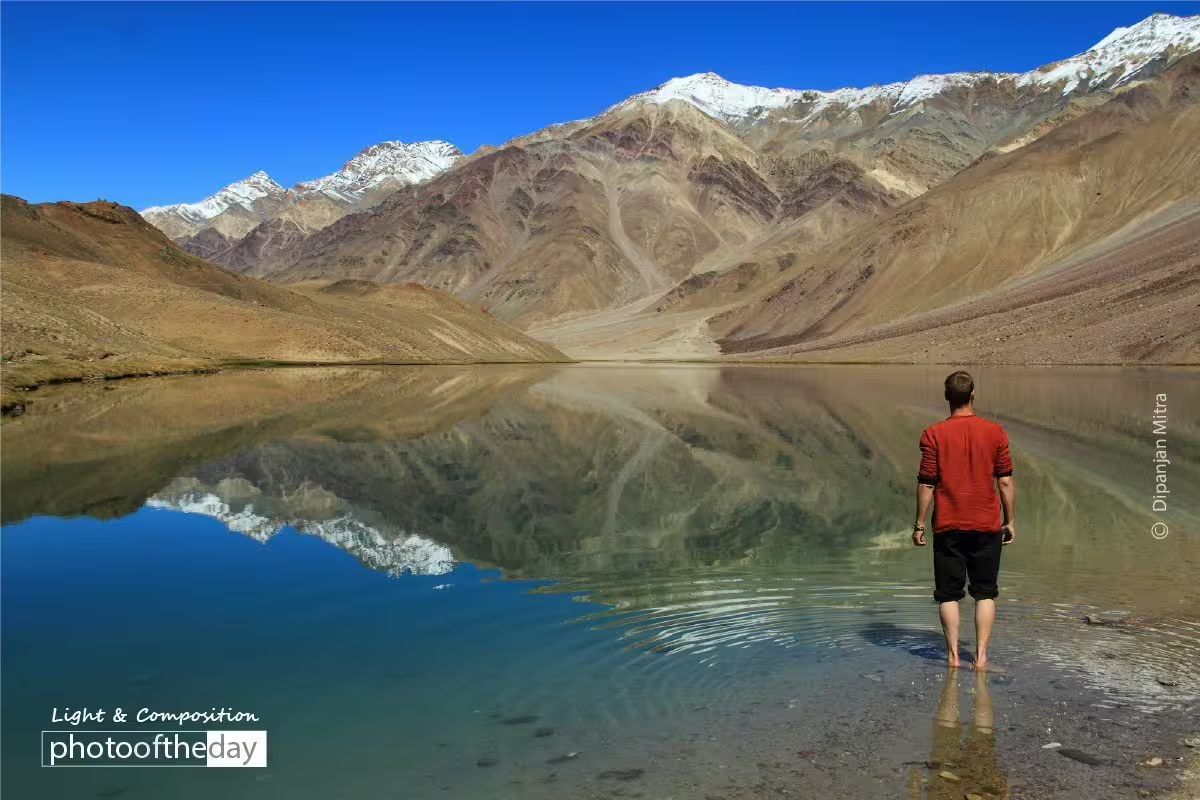
Captured amidst the breathtaking expanse of the Indian Himalayas, this photograph reflects a profound encounter with the rugged beauty of Himachal Pradesh. The photographer utilized a wide 24mm focal length to emphasize the immense scale of the mountainous landscape, balancing the sharp, clear light of the high altitude with a deliberate aperture setting. This image is award-worthy for its masterful composition, which successfully translates the overwhelming vastness of the terrain into a singular, evocative frame. It serves as a testament to the photographer’s ability to find stillness and grandeur within the complex, natural architecture of the Himalayas.
Dipanjan Mitra
Based in Calcutta, India, Dipanjan Mitra is a dedicated photographer who transitioned from a long-standing career in software engineering to pursue his passion for documenting the diverse Indian landscape. Since beginning his photographic journey in 2006, he has evolved from using compact digital cameras to professional-grade equipment, consistently refining his technical mastery of light and composition. His work is driven by an enduring fascination with the natural world and a desire to capture the magic of the terrains he traverses.
Resonance Score Breakdown
Transparency Note: The resonance score (11.9/20) is calculated based on social engagement metrics collected before the award announcement.
Expert Photography Reviews · 4
The Weight of Silence
I keep a small, smooth river stone on my desk, worn down by years of being turned over in my palm. It was picked up from a path I walked long ago, a place where the air felt thin and the world seemed to stretch out into an endless, quiet blue.
Read the reflection →The Weight of the Unseen
There was a blue wool sweater, thick and smelling of cedar, that lived on the back of the kitchen chair for three winters. It held the shape of shoulders that no longer lean against the doorframe.
Read the reflection →Reviews & Comments
Share your thoughts about this award-winning photograph. Your reviews contribute to the community engagement score.

The 24mm focal length forces a brutal geometry upon the Himalayan peaks. It’s a rigid architecture where the negative space doesn’t just exist; it dictates the frame’s equilibrium. The mountain’s mass anchors the lower quadrant, creating a fulcrum that prevents the composition from collapsing into mere scenic noise. I’ve rarely seen such disciplined spatial tension. It’s cold, precise, and entirely unforgiving. The frame holds because it refuses to offer the viewer any sentimental comfort.
The Himalayas aren’t just scenery; they’re a tectonic datum against which human scale dissolves. Mitra’s frame captures that brutal, jagged fenestration of rock, where light rakes across the ridges to define mass with terrifying clarity. It’s a spatial confrontation. I’ve spent my career analyzing built structures, but looking at this, I feel small—almost breathless. It’s a rare, honest admission that some spaces don’t need our architecture to define them; they simply exist, indifferent and vast.
Before the eye identifies the jagged peaks of Himachal, something in the chest tightens. It’s the sudden, cold recognition of our own insignificance. The clarity of that high-altitude light forces a shallow, rhythmic breath, a physiological surrender to the scale. I’ve returned to this frame three times today, and each time, the silence it demands feels heavier. It doesn’t just show a mountain; it hollows out a space inside me where only the wind remains.
The scale here echoes the sublime detachment found in Vittorio Sella’s Himalayan plates, yet the 24mm perspective pulls us into the precipice with a modern, unsettling intimacy. It’s a sharp departure from the romanticized vistas of the nineteenth century. I’m genuinely struck by how the high-altitude light renders the rock face with such clinical, biting precision. It doesn’t just document the terrain; it forces a confrontation with the void that I haven’t felt in years.