Let’s Go by Samira Rahmati
Captured on the vibrant Istiklal Street, this photograph encapsulates the rhythmic pulse of Istanbul. The image highlights the iconic tramway, a symbol of the city's perpetual motion where locals and tourists alike converge amidst the sounds of music and bustling cafe life. By focusing on the interplay between the historic architecture and the transient nature of the street's inhabitants, the photographer masterfully documents a moment of urban fluidity. This work is award-worthy for its authentic portrayal of street life, demonstrating a keen eye for composition and the ability to transform a common commute into a compelling narrative of human connection.
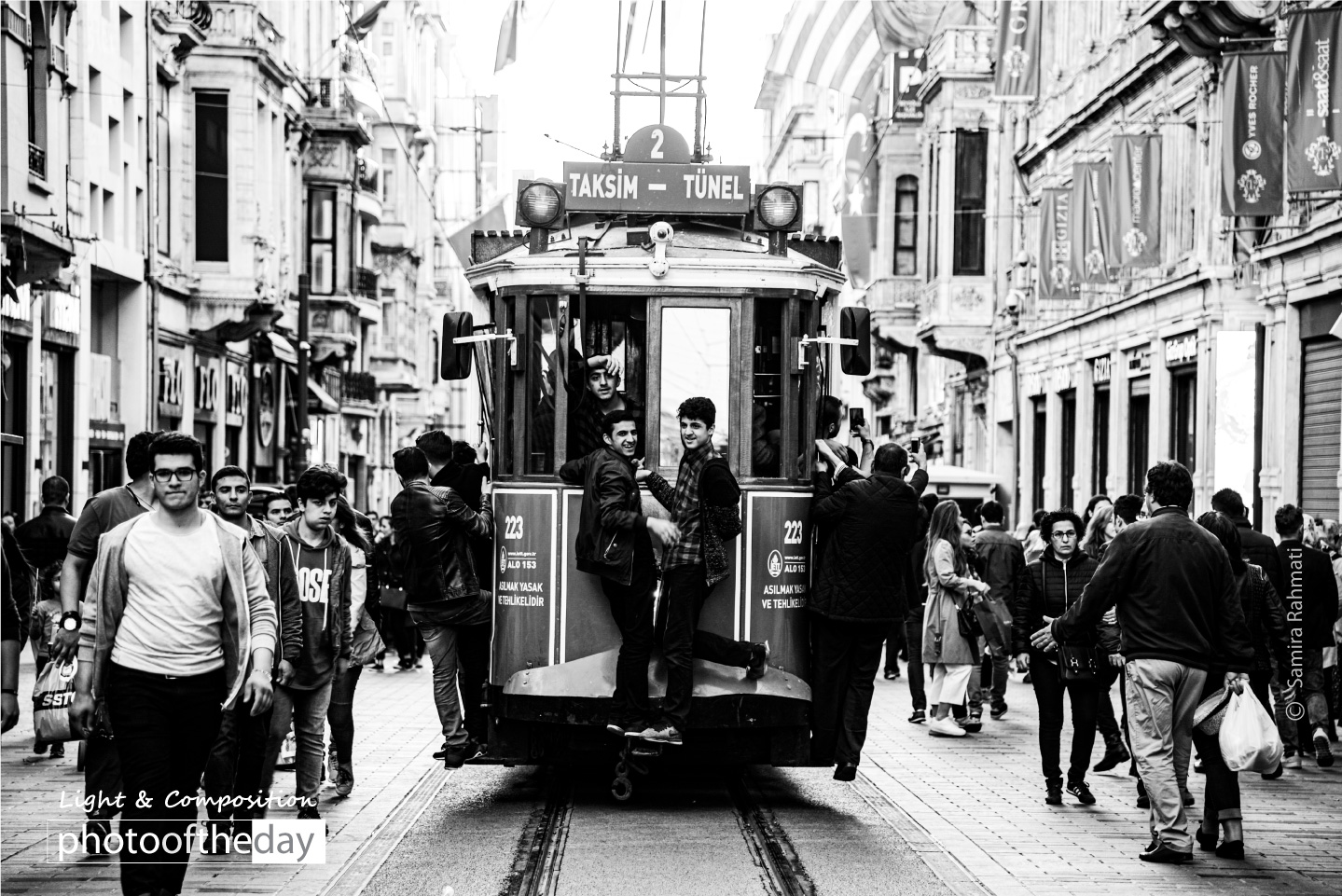
Exposure 1/125sec @ f/4 | ISO 100 | Focal Length 100mm
Samira Rahmati
Born in Iran and currently based in Tehran, Samira Rahmati is an emerging photographer whose work bridges the gap between artistic expression and cultural documentation. With an academic background in photography, Persian language, and literature, she brings a poetic sensibility to her role as a photographer for Young Hamshahri Magazine. Rahmati specializes in capturing the essence of daily life, nature, and the rich traditions of the Iranian people, consistently striving to translate her unique perspective on local culture into evocative visual narratives.
Resonance Score Breakdown
Transparency Note: The resonance score (11.4/20) is calculated based on social engagement metrics collected before the award announcement.
Expert Photography Reviews · 8
The Weight of Passing
We are always in transit. Even when we stand still, the world moves through us, a current of faces and intentions that never quite settle. There is a particular ache in watching a crowd.
Read the reflection →The Rhythm of Arrival
We are all in a state of transit, tethered to the earth by our shadows yet pulled forward by the invisible gravity of tomorrow.
Read the reflection →Reviews & Comments
Share your thoughts about this award-winning photograph. Your reviews contribute to the community engagement score.
The tram tracks cut through the stone. They lead the eye toward a blur of motion. I’ve spent minutes watching the stillness of the pavement against the rush of the crowd. It’s a quiet tension. The empty corner isn’t empty. It’s a breath held before the next arrival. I feel a sudden, sharp loneliness looking at the tracks. Nothing here is accidental. Rahmati trusts the silence. She leaves enough room for us to exist.
It’s jarring to see such sharp, warm light hitting the Istiklal tram. Down where I work, the water would have swallowed those reds and yellows within ten metres, leaving only a monochromatic blue haze. I’m honestly envious of how easily Samira captures this crisp, dry clarity. There’s no backscatter here, no refractive distortion to fight, just pure, unfiltered atmosphere. It’s a strange, beautiful relief to see a world that doesn’t need artificial strobes to breathe.
Istiklal’s architecture usually demands a wide lens, but here, the 100mm compression flattens the street’s rhythm into a dense, layered datum. It’s a bold choice. By narrowing the frame, Rahmati forces us to confront the tram as a solid mass against the delicate fenestration of the background. I’m genuinely moved by how the light catches the metal, grounding the transient motion. It doesn’t just show a commute; it captures the weight of Istanbul’s urban skin.
Most street photography is just noise, but this frame captures the specific, rhythmic friction of Istanbul. The tram’s red paint against the muted stone isn’t just color; it’s a heartbeat. I’ve seen thousands of commuters, yet the way Rahmati isolates that single, purposeful stride makes me feel the city’s actual weight. It’s not just a transit shot. It’s a document of a moment that won’t feel dated in thirty years. That’s why it earned its place.
Istiklal Street is a chaotic stage, yet Rahmati has managed to isolate the tram with a disciplined eye. One suspects she didn’t just stumble upon this frame; she likely spent hours dodging tourists to find that singular, rhythmic pulse. It’s a clean composition, though I’d have preferred a bit more grit in the shadows. Still, I’ve stood in that exact heat, and I respect the patience required to let the city finally settle into place.
The tram’s geometry anchors the frame, slicing through the chaotic urban sprawl with necessary clinical precision. It’s a rigid fulcrum against the soft, blurred masses of the crowd. The negative space surrounding the carriage creates a vital tension, forcing the eye to acknowledge the architecture’s weight. I’m genuinely irritated by the distracting pedestrian blur on the left, yet the structural integrity of the tracks holds the composition together. It’s a disciplined, if imperfect, visual architecture.
Istiklal Street is a blur, but the eyes here are sharp. I’ve spent years watching people move through crowds, and there’s a quiet, deliberate stillness in this subject that feels earned. It’s not just a snapshot of a commute; it’s a moment of genuine presence. I find myself wanting to know what they’re thinking behind that steady gaze. This face has a whole life in it. You can’t fake that kind of connection. It’s beautiful.
You waited for that tram to cut through the crowd, and I can feel the weight of the city in your timing. It’s not just a commute; it’s the rhythm of Istanbul breathing. I’ve walked Istiklal myself, and looking at this, I’m right back there, feeling the grit and the heat. You didn’t just snap a street scene. You caught the pulse. There’s something honest happening here. You were really present, and that’s everything.