Karnaphuli River by Saniar Rahman Rahul
Captured from the banks of the Karnaphuli River, this image highlights the serene landscape near the Kaptai Dam. The photographer focused on the interplay between the river’s expanse and the surrounding topography, capturing the quiet majesty of the region that serves as a vital water reservoir for the nearby hydropower station. By framing the river against the backdrop of this industrial and natural intersection, the image evokes a sense of stillness and scale. Its award-worthy quality lies in the deliberate composition and the ability to transform a functional utility site into a compelling, atmospheric study of light and water.
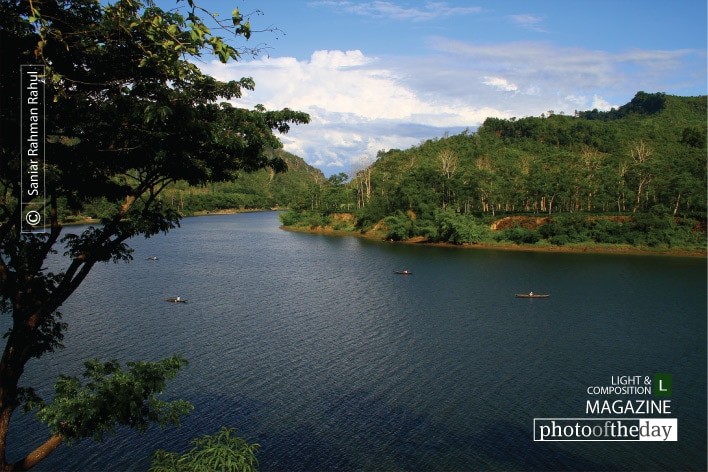
Saniar Rahman Rahul
Saniar Rahman Rahul is a dedicated photographer whose work often explores the intricate relationship between natural landscapes and human infrastructure. Based in the region surrounding the Karnaphuli River, Rahul demonstrates a keen eye for environmental storytelling, capturing the subtle beauty of water bodies and their significance to the local ecosystem. Through his lens, he seeks to document the quiet, often overlooked corners of his homeland, presenting them to an international audience with a focus on clarity, composition, and a deep appreciation for the natural world.
Resonance Score Breakdown
Transparency Note: The resonance score (12.9/20) is calculated based on social engagement metrics collected before the award announcement.
Expert Photography Reviews · 6
The Memory of Stillness
There is a particular silence that lives in the throat of a valley, a weight of air that has forgotten the urgency of the wind.
Read the reflection →The Weight of Still Water
I spent an hour this morning just watching the rain pool on my windowsill. It wasn't doing anything productive, just sitting there, holding the reflection of the grey sky until the wind pushed it over the edge. I realized then how rarely I allow myself to be that still.
Read the reflection →Reviews & Comments
Share your thoughts about this award-winning photograph. Your reviews contribute to the community engagement score.

The Karnaphuli doesn’t merely flow; it broods. Rahul captures the water not as a resource, but as a heavy, obsidian silence pressing against the hills. I’m unsettled by how the shadows swallow the shoreline, refusing to let the light explain the landscape. It’s a cold, deliberate erasure. When I look at those dark, submerged edges, I feel a sudden, sharp ache for the things we’ve chosen to leave unlit. It’s a haunting, necessary darkness.
The Karnaphuli doesn’t just flow; it breathes. Rahul stood here in the cooling hour, waiting for the water to mirror the silence of the hills. I’ve felt that same stillness, where the hum of the dam fades into the vast, indifferent light. It’s a quiet surrender to the landscape’s rhythm. Looking at these soft, layered horizons, I feel a sudden, sharp ache for the peace that only such patient observation can truly reveal.
Most landscapes I review are just pretty postcards, but this one lingers. The way the Karnaphuli’s expanse swallows the industrial weight of the dam creates a haunting, quiet tension. It’s not just a river; it’s a study in scale that makes me feel small in the best way. While others focused on the water’s surface, Rahul captured the heavy, humid stillness of the region. It’s a rare, enduring look at a landscape that’s actually breathing.
Before the eye identifies the water, something in the chest settles. The Karnaphuli’s expanse doesn’t just sit there; it pulls the breath out of you, demanding a stillness that feels almost heavy. I’ve returned to this frame three times today, and each time, the horizon’s quiet weight triggers a familiar, hollow ache. It’s the intersection of industry and silence that haunts me. It’s not just a river; it’s a place where my own pulse finally slows.
The Karnaphuli’s expanse breathes in hues of bruised slate and the pale, melancholic celadon one finds in a Morandi still life, where the water’s surface doesn’t merely reflect light but absorbs it into a heavy, liquid silence. It’s a haunting, chromatic ache that I’ve felt deep in my own chest, watching the way the mist clings to the banks like a veil of tarnished silver, turning industrial utility into a sublime, atmospheric meditation on stillness.
The horizon line bisects the frame with clinical indifference. It’s a rigid geometry that forces the eye toward the water’s flat, grey expanse. The surrounding topography provides a necessary counterweight, anchoring the composition against the sky’s emptiness. I’ve grown weary of landscapes that rely on mood, but the structural discipline here doesn’t falter. It’s a cold, precise arrangement of mass. The stillness isn’t sentimental; it’s architectural. It holds the frame together, and frankly, I’m impressed.
Wooww
wooooow!!! so beautiful nature…great photography!