Journey Home by Rafael Lorenzo de Leon
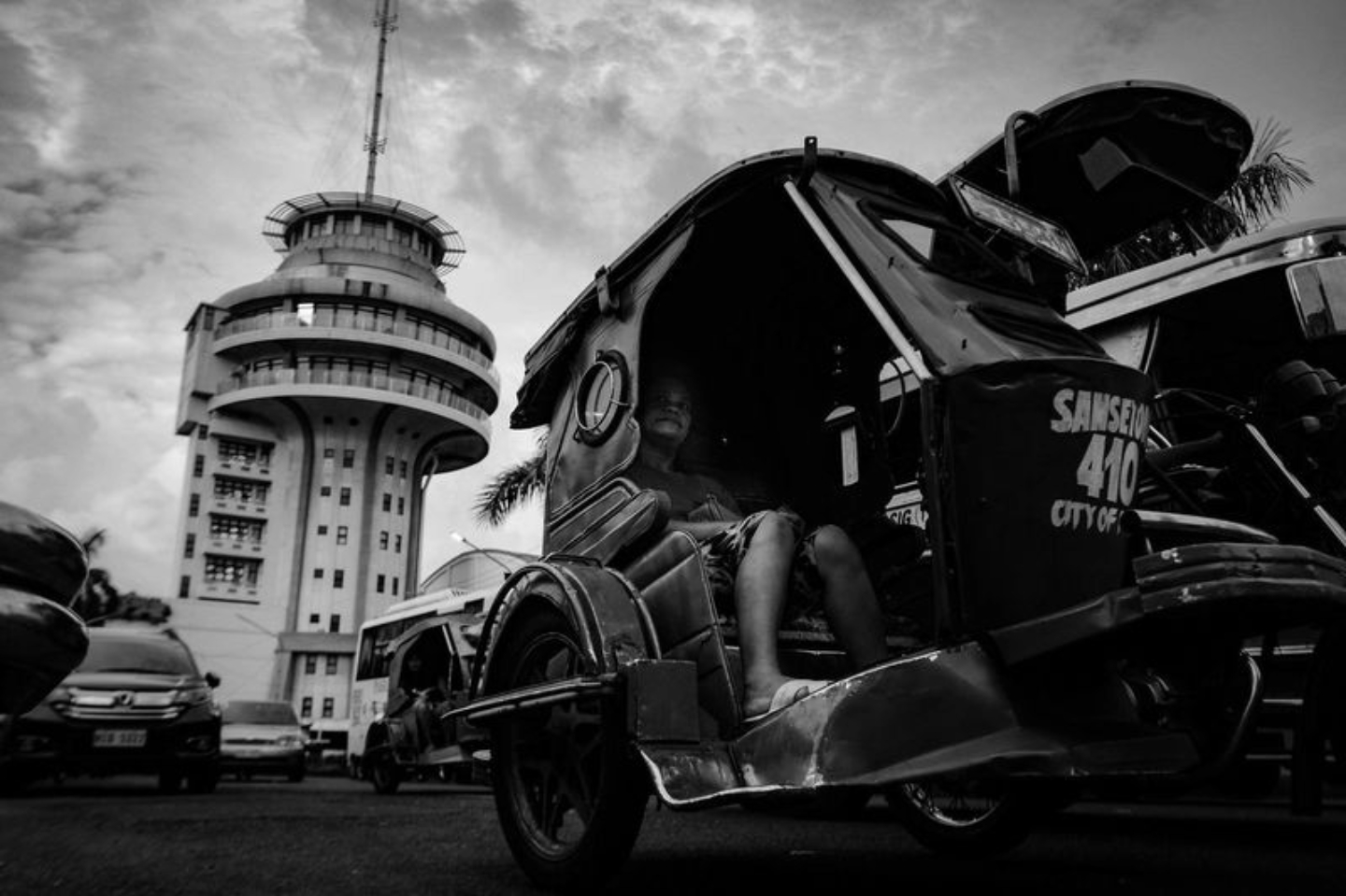
In 'Journey Home,' Rafael Lorenzo de Leon captures a poignant moment of daily life in Pasig, Philippines. The photograph depicts a woman riding her bicycle home from the market, her basket brimming with fresh produce. Beyond the simple act of commuting, the image evokes a sense of timelessness, suggesting that the subject carries a lifetime of wisdom and memories within her serene expression. The photographer’s choice to frame this quiet, rhythmic journey highlights the profound beauty found in ordinary routines, earning the work recognition for its evocative storytelling and masterful composition.
Rafael Lorenzo de Leon
Rafael Lorenzo de Leon is a dedicated photographer based in Makati, Metro Manila, whose creative journey began in the 1990s with simple film cameras. Transitioning to digital SLR photography allowed for an expansive exploration of both the world's aesthetic beauty and its stark realities. Through a refined eye for composition and observation, Rafael crafts images that serve as powerful vehicles for self-expression, consistently striving to inspire viewers to perceive their surroundings through a fresh, thoughtful lens.
Resonance Score Breakdown
Transparency Note: The resonance score (7.0/20) is calculated based on social engagement metrics collected before the award announcement.
Expert Photography Reviews · 4
The Weight of the Afternoon
The light of late afternoon in the tropics possesses a thickness that our Nordic sun never achieves. It is not the thin, fleeting gold of a winter solstice, but a heavy, humid amber that seems to cling to the skin and the pavement alike.
Read the reflection →The Weight of the Return
There is a quiet physics to the act of returning. We spend our mornings gathering—collecting groceries, errands, fragments of conversation, or the heavy accumulation of expectations—and our afternoons are spent carrying that weight back to the place we call sanctuary.
Read the reflection →Reviews & Comments
Share your thoughts about this award-winning photograph. Your reviews contribute to the community engagement score.
Of the thousands of street shots I’ve reviewed, most are just noise. What separates this from the pack is the tension between the heavy, overflowing basket and the woman’s effortless posture. It’s a quiet masterclass in balance. I’ll admit, the way the light catches the produce actually made me miss my own grandmother’s kitchen. It’s not just a commute; it’s a portrait of endurance. In thirty years, this dignity will still feel entirely necessary.
The shutter snaps, and the frame breathes. It’s a tracking shot frozen in Pasig, the rhythm of the bicycle wheels dictating the pace. I’m struck by the serenity in her eyes; it’s the kind of stillness an editor prays for in the rushes. The 18mm lens pulls us into her orbit, making the basket of produce feel like a heavy, cinematic prop. It’s a perfect cut. I’d keep this frame forever. It’s pure, unedited grace.
The rhythmic geometry of de Leon’s frame echoes the unpretentious humanism of Helen Levitt’s New York street work, yet it’s anchored in the humid, specific light of Pasig. That 18mm lens creates a proximity that feels startlingly intimate. I’ve spent decades cataloging the mundane, but the way this woman’s gaze anchors the chaotic motion of the market makes me catch my breath. It’s a quiet, profound defiance of the ephemeral, grounding the ordinary in something truly eternal.
At 1/1600th, de Leon freezes the bicycle with clinical precision, yet I find myself craving the kinetic smear of the Pasig commute. Why resolve every leaf of produce when the motion itself is the story? It’s technically competent, sure, but it’s safe. I’d love to see him abandon this sharpness for a long-exposure blur, turning that woman’s journey into a ghost of light. It’s a missed opportunity to transcend the merely descriptive.