Into the world of Nemo by Anish Kharkar
Captured at the London Aquarium, this photograph transports the viewer into the vibrant, aquatic world inspired by the beloved film 'Finding Nemo.' The photographer skillfully navigated the challenging low-light conditions of the aquarium, utilizing a high ISO to freeze the movement of the clownfish amidst their colorful environment. By focusing on these iconic characters, the image evokes a sense of childhood wonder and cinematic nostalgia. Its award-worthy quality lies in the clarity of the subject and the successful translation of a popular cultural narrative into a compelling, intimate underwater portrait.
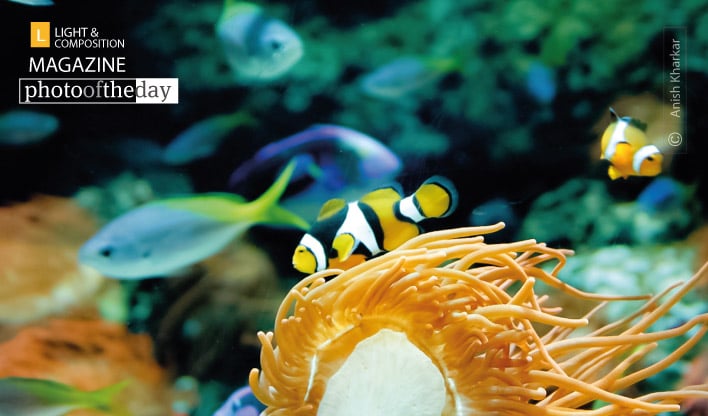
Exposure 1/50sec @ f/5.6 | ISO 3200 | Focal Length 53mm
Anish Kharkar
Originally from Mumbai, India, Anish Kharkar relocated to the island of Mauritius over a decade ago, where he draws inspiration from the region's natural beauty and cultural diversity. An aerospace engineer by training, he transitioned his interest in photography from a casual hobby into a dedicated passion for capturing life's fleeting moments. His diverse portfolio spans macro, astrophotography, and pet photography, reflecting his ongoing commitment to mastering new technical styles and creative techniques.
Resonance Score Breakdown
Transparency Note: The resonance score (13.2/20) is calculated based on social engagement metrics collected before the award announcement.
Expert Photography Reviews · 4
The Quiet Beneath
I spent this morning cleaning out the spare room, moving boxes that haven't been touched in years. I found a small, plastic figurine at the bottom of a bin—a bright orange fish with white stripes. I held it for a moment, and suddenly I wasn't in a dusty room anymore.
Read the reflection →The Weight of the Current
In the quiet hours of the morning, when the house is still settling into its bones, I often think about the nature of boundaries. We live our lives behind glass, separated from the wilder, colder currents by thin, transparent membranes of our own making.
Read the reflection →Reviews & Comments
Share your thoughts about this award-winning photograph. Your reviews contribute to the community engagement score.
Clarity here feels like a betrayal. By forcing the clownfish into such sharp relief, the frame loses the crushing, oceanic silence that defines the deep. It’s too bright, too eager to please. I’ve always found that light which refuses to swallow its subject is merely decorative. When I look at these vibrant, artificial oranges, I don’t feel wonder; I feel a strange, cold claustrophobia. It’s a cage, not an ocean, and it’s terrified of the dark.
Aquarium glass is a tedious barrier, and ISO 3200 is a desperate remedy for a lack of patience. One suspects the photographer stood there for twenty minutes, waiting for the fish to stop darting. It’s a clean shot, I’ll grant that, but it feels like a transaction rather than a pilgrimage. I’ve spent nights shivering in damp Scottish heather for a single frame; this feels a bit too comfortable for my taste. Still, it’s sharp.
The searing, saturated orange of the clownfish, reminiscent of a Turner sunset trapped in glass, vibrates against the cool, bruised indigo of the aquarium depths, creating a chromatic tension that feels almost electric. It’s a liquid, Morandi-esque stillness that I find utterly hypnotic; one is pulled into that bioluminescent glow, where the shadows aren’t merely absent light, but a deep, velvet navy that makes the creature’s frantic, joyful pigment sing with a truly startling, visceral intensity.
Shooting at 53mm through aquarium glass, the sensor’s noise floor at ISO 3200 creates a granular texture that almost mimics the particulate matter in the water. It’s a fascinating optical compromise. The diffraction limit at f/5.6 hasn’t fully softened the clownfish’s scales, which I find genuinely moving. You’ve captured a fleeting, sharp focal plane amidst the chromatic aberration of the thick glass. It’s a brave, technical gamble that pulls the viewer into that vibrant, liquid depth.
Cute!