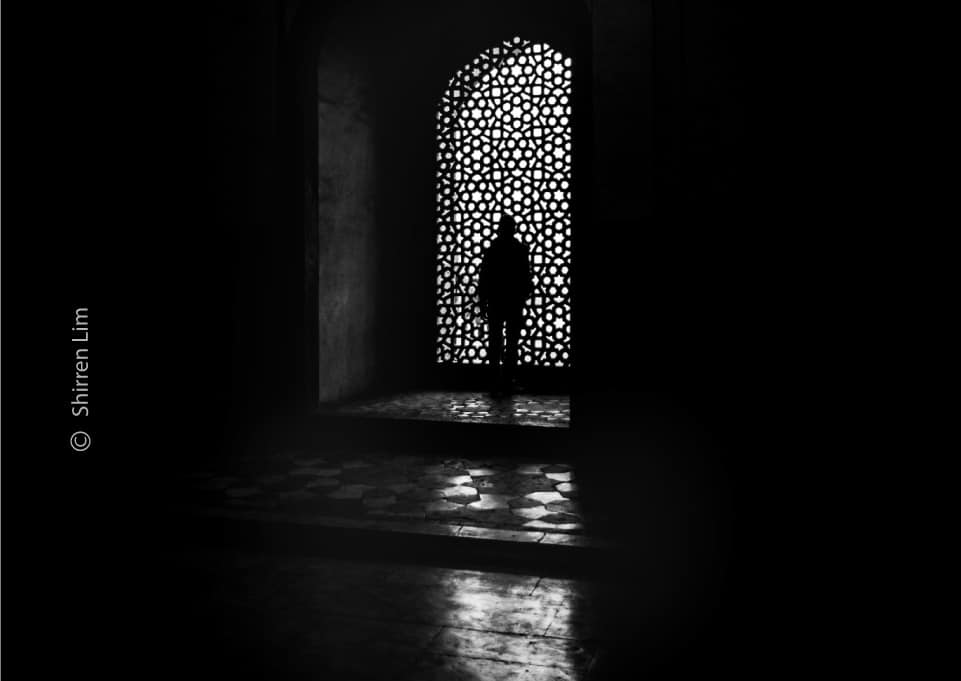
Inside Humayun Tomb by Shirren Lim
Captured within the historic walls of Humayun’s Tomb in Delhi, this photograph explores the interplay of light and shadow during the golden hour. The photographer patiently waited for the bustling crowds to disperse, allowing for a serene composition that highlights the intricate Mughal architecture and the delicate patterns cast by the window lattices. This image is award-worthy for its masterful use of natural light and its ability to transform a well-known monument into a quiet, contemplative space, demonstrating a profound respect for the site's historical significance and architectural beauty.
Shirren Lim
Born in Penang Island, Malaysia, in 1970, Shirren Lim is a Jakarta-based photographer who discovered her true passion for the craft in 2009. Her work is characterized by an intense and earthy aesthetic, with a focus on portraiture that seeks to capture the sincere, uncovered expressions of humanity. Influenced by the iconic imagery of Steve McCurry, Shirren strives to create powerful, world-changing photographs, and her evocative compositions have been featured in numerous international web and print publications.
Resonance Score Breakdown
Transparency Note: The resonance score (11.7/20) is calculated based on social engagement metrics collected before the award announcement.
Expert Photography Reviews · 6
The Architecture of Silence
In the deep forest, the mycelium network operates in total darkness, connecting disparate roots through a silent, subterranean architecture that sustains the entire grove.
Read the reflection →The Architecture of Silence
Can stone ever truly hold the weight of a human memory, or does it merely provide a stage for our own ghosts to wander? We build monuments to defy the erosion of time, stacking heavy blocks toward the sky as if height could grant us permanence.
Read the reflection →Reviews & Comments
Share your thoughts about this award-winning photograph. Your reviews contribute to the community engagement score.
Humayun’s Tomb is a graveyard, but here it breathes. Most tourists clutter the frame, yet Lim waited for the silence. The light cutting through those lattices? That’s the gold. It’s precise. If she’d clicked a heartbeat later, the geometry would’ve lost its tension. I’ve stood in that exact heat, and looking at this, I can almost feel the dust settling. It’s not just architecture; it’s a perfectly timed exhale. She caught the ghost of the place.
The light hits the stone and the frame breathes. It’s a long take, a moment of silence carved out of Delhi’s chaos. I’ve spent hours in editing suites chasing this exact stillness, where the lattice shadows stretch like film grain across the floor. It’s haunting. Shirren didn’t just capture a tomb; she held the shutter until the world stopped moving. I’d keep this frame forever. It’s the shot the editor never cuts. Pure, rhythmic, and perfectly held.
Delhi’s heat is a persistent nuisance, yet here, the air feels perfectly still. One suspects Lim didn’t just stumble upon this silence; she likely endured the humidity until the tourists finally retreated. Those lattice shadows aren’t accidental. I’ve spent enough afternoons in similar stone chambers to know the ache of waiting for that precise alignment. It’s a quiet, disciplined piece of work. I find myself wishing I’d been the one to hold the tripod that day.
Stone walls. The lattice filters the sun into precise geometry. It’s quiet here. I’ve stood in this tomb, yet I’ve never felt its breath until now. The shadows don’t just fall; they anchor the floor. Nothing here is accidental. The empty corner is not empty. It’s a weight. A pause. I find myself holding my own breath, afraid to disturb the dust motes. Lim understands that silence is a shape. It’s enough.
You waited for the ghosts to leave, didn’t you? Most people just snap the architecture and move on, but you let the silence settle into those stone lattices. It’s quiet. I can feel the cool air against the sandstone just looking at it. Because you held your ground, the light doesn’t feel like a trick; it feels like a memory. There’s something honest happening here. You didn’t just photograph a tomb; you felt the stillness.
The geometry here echoes the rigid precision of Frederick Evans’s cathedral studies, yet Lim’s handling of the jali screens feels more fluid, almost rhythmic. It’s a delicate dance of Mughal shadow play that I haven’t seen captured with such quietude in years. While the composition leans heavily on classical symmetry, the way the light bleeds across the stone floor genuinely took my breath away. It’s a rare, serene dialogue between ancient architecture and modern patience.