Immigration by Moslem Azimi
Captured on a crisp, snowy day in Javanroud, this evocative image documents a sudden, fluid migration of birds across the winter sky. The photographer, struck by the spontaneous movement, acted quickly to frame the scene, resulting in a striking monochrome aesthetic where the stark contrast of the snow and the silhouettes of the birds create a sense of quiet, natural drama. The image is award-worthy for its ability to transform a fleeting, everyday observation into a timeless, artistic composition that captures the raw beauty of nature in motion.
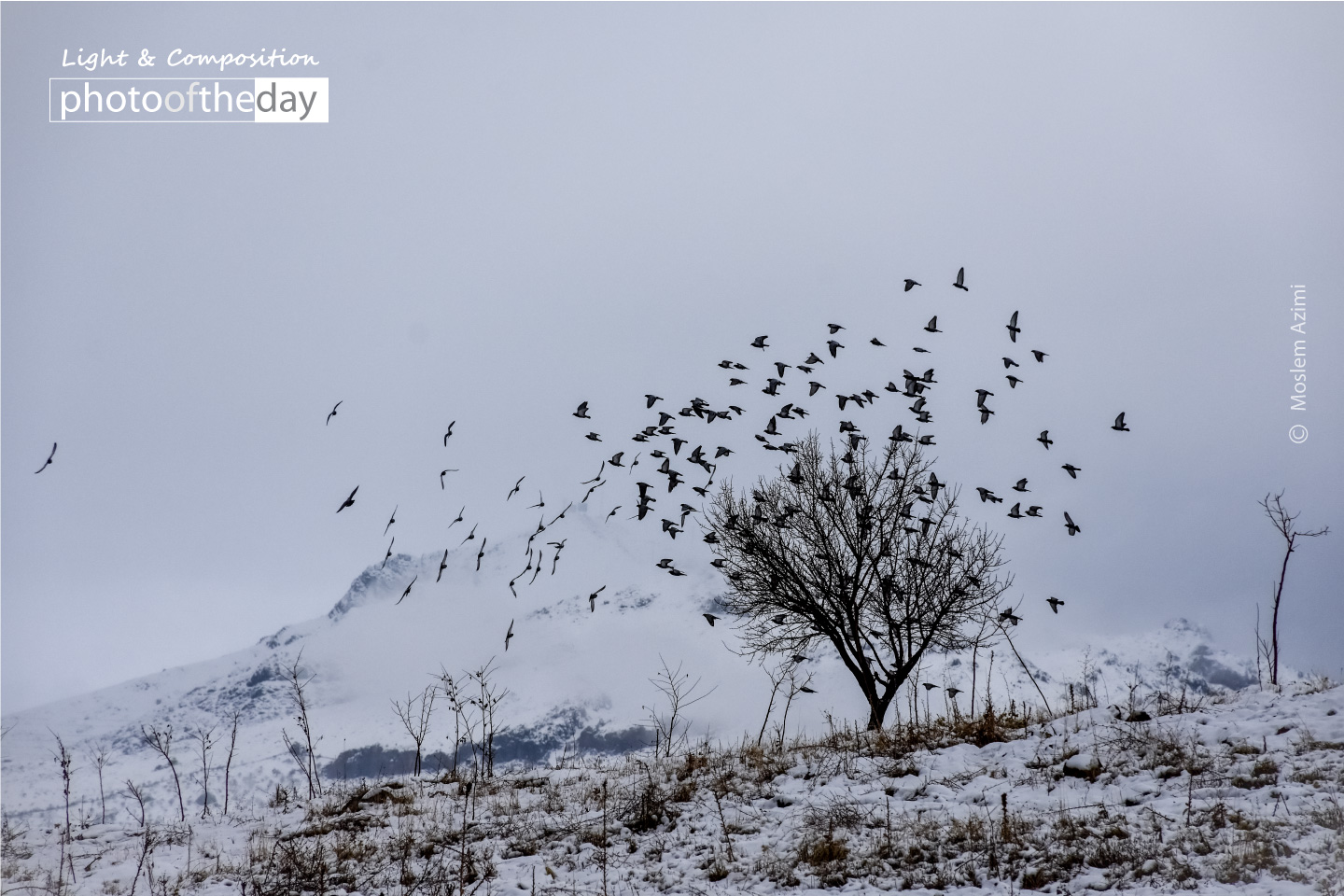
Exposure 1/3200sec @ f/7.1 | ISO 800 | Focal Length 105mm
Moslem Azimi
Of Kurdish origin and currently based in Melbourne, Australia, Moslem Azimi is a self-taught photographer who holds a Bachelor of Arts in English Translation. His work is driven by a deep commitment to documenting the traditions, culture, and daily life of the Kurdish people. Through active participation in various photography groups and consistent presence in national and international exhibitions, Azimi has established himself as a dedicated visual storyteller focused on preserving the heritage of his community.
Resonance Score Breakdown
Transparency Note: The resonance score (12.2/20) is calculated based on social engagement metrics collected before the award announcement.
Expert Photography Reviews · 3
The Weight of Leaving
It is 3:14 am. The house is holding its breath, and I am finally listening to the silence I spend all day trying to drown out. There is a specific kind of ache in watching things move away.
Read the reflection →The Rhythm of Leaving
I watched a single leaf detach from the oak tree in my front yard this morning. It didn't fight the wind; it just let go, swirling in a slow, deliberate dance before settling into the grass.
Read the reflection →Reviews & Comments
Share your thoughts about this award-winning photograph. Your reviews contribute to the community engagement score.
At 1/3200th, Azimi freezes the migration into static, clinical dots. It’s technically precise, sure, but it’s also remarkably safe. I’m left craving the smear of wings—a gesture toward the blur that defines flight. Why resolve every feather when the essence is movement? This approach is closer to a bird count than Hiroshi Sugimoto’s long-exposure theatres. I’d have traded that sharpness for a ghost of motion; it’s the blur that tells the truth.
Most bird photography is just clutter, but this works because of the negative space. The birds aren’t just subjects; they’re ink drops on a blank page. I’ve seen thousands of avian shots, yet this one makes me hold my breath. It’s the restraint that wins here. By refusing to over-frame, Azimi lets the silence of the snow do the heavy lifting. It’s a quiet, enduring piece that won’t lose its edge in thirty years.
The frame’s geometry relies on the diagonal vector of the avian swarm. It’s a precarious balance. The negative space above the birds provides necessary air, preventing the composition from collapsing under the weight of the silhouettes. The contrast is sharp, almost clinical. It’s rare to see such disciplined chaos. I’ve spent years looking for this kind of structural economy. It doesn’t just occupy the plane; it commands the entire field of vision with absolute, icy precision.