Happy as a Child by Jana Z
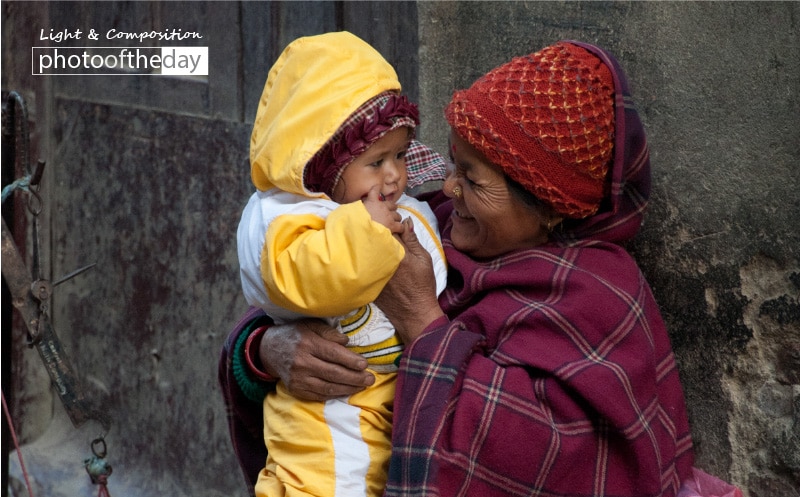
Captured in the vibrant streets of Kathmandu, this photograph encapsulates the pure, unadulterated joy found in human connection. By utilizing a 300mm focal length, the photographer was able to isolate a tender, candid moment between a woman and her grandchild, emphasizing their laughter and curiosity against a softly blurred background. The technical decision to use a high ISO allowed for a fast shutter speed, freezing the fleeting expression of happiness with clarity. This image is award-worthy for its emotional resonance, successfully elevating a simple, everyday interaction into a universal celebration of life’s most precious, non-material treasures.
Jana Z
Originally from Slovenia and now based in Geneva, Switzerland, Jana Z discovered her passion for photography in 2010 as a means to document her travels and the diverse people she encountered. Her work is deeply rooted in the desire to capture authentic human experiences and the beauty of her surroundings. Beyond her photographic pursuits, she is an avid pianist and traveler who finds inspiration in learning new languages and the art of baking, all of which inform the warm, observant perspective she brings to her candid imagery.
Resonance Score Breakdown
Transparency Note: The resonance score (11.9/20) is calculated based on social engagement metrics collected before the award announcement.
Expert Photography Reviews · 5
The Architecture of Laughter
In the study of acoustics, there is a phenomenon known as the reverberation time—the length of time it takes for a sound to decay into silence after the source has stopped. We tend to think of laughter as a fleeting event, a sudden eruption that vanishes as quickly as it arrives.
Read the reflection →The Root of Joy
In the high alpine meadows, certain wildflowers germinate only after the soil has been scorched by fire; the heat cracks their dormant seeds, allowing life to surge forward in the wake of destruction.
Read the reflection →Reviews & Comments
Share your thoughts about this award-winning photograph. Your reviews contribute to the community engagement score.

The compression of the 300mm lens here recalls the detached observation of Cartier-Bresson, yet the intimacy feels closer to the warmth of Helen Levitt’s street children. It’s a delicate balance. While the high ISO grain creates a texture reminiscent of early Tri-X, the emotional clarity is startling. I’ve seen thousands of portraits of joy, but the genuine, unposed crinkle in the grandmother’s eyes actually made me smile. It’s a rare, honest echo in a crowded, noisy lineage.
Using a 300mm lens from a distance is a relief; it suggests the photographer didn’t intrude on this intimacy. I’ve spent enough time in blinds to know that when you respect the space, the subject forgets you’re there. It’s a rare, honest capture. Seeing that genuine laughter makes me smile, honestly. It’s refreshing to see someone prioritize the moment’s integrity over forcing a reaction. They’ve earned this connection by simply staying out of the way.
The blur of Kathmandu recedes. It doesn’t distract. It creates the necessary distance for the laughter to breathe. I’ve spent minutes watching the space between their faces. It’s heavy with light. The 300mm lens has carved out a sanctuary from the street noise. Nothing here is accidental. The empty corner is not empty. It holds the quiet weight of their bond. I feel a sudden, sharp ache in my chest. It’s the sound of stillness.
A 300mm lens creates distance, not intimacy. Jana Z pulls these subjects from the Kathmandu streets, flattening their world into a soft, indistinct blur. Why does the background vanish? Does this erasure protect their dignity, or does it strip away the context of their poverty? I’m unsettled by how easily we consume this curated joy. It’s a pretty picture, sure, but whose gaze are we inhabiting? We’re watching them, but are they ever really allowed to look back?
Most candid shots of children are fleeting, sugary distractions. What separates this from the thousands of similar street portraits I’ve reviewed is the compression of that 300mm lens. It flattens the chaos of Kathmandu into a soft, painterly backdrop, forcing us to confront the raw, unvarnished delight in their faces. It’s rare to find a moment that feels this honest. Looking at it, I actually found myself smiling—a genuine reaction that tells me this will endure.