Handles of Calligraphy Brush by Siew Bee Lim
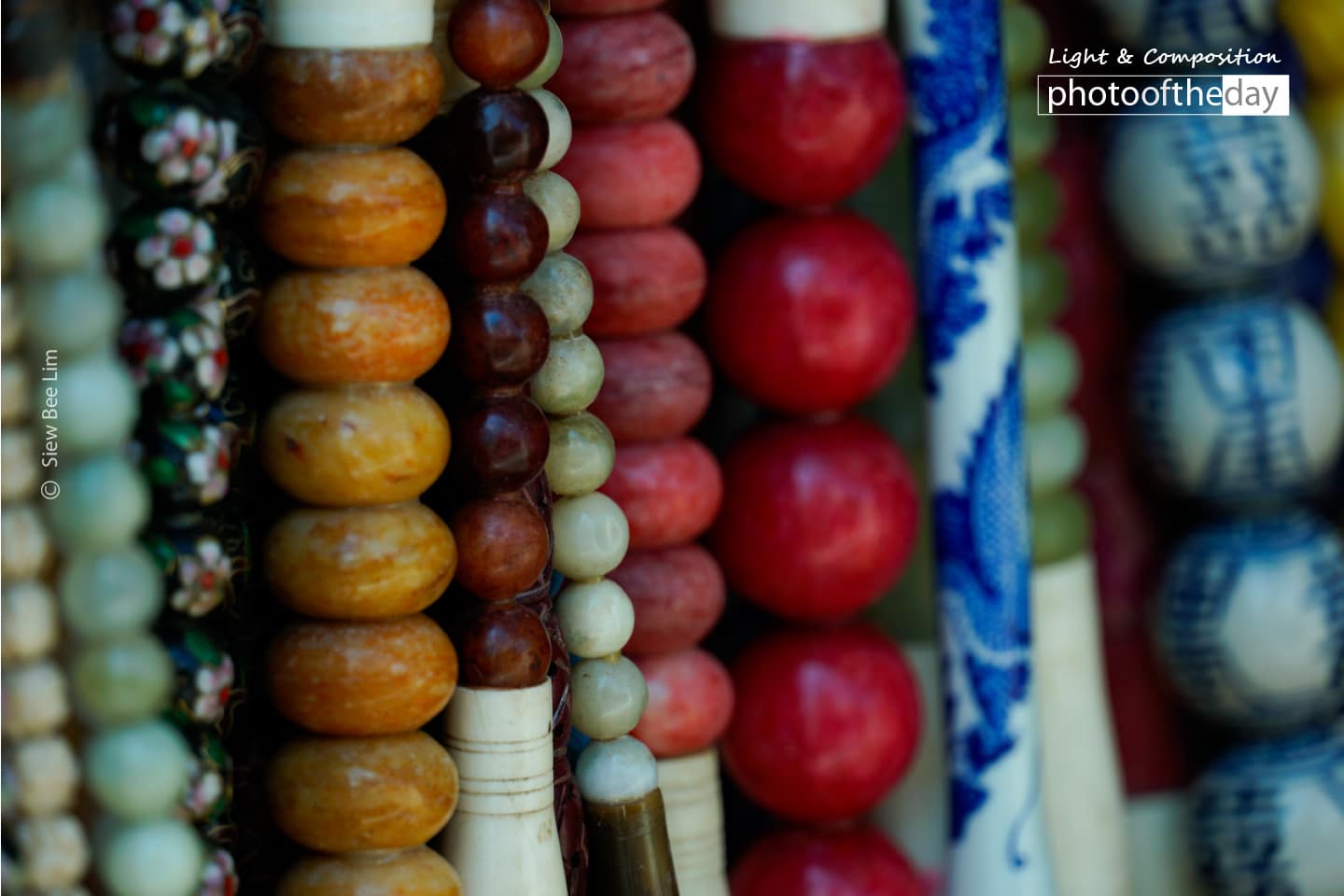
Captured on a vibrant, sunny day in Singapore’s Chinatown, this image focuses on the intricate handles of traditional calligraphy brushes. The photographer was drawn to the colorful display of these decorative bamboo and wooden instruments, which are crafted for art rather than writing. By isolating the handles, the composition transforms everyday craft items into a rhythmic, abstract study of texture and color. The decision to frame the shot tightly against the backdrop of a bustling stall highlights the beauty of these objects, earning the photograph recognition for its exceptional composition and keen eye for detail.
Nadzeya Arbuzava
Nadya Arbuzava from Minsk, Belarus. She loves to travel and loves life. Graduated from medical university. She always strives to motivate people for the better, to teach to feel life and happiness every day. She loves taking pictures of nature, the sea, flowers, architecture and of course taking selfies. Nadya wants to show people what a wonderful world we live in. Current Location Minsk Instagram https://www.instagram.com/arbuzza/?hl=ru Best Achievements & Exhibitions None Award Winner Photo of the Day Camera Samsung S7 edge, Samsung A8 Lenses and Gears None
Resonance Score Breakdown
Transparency Note: The resonance score (11.7/20) is calculated based on social engagement metrics collected before the award announcement.
Expert Photography Reviews · 4
The Weight of Intention
In the quiet corners of a workshop, there is a specific gravity to tools that have been crafted for a purpose beyond mere utility.
Read the reflection →The Weight of Unspoken Lines
I keep a small, wooden ink-grinding stone in my desk drawer, its surface worn smooth by the friction of a hand that has long since stopped moving. It is a heavy, silent thing, stained with the ghost of black pigment that refuses to wash away.
Read the reflection →Reviews & Comments
Share your thoughts about this award-winning photograph. Your reviews contribute to the community engagement score.
Most color studies I see in Chinatown stalls are cluttered, noisy failures. Siew Bee Lim succeeds because she resists the urge to capture the whole scene. By isolating these brush handles, she turns wood and lacquer into a rhythmic, tactile sequence. It’s a quiet, disciplined choice. I’ve stared at these textures for ten minutes, and honestly, I still feel a strange, tactile urge to reach out and touch them. That’s why this endures.
Before the eye identifies the wood and lacquer, a rhythmic stillness settles in the chest. It’s an activation of order amidst the chaos of a Singaporean afternoon. I find my pulse syncing with the vertical repetition of these brushes. When I return to this a year later, the colors feel like a phantom memory of heat. It’s the tactile promise of the bristles that haunts me; I’ve always wanted to reach out and touch the grain.
The rhythmic repetition of these vertical axes creates a rigid, satisfying geometry. The frame doesn’t collapse under the weight of the saturated pigments because the alignment remains disciplined. It’s a rare instance where the clutter of a Singaporean stall is successfully suppressed by the tight, claustrophobic cropping. I’m genuinely unsettled by how the negative space is entirely denied. The composition demands total submission to the pattern. It’s a cold, calculated triumph of visual order.
f/2.8 at 50mm, 1/250s, ISO 100. A shallow plane of focus isolates the brush handles, but the bokeh is nervous, distracting from the wood grain. It’s a clinical choice that doesn’t quite resolve the texture. I’m frustrated by the chromatic aberration bleeding into the highlights. It’s technically lazy. Still, the alignment of the bamboo shafts is precise. You’ve calculated the geometry correctly, even if the optics didn’t cooperate. It’s a sharp, cold, calculated success.