From the Past to the Future by Kirsten Bruening
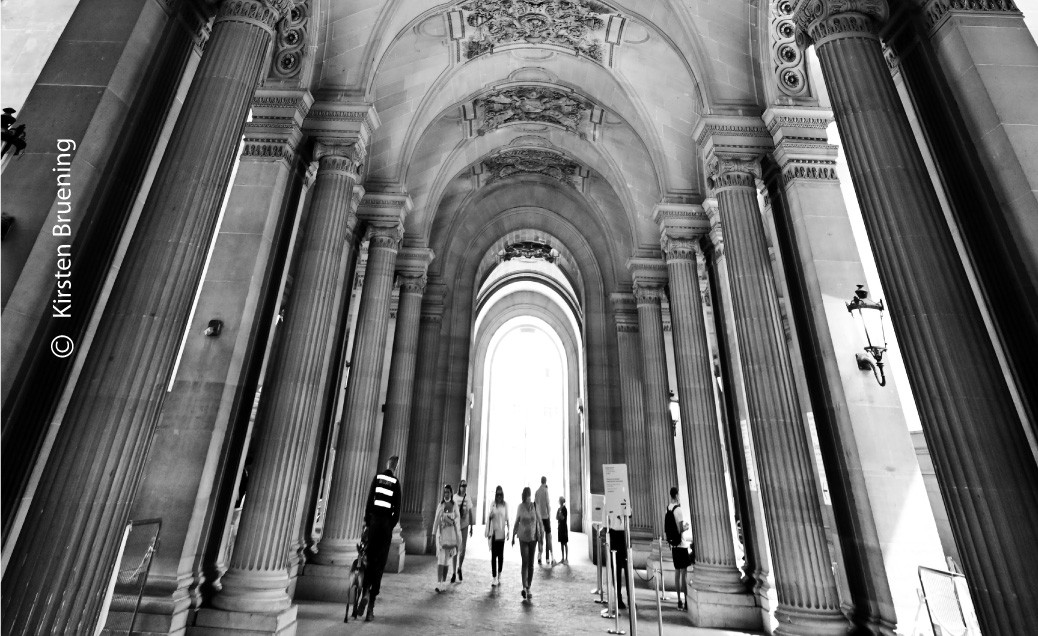
Captured at the iconic Louvre Museum, this photograph bridges the gap between historical grandeur and modern architectural precision. By utilizing a wide 14mm focal length, the photographer emphasizes the sweeping lines and structural complexity of the site, creating a sense of scale that draws the viewer into the heart of Paris. The technical decision to shoot at ISO 800 with a balanced aperture of f/4 captures the subtle interplay of light across the building's surfaces. This image is award-worthy for its masterful composition, which transforms a world-renowned landmark into a striking, intimate study of form and light.
Kirsten Bruening
Based near Cologne, Germany, Kirsten Bruening is a dedicated photographer whose creative journey began in childhood with an early fascination for analogue techniques. After a fifteen-year hiatus, she returned to the craft with a renewed focus on the evocative power of black and white imagery across nature, portraiture, and wildlife. She is currently expanding her professional horizons through formal photographic studies, driven by a deep-seated belief that the interplay of light and shadow remains the most profound way to convey beauty and human emotion.
Resonance Score Breakdown
Transparency Note: The resonance score (8.8/20) is calculated based on social engagement metrics collected before the award announcement.
Expert Photography Reviews · 7
The Echo of Stone
In the quiet hours of the morning, before the city begins its rhythmic pulse, stone feels different. It is not merely a material for shelter or a monument to vanity; it is a ledger.
Read the reflection →The Echo of Stone
If we could peel back the layers of a wall, would we find the hands that stacked the stones, or would we find only the silence of the centuries they have endured?
Read the reflection →Reviews & Comments
Share your thoughts about this award-winning photograph. Your reviews contribute to the community engagement score.
Most architectural shots of the Louvre are just postcards, but this one breathes. By pushing the 14mm lens to its limit, Bruening forces the glass pyramid to lean into the frame, creating a tension that feels alive. It’s the way the light catches those steel joints that gets me—I’ve stared at this building for decades, yet I’ve never felt its weight quite like this. It’s a rare, enduring study of geometry that won’t age poorly.
Before the eye identifies the Louvre, something in the chest tightens. The 14mm distortion pulls the horizon inward, forcing a sudden, involuntary intake of breath. It’s a dizzying, vertical expansion that makes me feel small, almost fragile against that stone. When I return to it, the coldness of the glass remains, a phantom weight in my palms. It’s not just architecture; it’s the quiet, terrifying sensation of time folding itself into a single, sharp frame.
I’ve spent decades tracing the Louvre’s geometry, yet Bruening’s 14mm perspective feels startlingly fresh. It echoes the rigid structuralism of Berenice Abbott, but the wide-angle distortion pushes the glass pyramid into a contemporary, almost aggressive dialogue with the stone. It’s a sharp, cold collision of eras. Honestly, that distorted tension made me catch my breath. It’s rare to see such a tired landmark forced into a new, uncomfortable, and utterly compelling architectural conversation.
The Louvre’s glass pyramid demands a precise rhythm, yet this frame feels like a sprinter who’s already crossed the line. At 1/80th of a second, the light is soft, but the composition lacks that singular, kinetic snap. I’ve spent my life chasing the exact millisecond of peak tension, and honestly, this feels a fraction too static. It’s technically clean, but it doesn’t catch the architecture’s breath. It’s just a record of what’s standing there.
The Louvre’s glass breathes here. Kirsten waited for the moment when the stone stopped feeling heavy and the light began to hum against the steel. It’s a quiet geometry, isn’t it? I’ve stood in that courtyard when the shadows stretch long, and I can feel the patience in her 14mm frame. She didn’t force the architecture; she listened until the past and future finally aligned. It makes me ache for the stillness of a Parisian dusk.
1/80sec at f/4, ISO 800, 14mm. A wide-angle gamble that barely pays off. At 14mm, the Z7’s sensor demands precision, yet ISO 800 introduces unnecessary noise in the Louvre’s shadows. It’s technically lazy. I’ve seen better noise control from a decade-old DSLR. The aperture choice is safe, almost cowardly. It doesn’t commit to the geometry. I’m annoyed by the wasted potential here. The optics were capable of so much more than this grainy compromise.
The Louvre’s glass pyramid cuts through the frame like a jagged edit. It’s a wide, breathless shot that forces the eye to track those sweeping lines until they vanish. I love the way the 14mm lens stretches the history, pulling the past into a sharp, modern focus. It’s a sequence frozen in mid-motion. The cut would’ve been a mistake; the frame holds because it doesn’t need to move. It’s a perfect, silent, cinematic beat.