Dryer by Ryszard Wierzbicki
Captured during a trek through Nepal's Annapurna Circuit in October 2013, this photograph highlights a striking local tradition of drying laundry in the Himalayan sunshine. The photographer was drawn to the vibrant, rhythmic display of fabrics, which created an extraordinary collection of colors against the rugged mountain backdrop. By focusing on the interplay between the mundane act of drying clothes and the dramatic landscape, the image transforms a simple village scene into a captivating study of texture and hue. Its ability to elevate a fleeting, everyday moment into a visually harmonious composition is what makes this work truly award-worthy.
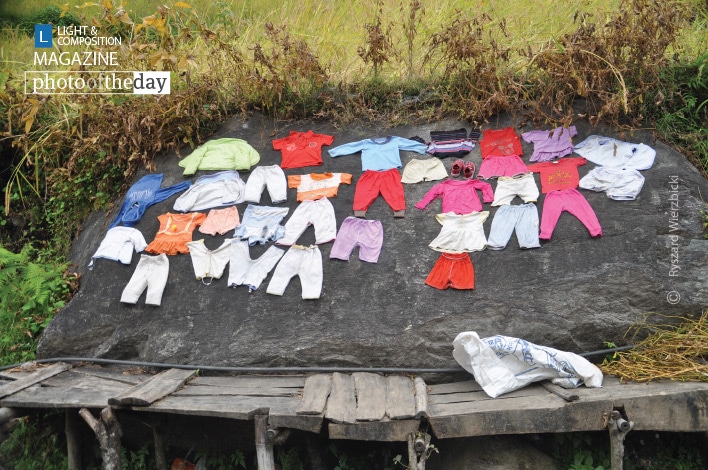
Exposure 1/125sec @ f/5.6 | ISO 200 | Focal Length 25mm
Ryszard Wierzbicki
Born in Poland in 1963, Ryszard Wierzbicki is a dedicated traveler and photographer currently based in Swindon, United Kingdom. After a diverse career in education and marketing, he transitioned into a life of exploration, focusing his lens on the cultures and landscapes of South-East Asia. His work is deeply informed by his passion for adventure and his commitment to humanitarian efforts, including his volunteer work with orphans in Thailand and Burma. Through his photography and travel forums, he shares his unique perspective on the world, blending technical skill with a profound curiosity for the human experience.
Resonance Score Breakdown
Transparency Note: The resonance score (12.9/20) is calculated based on social engagement metrics collected before the award announcement.
Expert Photography Reviews · 5
The Weight of Routine
I spent this morning folding laundry, a task that usually feels like a chore I want to rush through. I was listening to the hum of the machine and thinking about my to-do list, when I suddenly stopped.
Read the reflection →The Architecture of Breath
We often mistake the act of waiting for a pause in our lives, a stagnant pool where time gathers dust. But look at how the wind treats the fabric left to dry; it does not merely dry the threads, it breathes through them, turning the mundane into a flag of surrender.
Read the reflection →Reviews & Comments
Share your thoughts about this award-winning photograph. Your reviews contribute to the community engagement score.
Before the eye identifies the laundry, something in the chest tightens, then releases. It’s the sudden, sharp contrast between the jagged, indifferent stone of the Annapurna peaks and the fragile, human vulnerability of drying fabric. I’ve felt that same ache—the quiet realization of our own fleeting presence against the infinite. When I return to this, I don’t see clothes; I see the rhythm of a life lived in the thin, cold air. It’s hauntingly beautiful.
1/125sec at f/5.6, 25mm, ISO 200. It’s a safe, middle-of-the-road aperture choice. At 25mm, f/5.6 provides enough depth to keep the foreground fabrics and the distant peaks in acceptable focus, but it lacks the surgical sharpness I’d prefer for such textures. The shutter speed is adequate for static laundry, though I’ve always found the D5000’s sensor noise at higher ISOs unforgiving. It’s technically competent, yet it doesn’t push the glass. It’s a clean, honest capture.
Sunlight in Manang doesn’t merely illuminate; it interrogates. These drying fabrics, suspended against the crushing indifference of the Annapurna peaks, aren’t just laundry. They’re fragile, human punctuation marks in a geological sentence. I’ve stared at these vibrant, flapping ghosts until my eyes ached. It’s a haunting tension—the domestic clinging to the monumental. When the shadows finally swallow the folds of that fabric, I feel a sudden, cold shiver. It’s the weight of our own fleeting existence.
Those drying linens, caught in the thin, Himalayan light, possess the bruised, chalky ochres of a Morandi still life, yet they’ve been set against a sky of such piercing, glacial cerulean that it’s almost painful to behold. I’m breathless at how these mundane, sun-bleached fabrics quarrel with the rugged, granite indifference of the peaks, creating a chromatic friction that feels less like a travel snapshot and more like a fever dream of pure, unadulterated pigment.
Most travel photography is just visual noise, but Wierzbicki’s laundry lines in Manang actually hold my gaze. It’s the tension between the vibrant, domestic fabrics and that brutal, indifferent Himalayan rock face that wins me over. I’ve seen thousands of mountain shots, yet this one feels intimate, almost fragile. It’s a quiet, human defiance against a landscape that doesn’t care if we’re there. Thirty years from now, we’ll still be looking for this kind of warmth.