Down the Track by Ryszard Wierzbicki
Captured during a trek along the iconic Annapurna Circuit, this photograph encapsulates the profound silence and rugged beauty of the Nepalese mountains. The photographer sought to document the intersection of ethnic culture and the natural landscape, focusing on the rhythmic journey of those navigating the high-altitude trails. By utilizing a telephoto perspective, the image isolates the subject against the vast, unrepeatable atmosphere of the Himalayas. Its award-worthy quality lies in the balance between the harsh, challenging environment and the quiet, human-centric narrative, offering a compelling glimpse into the spirit of adventure travel.
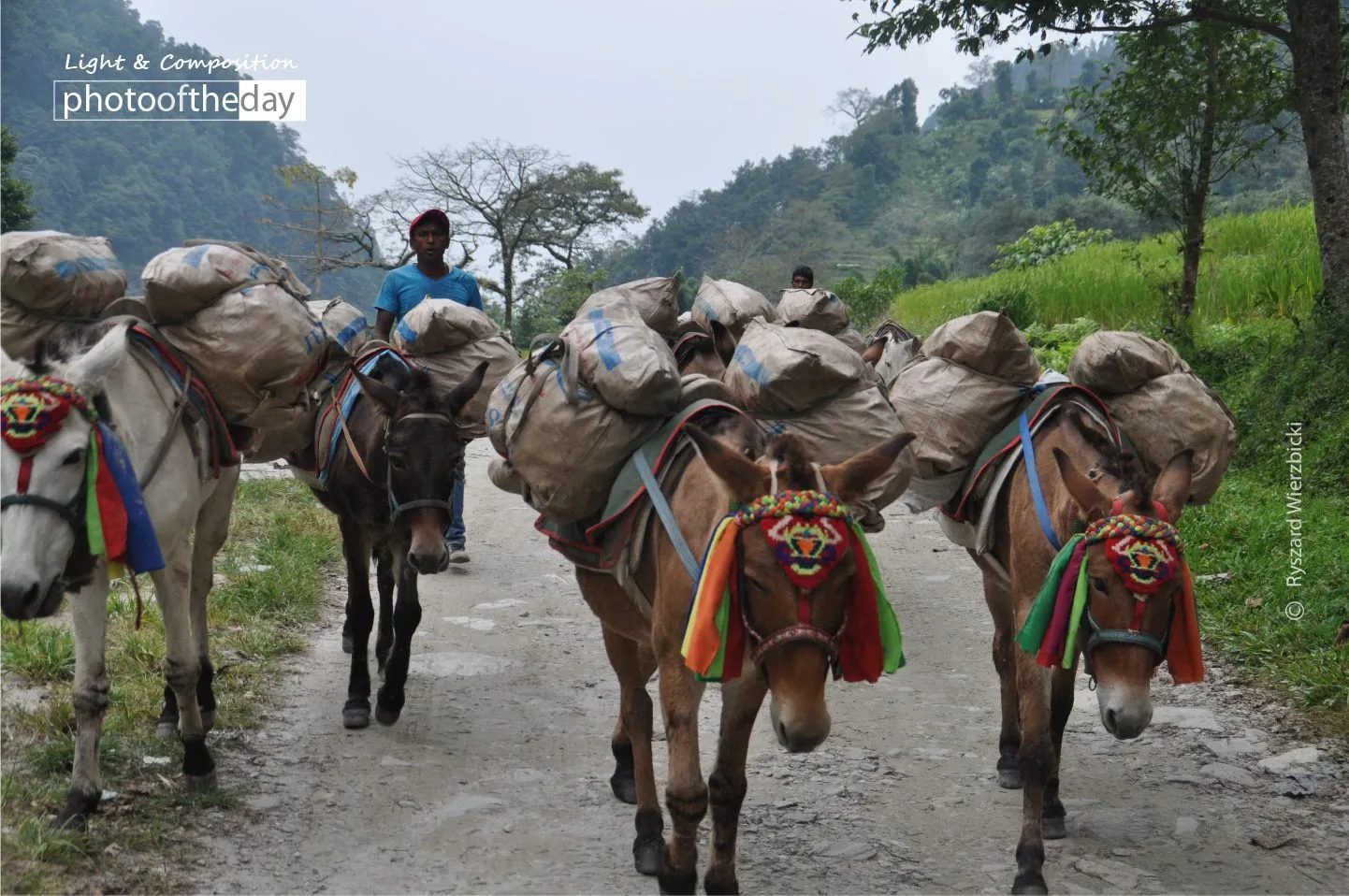
Exposure 1/750sec @ f/6.7 | ISO 200 | Focal Length 100mm
Ryszard Wierzbicki
Born in 1963 and a graduate of the University of Gdańsk, Ryszard Wierzbicki transitioned from a diverse career in social sciences and marketing to become a dedicated travel photographer and tour organizer. After relocating to the United Kingdom in 2006, he channeled his passion into exploring South-East Asia and supporting charitable causes for orphans. As the founder of the Instant Travelling and World Around forums, Wierzbicki combines his professional expertise with a deep commitment to documenting the world's cultures through his lens.
Resonance Score Breakdown
Transparency Note: The resonance score (11.3/20) is calculated based on social engagement metrics collected before the award announcement.
Expert Photography Reviews · 8
The Grit of the Ascent
The taste of thin, cold air is metallic, like licking a frozen iron gate in the dead of winter. It settles at the back of the throat, sharp and unforgiving, demanding that you pay attention to every breath.
Read the reflection →The Weight of the Horizon
I often think of the city as a series of thresholds, but there are places where the threshold is not a doorway, but a line drawn against the sky. In the high, thin air of a mountain pass, the world stops its frantic chatter.
Read the reflection →Reviews & Comments
Share your thoughts about this award-winning photograph. Your reviews contribute to the community engagement score.
The ochre dust of the Manang trail, a shade reminiscent of Morandi’s most melancholic clay pigments, bleeds into the thin, glacial air with such haunting precision that one’s breath catches in the throat. It’s a chromatic dialogue between the sun-scorched earth and the bruised, violet shadows of the high peaks; I’ve rarely felt such a visceral ache for the silence of stone, where the light doesn’t merely illuminate, but rather hums with a cold, ancient, and utterly indifferent grace.
The air in Manang is thin, and you can feel the mountain’s indifference in this frame. He stood here as the light flattened, waiting for the traveler to find their rhythm against the vast, grey stone. It’s a lonely, honest moment. I’ve spent enough hours on these trails to know that ache in the lungs. He didn’t chase the shot; he let the silence of the Himalayas dictate the shutter’s release. It’s deeply, quietly moving.
The vastness of the Annapurna landscape here feels earned, not just framed. I’ve spent enough time in high-altitude silence to know that capturing this rhythm requires a photographer to become part of the trail’s background noise. It’s a relief to see a travel shot that doesn’t intrude on its subjects. There’s a genuine humility in this distance; it’s a quiet, respectful observation of a journey that doesn’t demand the subject’s attention or compromise their path.
The mountain doesn’t ask for attention. It simply is. A figure walks the track, small against the scale of the stone. I’ve stood in places like this, where the wind steals your breath. It’s terrifying. Wierzbicki lets the vastness breathe. He doesn’t crowd the frame with the peaks. He leaves the gray rock to do the work. Nothing here is accidental. The empty corner is not empty. It’s a pause. A deep, cold silence.
The telephoto compression flattens the Manang terrain into a series of stacked, jagged planes. It’s a rigid geometry. The subject’s placement at the lower third creates a necessary fulcrum, anchoring the vast, indifferent mountain mass above. I’m actually relieved the frame doesn’t collapse under the weight of the peaks. The negative space is disciplined, refusing to let the landscape overwhelm the figure. It’s a rare instance where the architecture holds the silence perfectly in place.
We look at this traveler and we feel the thin, biting air of Manang. Ryszard hasn’t just captured a trekker; he’s captured the rhythm of a life lived in motion. I’m struck by the way the subject’s gaze anchors that vast, indifferent landscape. It’s a quiet conversation between human endurance and the mountain’s scale. I find myself wanting to walk beside them, to hear the stories they’ve gathered along the track. It’s a photograph that asks to be returned to.
At 100mm and f/6.7, Wierzbicki’s lens avoids the diffraction limit, preserving the crisp micro-contrast of the Manang trail’s scree. The focal plane is razor-thin, isolating the traveler against the mountain’s vast, compressed geometry. It’s a clinical capture, yet the way the light scatters across those rugged textures makes my pulse quicken. I’ve spent years studying optics, but seeing the Himalayas resolved with such precise, cold clarity—it’s honestly breathtaking. It’s a rare, beautiful intersection of physics and human endurance.
The telephoto lens flattens these mountains into a mere backdrop, turning a grueling trek into a picturesque aesthetic. Why does the subject remain anonymous, a prop for the viewer’s wanderlust? It’s frustrating. I’ve seen this romanticized isolation a thousand times, yet it still feels like an intrusion. Does the hiker know they’re being framed as a symbol of rugged adventure? We’re consuming their labor as scenery. Is this really a journey, or just a souvenir?