Divine Way by Sergey Tomas
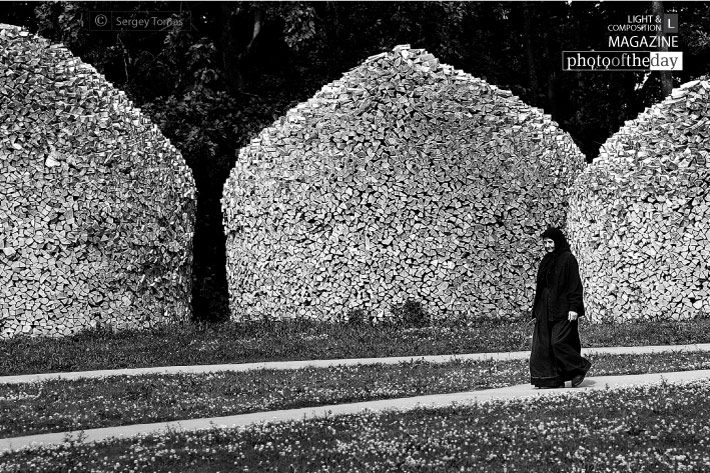
Captured at a convent in Veliky Novgorod, Russia, in 2008, this evocative image documents the arduous daily life of the resident nuns. The photographer was struck by the unique, tent-like method used to stack firewood, a task requiring significant physical labor. By focusing on the rhythmic, repetitive nature of this chore, the image transforms a mundane domestic duty into a poignant study of devotion and endurance. The stark black-and-white composition emphasizes the textures of the wood and the solemn atmosphere of the monastery, earning recognition for its powerful storytelling and authentic cultural insight.
Sergey Tomas
Based in Donetsk, Ukraine, Sergey Tomas is a dedicated photographer and television technical director who views the medium as a vital outlet for his personal philosophy and worldview. His lifelong passion for the craft began in elementary school and has since evolved into a prolific career marked by frequent participation in international exhibitions and competitions. Beyond his artistic pursuits, he is the author of the publication 'Fotofact. Saw! Shot! Posted!', reflecting his commitment to capturing the reality of the world around him.
Resonance Score Breakdown
Transparency Note: The resonance score (11.9/20) is calculated based on social engagement metrics collected before the award announcement.
Expert Photography Reviews · 3
The Weight of Winter
The smell of dry bark always brings me back to the shed behind my childhood home. It was a sharp, woody scent that clung to the wool of my sweaters, a smell that felt like safety and cold air combined.
Read the reflection →The Weight of the Stack
There is a quiet physics to the way we organize our survival. If you watch a gardener stacking stones or a mason laying bricks, you see a conversation between the hand and the earth. It is not merely about utility; it is a rhythmic negotiation with gravity.
Read the reflection →Reviews & Comments
Share your thoughts about this award-winning photograph. Your reviews contribute to the community engagement score.
Stacking wood is a chore that reveals a soul’s mettle. One suspects Tomas didn’t just stumble upon this rhythm; he likely stood in that biting Russian chill until his own fingers went numb, mirroring the nuns’ endurance. It’s a quiet, heavy sort of devotion. I’ve spent enough winters in the field to recognize the ache in those logs. He didn’t just find this scene; he earned the right to watch it unfold. Quite decent work.
In Veliky Novgorod, the firewood isn’t merely fuel; it’s a geometry of penance. Tomas understands that shadow isn’t the absence of light, but the architecture of the soul’s labor. I’ve stared at these stacked logs until my own hands ached from the phantom cold. It’s a brutal, rhythmic silence. When the light catches those jagged edges, it doesn’t invite us in—it demands we acknowledge the weight of a devotion that refuses to be illuminated.
Stripped of chromatic distraction, one finds the silver-grey of weathered birch and the charcoal shadows of Veliky Novgorod’s winter, a tonal range reminiscent of Morandi’s dust-choked still lifes. It’s a stark, rhythmic architecture of wood that hums with a quiet, ascetic gravity. I’m genuinely moved by how the absence of colour forces the eye to trace the grain’s tactile ache, turning simple labor into a monochromatic prayer that feels, quite frankly, like a heavy, holy silence.