Chasing Escape by Jabbar Jamil
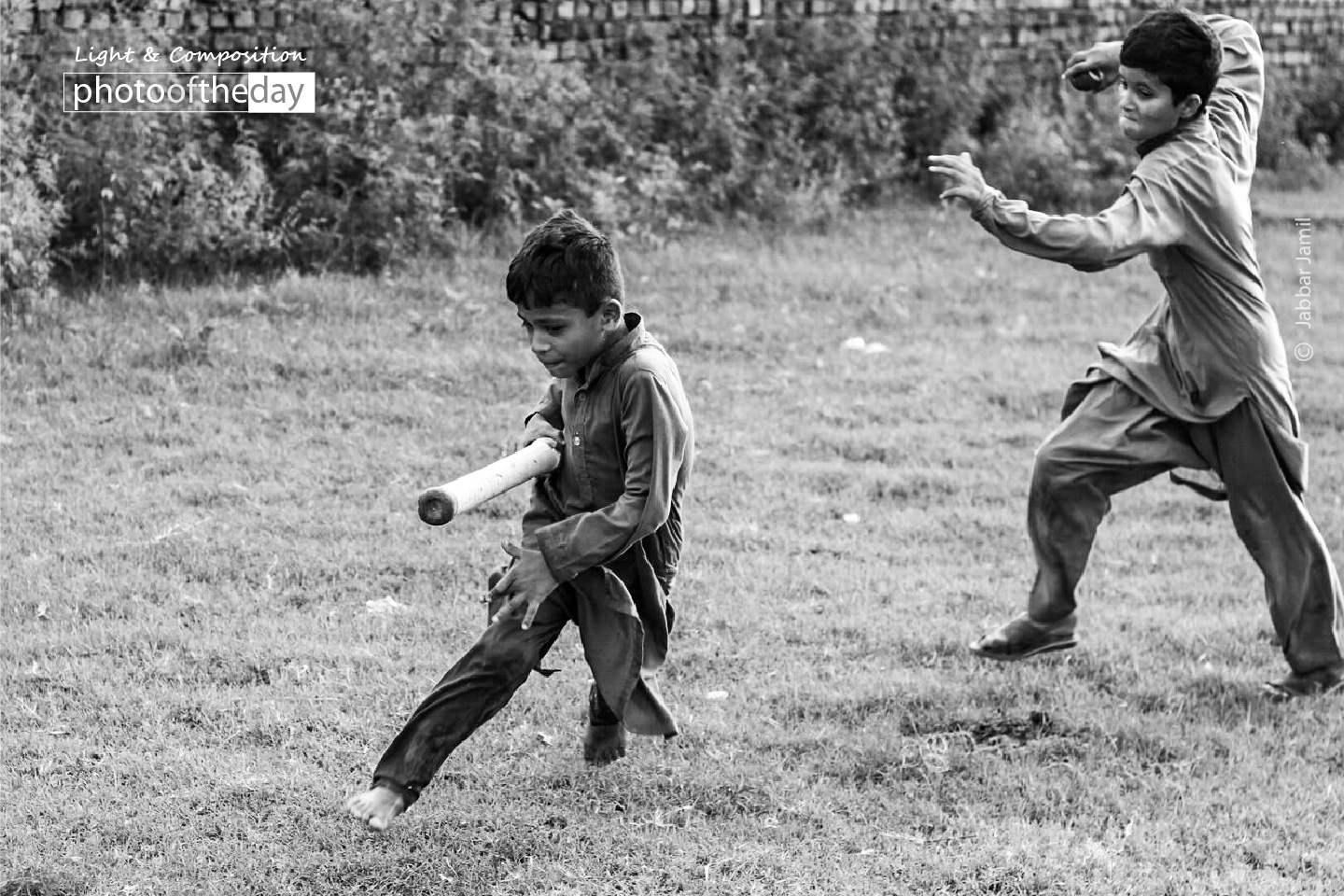
In the bustling streets of Sialkot, Jabbar Jamil captured a fleeting moment of childhood play. The image freezes a high-stakes game where children compete to strike a ball with a wooden rod, their movements charged with raw energy and competitive spirit. The photographer was drawn to the candid nature of the scene, specifically the split-second reaction of a boy narrowly escaping a stray ball. This photograph is award-worthy for its authentic portrayal of human interaction and the resilience of youth, capturing a narrative of play that transcends cultural boundaries through a sharp, observant lens.
Jabbar Jamil
Based in Sialkot, Pakistan, Jabbar Jamil is a dedicated street photographer who views his craft as a vital bridge to the world around him. By stepping outside his comfort zone, he captures the unfiltered realities of daily life, finding both creative expression and personal tranquility through his lens. His work is defined by a commitment to documenting the world exactly as it appears, focusing on the genuine connections and human stories that unfold in public spaces.
Resonance Score Breakdown
Transparency Note: The resonance score (0.9/20) is calculated based on social engagement metrics collected before the award announcement.
Expert Photography Reviews · 4
The Grit of Bare Feet
The smell of sun-baked earth always brings me back to the taste of dust on my tongue. It is a dry, metallic flavor, the kind that settles in the back of the throat after a long afternoon of running until your lungs burn.
Read the reflection →The Weight of a Running Shadow
I keep a small, smooth stone in my desk drawer, worn down by years of being turned over in my palm. It was once part of a garden wall that crumbled long ago, a piece of something that stood firm against the wind until it didn't.
Read the reflection →Reviews & Comments
Share your thoughts about this award-winning photograph. Your reviews contribute to the community engagement score.
Sialkot’s dust is practically flying off the print. That boy’s mid-air twist is pure adrenaline. It’s the kind of kinetic chaos Winogrand lived for. If Jamil had blinked, the tension would’ve vanished into the background noise. I’m actually holding my breath looking at that wooden rod swinging. One tenth of a second later and the geometry collapses, the energy dissipates. He nailed it. It’s raw, it’s frantic, and it’s exactly why we keep chasing the light.
The kinetic blur of that wooden rod feels visceral, yet I’m unsettled by the framing. Why does the boy’s terror serve as our aesthetic pleasure? It’s a sharp capture, sure, but does the camera exploit his vulnerability to manufacture a narrative of resilient youth? I find myself wincing at the voyeurism inherent in this split-second reaction. Are we celebrating his play, or are we just consuming his proximity to danger from a safe, detached distance?
Street photography is often a game of luck, but this frame suggests Jamil didn’t just stumble upon the chaos. He’s clearly spent hours in the dust of Sialkot, waiting for the geometry of that boy’s desperate scramble to align with the rod. It’s a frantic, kinetic bit of work. I’ve spent enough time in the heat to know that level of commitment isn’t cheap. It’s a rare, honest scrap of life, well earned.
Sialkot’s dust doesn’t just settle; it obscures the ontological weight of these children. Jamil’s shadows aren’t merely voids, but the very crucible where this frantic game survives. When I look at that boy’s desperate, blurred recoil, I’m struck by a sudden, cold ache in my own chest. It’s a reminder that we’re all perpetually dodging the inevitable. Light here is a cruel, fleeting mercy, leaving the darkness to hold the truth of their fragile, kinetic existence.