Bodie Ghost Town by Masja Stolk
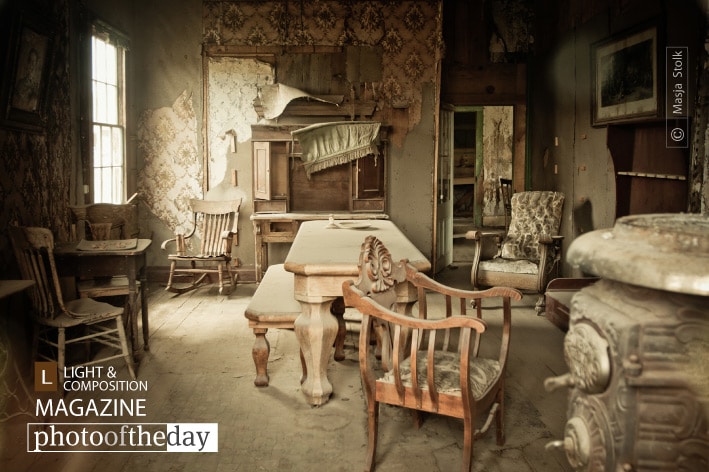
Captured during a summer family holiday in 2009, this evocative image immortalizes the weathered remains of Bodie, California. The photographer utilized a wide 18mm focal length to frame the desolate beauty of the historic mining camp, balancing the harsh desert light with a wide aperture to emphasize the textures of the decaying structures. This photograph is award-worthy for its ability to transport the viewer into the authentic stillness of the Wild West, transforming a relic of the gold rush into a poignant narrative of time, abandonment, and the enduring spirit of the American frontier.
Masja Stolk
Based in Gouda, Netherlands, Masja Stolk transitioned from a fifteen-year career as a hairstylist to pursue her true passion for professional photography. A graduate of a formal photography school, she specializes in advertising and reportage, with a particular focus on portraiture. Beyond her commercial work, Stolk is deeply committed to humanitarian efforts, frequently traveling to regions such as Kenya and Bangladesh to document the lives of vulnerable children and support charitable projects through her evocative visual storytelling.
Resonance Score Breakdown
Transparency Note: The resonance score (11.9/20) is calculated based on social engagement metrics collected before the award announcement.
Expert Photography Reviews · 4
The Architecture of Silence
We often mistake stillness for an ending, as if the world stops breathing the moment we turn our backs. But wood remembers the sun long after the roof has surrendered to the wind, and iron holds the memory of the forge even as it turns to rust.
Read the reflection →The Weight of Silence
We build things to last, yet we are only ever passing through. Wood warps under the sun. Paint peels away like dead skin.
Read the reflection →Reviews & Comments
Share your thoughts about this award-winning photograph. Your reviews contribute to the community engagement score.
Extremely beautiful!
Bodie isn’t just wood and dust; it’s a graveyard of intention. Stolk’s aperture choice forces the desert light to surrender, pushing the shadows into the splintered floorboards where they belong. I’ve stared at these dark corners until my eyes ached, feeling the cold weight of a life that simply stopped. It’s haunting how the darkness refuses to apologize. When light dies here, it doesn’t vanish—it settles into the grain, waiting for us to notice.
The desert sun here isn’t a tool; it’s a heavy, bleaching weight. Masja stood in that dry, thin air, waiting for the shadows to stretch just enough to reveal the wood’s weary grain. I’ve felt that same stillness in the high desert, where time doesn’t pass so much as it settles into the dust. It’s haunting. She didn’t just capture a ghost town; she listened to the silence of a life long since departed.
The wide-angle distortion pulls the horizon into a precarious arc, threatening the stability of the frame. It’s a risky choice. The decaying timber provides a necessary vertical anchor, yet the negative space above the structures feels hollow, lacking the density required to ground the composition. I’ve seen better, but the spatial tension between the foreground debris and the distant sky holds. It doesn’t collapse. That’s enough to keep the eye from wandering off the edge.
Most desert photography relies on dramatic sunsets, but Stolk’s choice to shoot at f/2.8 creates a shallow depth that forces the eye to confront the peeling wood grain rather than the vast horizon. It’s a quiet, unsettling choice. I’ve seen thousands of ghost town shots, but this one actually makes me feel the dry, biting heat of that California afternoon. It’s the texture of decay that ensures this remains relevant long after the gold rush fades.
This is outstanding