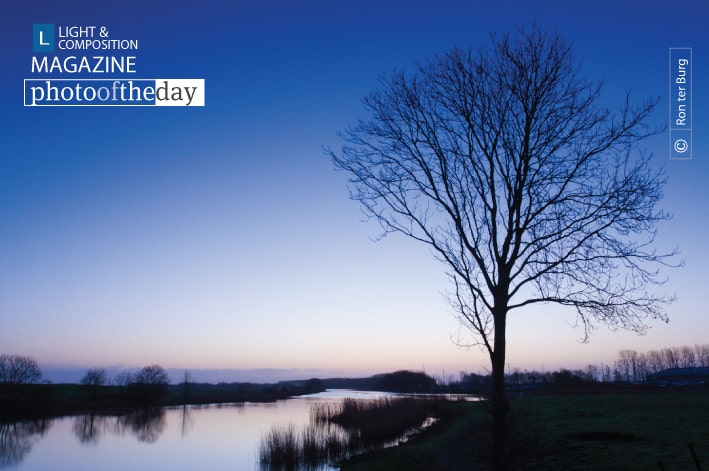
Blue Sunrise at Lauwersmeer by Ron ter Burg
Captured at the port of Dokkumer Nieuwe Zijlen, this image showcases the serene beauty of the National Park Lauwersmeer in the Netherlands. The photographer utilized a long exposure of 1332 seconds at f/16 to transform the water and sky into a smooth, ethereal canvas, emphasizing the quiet stillness of the pre-dawn atmosphere. By focusing on the sluice structures that protect the land from the Wadden Sea, the image highlights the delicate balance between Dutch engineering and the natural landscape. This award-winning photograph is a testament to the photographer’s ability to capture the profound tranquility of the low-light moments just before sunrise.
Ron ter Burg
Based in the small village of Nietap in the Dutch province of Drenthe, Ron ter Burg has been dedicated to the art of photography since 1991. His work is deeply rooted in a fascination with the lines and colors of the natural world, with a particular focus on the evocative landscapes of the Netherlands. By specializing in low-light photography during the golden hours of sunrise and sunset, he captures the essence of his surroundings through meticulous composition and a keen eye for atmospheric light.
Resonance Score Breakdown
Transparency Note: The resonance score (12.4/20) is calculated based on social engagement metrics collected before the award announcement.
Expert Photography Reviews · 6
The Weight of Stillness
There is a peculiar physics to the hour before dawn. It is a time when the world feels suspended, as if the earth has held its breath, waiting for the sun to grant it permission to begin again.
Read the reflection →The Breath of Still Water
There is a specific cold that settles into the marrow before the sun decides to wake. It is a damp, velvet chill that clings to the skin like wet silk, smelling faintly of salt and dormant reeds.
Read the reflection →Reviews & Comments
Share your thoughts about this award-winning photograph. Your reviews contribute to the community engagement score.
The sluice gates anchor the frame, providing a necessary fulcrum against the blurred horizon. It’s a rigid geometry that keeps the long exposure from dissolving into mere abstraction. The negative space above the water is heavy, yet it doesn’t collapse. I’m genuinely unsettled by how the stillness forces the eye to confront the artificial barriers. It’s a cold, calculated architecture. The composition holds because the structural weight of the concrete refuses to yield to the sky.
Twenty-two minutes of exposure forces the water into a ghost of itself. It’s a haunting erasure. By suppressing the chaos of the tide, ter Burg reveals the sluice as a tombstone for the sea. I’ve spent hours staring at these dark, rigid lines, and I feel a cold, existential dread creeping in. The shadows here don’t hide the landscape; they consume it. It’s a heavy, silent meditation on our desperate, futile need to contain nature.
The cerulean hush of this Lauwersmeer dawn evokes the melancholic, dust-laden stillness of a Morandi study, where the water’s surface dissolves into a pale, bruised indigo that feels almost liquid against the skin. It’s a haunting, spectral palette; I’m genuinely breathless at how the long exposure bleeds the horizon into a seamless, velvety void, stripping away the world’s noise until only the cold, quiet vibration of pre-dawn light remains to anchor one’s weary soul.
Twenty-two minutes of exposure. Ron stood in the biting pre-dawn chill, listening to the sluice gates hold back the Wadden Sea. It’s a profound act of surrender, letting the shutter stay open while the world softens into this ethereal, blue silence. I feel a strange, hollow ache in my chest looking at it—the stillness is almost heavy. He didn’t just capture the landscape; he waited until the land finally exhaled its secrets to him.
Most long exposures today are just blurry gimmicks, but this one earns its keep. By holding the shutter for over twenty minutes, ter Burg turned the sluice gates into anchors against a dissolving world. It’s haunting. I’ve seen thousands of coastal shots, yet this stillness actually makes me hold my breath. It’s not just a pretty sunrise; it’s a meditation on permanence. Thirty years from now, people will still feel that cold, quiet weight of the water.
Twenty-two minutes of exposure. That’s a long time to stand shivering by a sluice gate in the Dutch dark, wondering if the clouds will cooperate or simply turn to mush. Most would have packed up after five. Ter Burg didn’t. He’s clearly earned this stillness. I’ve spent enough nights waiting for the light to know that kind of commitment isn’t cheap. It’s a quiet, cold, and entirely respectable bit of work.