Blue Screen by Hairolnizam Samion
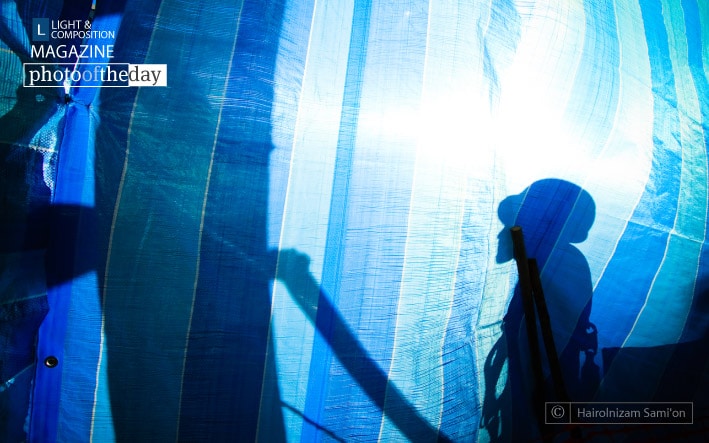
Captured under the intense glare of the afternoon sun, this image reveals a serendipitous moment of discovery during a photowalk. The photographer encountered a construction worker performing maintenance at a car-park entrance, partially obscured by a vibrant blue safety screen designed to catch debris. By positioning the camera so the sun sat directly behind the subject, the photographer captured a striking silhouette cast against the fabric. This photograph is award-worthy for its masterful use of natural light and the transformation of a mundane, industrial scene into a compelling, high-contrast narrative of human labor.
Hairolnizam Samion
Hairolnizam Samion is a dedicated photographer based in Singapore who specializes in uncovering the extraordinary beauty hidden within everyday life. Over the past two years, he has focused on refining his technical craft, developing a keen sensitivity to the interplay of light and shadow in urban environments. His work invites international audiences to pause and appreciate the subtle magic of the mundane, as he consistently seeks to reveal fresh perspectives through his lens.
Resonance Score Breakdown
Transparency Note: The resonance score (10.4/20) is calculated based on social engagement metrics collected before the award announcement.
Expert Photography Reviews · 4
The Weaver of Shadows
When a spider constructs its web, it does not merely spin silk; it maps the invisible currents of the air, anchoring its fragile architecture to the rigid geometry of the world.
Read the reflection →The Ghost Behind the Veil
It is 3:14 am. The silence in this room is heavy, the kind that presses against your eardrums until you start hearing the hum of your own blood. I am thinking about the things we hide behind.
Read the reflection →Reviews & Comments
Share your thoughts about this award-winning photograph. Your reviews contribute to the community engagement score.
That blue screen is a trap, and Samion didn’t blink. Most would’ve missed the silhouette, but he caught the worker right as the sun hit that fabric. It’s raw, industrial, and honest. One tenth of a second later and the shadow would’ve blurred into the mesh, the frame collapsing entirely. I’ve spent years chasing this kind of light in Singapore; it’s electric. He didn’t just take a picture; he caught the city breathing. Perfect timing.
The blue screen isn’t merely a barrier; it’s a veil between the worker and his own existence. By forcing the sun to act as an interrogator, Samion strips the man of his features, leaving only the raw, aching geometry of labor. It’s haunting. I’ve stared at this silhouette for an hour, feeling the crushing weight of that industrial debris. When the light is this violent, the shadow doesn’t just hide; it finally speaks the truth.
We look at this silhouette against the blue screen and we aren’t just seeing a worker; we’re meeting a ghost of industry. Hairolnizam didn’t just snap a shutter; he waited for the sun to turn a man into a shadow. It’s a quiet, heavy moment. I feel a sudden, sharp ache for the anonymity of his labor. It’s a photograph that asks to be returned to, because it’s really a conversation about being seen.
That electric, synthetic cerulean—the blue of a bruised twilight sky trapped in industrial mesh—vibrates against the worker’s silhouette with a tension that’s frankly intoxicating. It’s as if Vermeer’s lapis lazuli had been dragged through a Singaporean construction site, forcing the light to bleed through the weave. One finds it impossible to look away; it’s a visceral, humming collision of human labor and pure, unadulterated pigment that makes my own heart race with quiet, chromatic envy.