Art in The Tunnel by Wilfried Claus
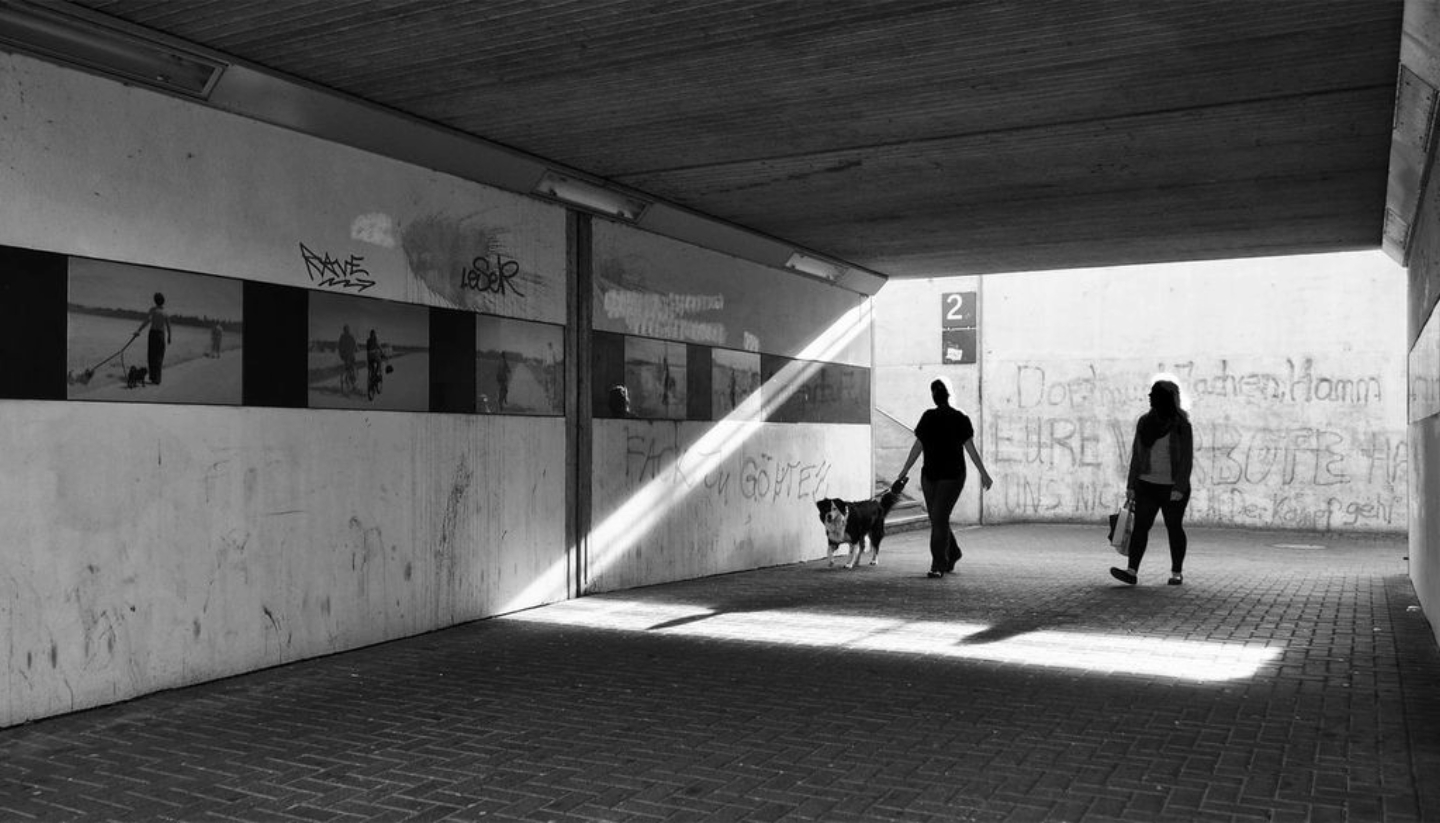
Captured within the pedestrian tunnel of Pulheim station, this photograph highlights a unique intersection of public infrastructure and art. The frame centers on a frieze by artist Sigrid Lange, depicting figures in motion, which mirrors the real-life passers-by walking their dogs. The photographer skillfully balances the stark, graffiti-marked reality of the tunnel walls with the rhythmic, artistic narrative of the installation. This image is award-worthy for its keen observation of urban life, where the mundane act of transit becomes a layered visual dialogue between static art and fleeting human presence.
Wilfried Claus
Born in Cologne in 1947, Wilfried Claus transitioned into a dedicated photographic career following his retirement from a long tenure as a teacher and headmaster in 2009. He operates a professional studio with a focus on portraiture, while his diverse portfolio includes architectural documentation and atmospheric theatre photography. A multifaceted artist, Claus has also been instrumental in the cultural life of his community, co-founding a theatre in a repurposed factory and participating in numerous art exhibitions that showcase his evolving technical mastery.
Resonance Score Breakdown
Transparency Note: The resonance score (6.6/20) is calculated based on social engagement metrics collected before the award announcement.
Expert Photography Reviews · 4
The Echoes We Walk Through
There is a particular kind of silence that lives in the underpasses of a city, a subterranean hum where the air feels heavy with the ghosts of everyone who has hurried through before you.
Read the reflection →Echoes in the Concrete
Dear traveler, I have been thinking about the places we pass through without ever really arriving. We treat these spaces like ghosts, mere corridors between the things that actually matter.
Read the reflection →Reviews & Comments
Share your thoughts about this award-winning photograph. Your reviews contribute to the community engagement score.
Most urban tunnel shots are just visual noise, but Claus caught a rare, rhythmic alignment here. By framing the static frieze against the blurred movement of the dog walker, he’s turned a mundane transit point into a genuine narrative. I’ve seen thousands of these, yet this one sticks because it captures a fleeting, rhythmic grace. It’s the kind of quiet, human observation that’ll still feel relevant in thirty years. I’d hang this in my own hallway.
The tunnel’s concrete throat swallows the light, leaving Sigrid Lange’s figures to haunt the periphery. It’s a claustrophobic dialogue between the static painted ghost and the living dog-walker. I’ve always found these subterranean spaces unsettling, like a purgatory where time refuses to settle. Claus doesn’t just document transit; he forces us to confront the darkness clinging to the walls. It’s not a pretty scene, but it’s honest. The shadows here don’t hide the truth; they define it.
The tunnel’s geometry dictates the frame. Lange’s frieze provides a rigid horizontal anchor, yet the human figures disrupt that stability. It’s a precarious balance. The negative space around the dog walker creates a necessary fulcrum, preventing the composition from collapsing into mere documentation. I’m genuinely unsettled by how the graffiti’s chaos threatens the mural’s order. It doesn’t just record transit; it forces a confrontation between static art and the messy, kinetic reality of the frame.
Pulheim’s tunnel feels claustrophobic, yet Claus finds a rhythm in the juxtaposition of Lange’s frieze and the commuters. Does the art dignify the graffiti, or does the grime mock the mural? I’m unsettled by how the dog walkers become mere props for the photographer’s narrative. Why must we aestheticize transit spaces to find value in them? It’s a sharp composition, but I can’t shake the feeling that the subjects are being used rather than seen.