A Wonder Kid by Arif Hossain Sayeed
In the bustling streets of Old Dhaka, the photographer captured a poignant moment of childhood innocence amidst the urban flow. Waiting patiently for a street vendor’s child to lose self-consciousness, the photographer sought a candid interaction as the girl engaged in a playful game of hide and seek. By carefully framing the scene to include passersby in motion on either side, the photographer created a dynamic contrast between the stillness of the child and the rhythm of the city. This image is award-worthy for its masterful composition and the photographer's ability to transform a fleeting, everyday street encounter into a timeless narrative of human connection.
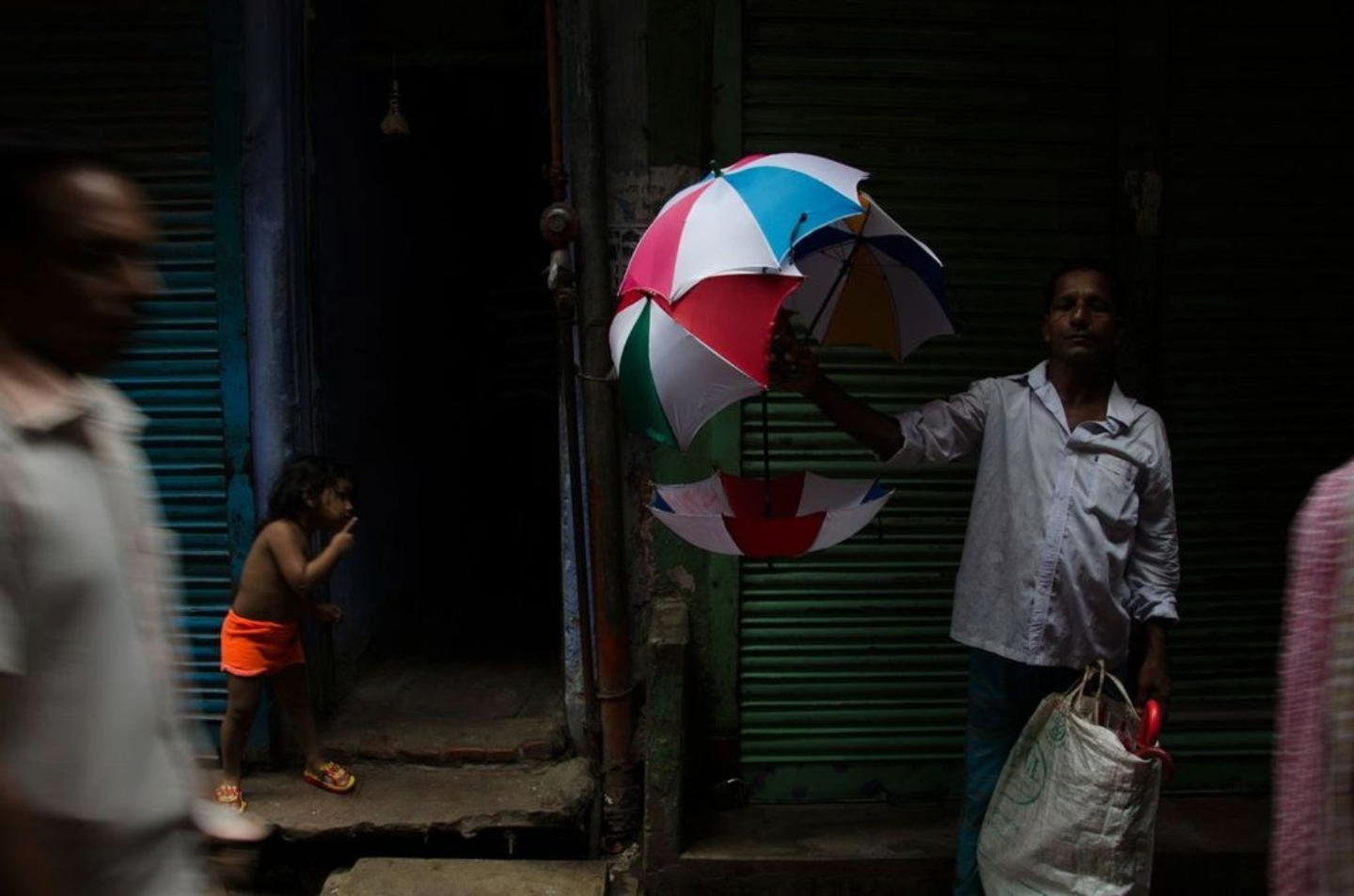
Exposure 1/30sec @ f/5.6 | ISO 200 | Focal Length 18mm
Arif Hossain Sayeed
Born in 1989 in a village in Cumilla, Bangladesh, Arif Hossain Sayeed discovered his creative calling through the lens of a camera. Now based in Siddhirganj, Narayanganj, he has cultivated a deep passion for documentary and street photography, consistently focusing on the human element as his primary subject. Influenced by renowned photographers such as Munem Wasif and Steve McCurry, Sayeed continues to document the vibrant, authentic stories of the people around him with a keen eye for detail and emotional depth.
Resonance Score Breakdown
Transparency Note: The resonance score (6.3/20) is calculated based on social engagement metrics collected before the award announcement.
Expert Photography Reviews · 7
The Architecture of Hiding
The blue wool sweater my brother wore in the winter of 1998 is gone, and with it, the specific smell of damp cedar and peppermint that clung to the fibers.
Read the reflection →The Geometry of Play
There is a particular rhythm to the streets of Old Dhaka that feels like a conversation between stone and shadow. I often find myself wandering these lanes in my mind, tracing the way the afternoon light carves out pockets of stillness amidst the relentless surge of the crowd.
Read the reflection →Reviews & Comments
Share your thoughts about this award-winning photograph. Your reviews contribute to the community engagement score.
Before the eye identifies the child, a sudden stillness anchors the chest. The blur of Old Dhaka’s motion creates a sensory dissonance that forces me to hold my breath. It’s the contrast—the girl’s quiet, fixed gaze against the city’s frantic pulse—that triggers a sharp, phantom ache of my own forgotten play. I’ve returned to this frame three times today; each time, the stillness feels heavier, a fragile sanctuary I’m terrified to disturb.
There’s a quiet ache in this girl’s eyes that stops me cold. She’s playing hide and seek, but she’s looking right at us, searching for something beyond the lens. Arif didn’t just snatch a frame; he waited until the city’s chaos blurred into a backdrop for her stillness. It’s a gift, really. You can see she’s chosen to let him in. This face has a whole life in it, and I’m grateful he stayed long enough.
The frame’s geometry hinges on the child’s stillness against the blur of Old Dhaka. It’s a precarious balance. The wide-angle distortion pushes the periphery into a frantic rhythm, yet the subject remains anchored. I’m genuinely unsettled by how the negative space doesn’t collapse under the weight of the motion. The composition holds, though the shutter speed barely survives the chaos. It’s a rigid architecture, forcing the eye to acknowledge the fulcrum before the sentiment takes hold.
The girl’s hands are mid-motion, fingers splayed against her face, but the shutter speed is too slow. At 1/30th of a second, the motion blur on the passersby is fine, but the child’s eyes are lost in the smear. I’ve spent my life chasing the exact millisecond of peak tension; here, the timing is just a hair off. It’s a sweet scene, but I’m left wishing for a sharper, cleaner snap of that hidden expression.
Old Dhaka’s blur frames the girl, but why does she serve as a prop for our aesthetic consumption? I’m unsettled by how the motion-blurred passersby reduce her to a static curiosity. Is her innocence truly the focus, or is it the photographer’s desire to curate a “timeless” poverty? We’ve seen this gaze before. Does the child know she’s being framed as a symbol, or is she just waiting for a game that never ends?
1/30sec at f/5.6, 18mm, ISO 200. It’s a gamble. The shutter speed is dangerously slow for handheld street work, yet the motion blur on the passersby is perfectly calibrated. It creates a kinetic frame for the girl’s stillness. I’ve spent years criticizing lazy motion, but here, the math holds up. The depth of field is sufficient to isolate the subject without losing the context of Old Dhaka. It’s technically sound. I’m actually impressed.
The shutter speed drags, blurring the Dhaka rush into a kinetic smear. It’s a perfect long-lens choice. The girl stays sharp, an island of stillness in a frame that refuses to settle. I’ve spent years watching editors hunt for this exact rhythm. The motion blur on the edges creates a frame that feels like it’s breathing. Honestly, it makes me miss the chaos of the street. It’s the cut that never came, and it’s beautiful.