A Village Girl by Azam Vaez
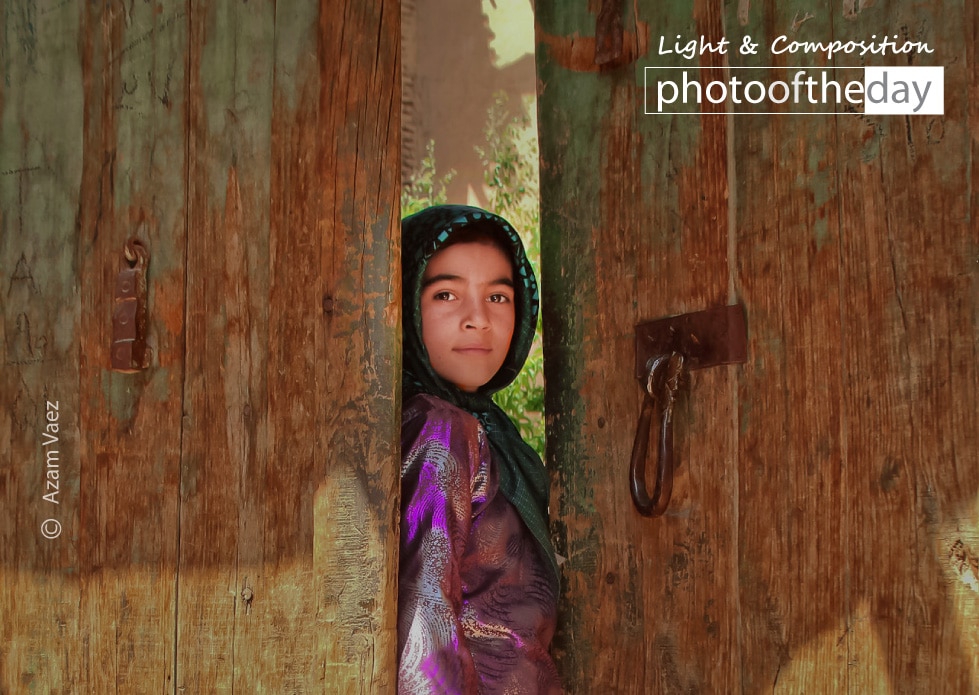
Captured in a picturesque village near Esfahan, this portrait of a young girl named Fatima highlights a moment of genuine cultural connection. The photographer, drawn to the village's traditional architecture and the residents' commitment to local costumes, encountered Fatima during a visit. Her initial surprise at the sight of the camera quickly transformed into joy upon seeing her own image. This photograph is award-worthy for its ability to bridge the gap between the observer and the subject, capturing a candid, heartfelt interaction that celebrates the beauty of human connection and the preservation of cultural identity through a single, luminous portrait.
Azam Vaez
Born in 1971 in Isfahan, Iran, Azam Vaez is an accomplished art educator who channels her passion for nature, street, and architectural photography into her teaching. Her work reflects a deep appreciation for the human experience, often exploring lifestyle and travel themes that emphasize positive energy. Beyond her classroom, Vaez has showcased her photography in solo exhibitions, including a notable focus on Mecca, and has consistently demonstrated her technical prowess through participation in various provincial photography championships.
Resonance Score Breakdown
Transparency Note: The resonance score (10.8/20) is calculated based on social engagement metrics collected before the award announcement.
Expert Photography Reviews · 7
The Geography of Belonging
We often speak of the city as a machine for living, but we forget that the edges of our urban centers are defined by the people who remain rooted in the soil while the concrete expands.
Read the reflection →The Weight of a Secret Smile
Dear stranger, I have been thinking about the way we hold our faces when we think no one is watching.
Read the reflection →Reviews & Comments
Share your thoughts about this award-winning photograph. Your reviews contribute to the community engagement score.
Fatima’s smile is a fraction of a second late. The zygomatic muscles have already begun to relax, and the initial, genuine spark of surprise has faded into a posed expression. It’s a near miss. I’ve spent my life chasing that singular, physiological peak, and here, the shutter fired just after the apex of her joy. It’s technically sound, but it doesn’t hit that raw, electric nerve. I wanted to see the moment before the mask settled.
Fatima stands against the wall. The plaster is worn. It’s a quiet geography. I’ve spent minutes looking at the space behind her shoulder. It’s not just a backdrop. It’s the breath between her and the world. Nothing here is accidental. The empty corner is not empty. It holds the weight of the village. I feel a sudden, sharp ache for the stillness she keeps. She doesn’t need the frame to be full. She is enough.
Fatima’s portrait feels trapped by the jury’s obsession with clarity. Why must we resolve every thread of her traditional costume? It’s a missed opportunity for abstraction. I’d have preferred the motion of her surprise—that fleeting joy—to bleed into the frame, blurring the line between observer and subject. It’s closer to a static ethnographic record than the visceral, kinetic energy of a human encounter. I’m genuinely bored by the sharpness; it’s just too safe.
It’s jarring to see such warmth in a portrait. Down here, we’re constantly fighting the water’s theft of the red spectrum, but Fatima’s skin tones remain vibrant and true. There’s no backscatter to distract from her gaze, and the clarity is startling. I’ve spent my life chasing light through a refractive, unforgiving medium, so I’m genuinely moved by how easily this portrait breathes. It’s a rare, dry-land triumph of pure, unadulterated colour.
Fatima’s smile hits like a freight train. It’s that rare, raw spark—the exact second surprise melts into pure, unadulterated joy. If Azam had waited, that light in her eyes would’ve dimmed, the magic gone. It’s a classic Cartier-Bresson instinct, catching the soul before the subject realizes they’re being watched. I’m genuinely moved by how she owns the frame. One tenth of a second later and the connection collapses. You nailed the timing. It’s electric.
We look at Fatima and see the echo of a conversation. Before the shutter clicked, she wasn’t just a subject; she was a girl meeting a stranger. You can feel the shift from her initial surprise to that radiant, unguarded joy. It’s a rare, luminous honesty that warms me to my core. I’ve spent years studying faces, but it’s this genuine connection that makes me want to stay here, listening to her silent story.
It’s easy to snap a portrait when the subject is curious, but Vaez clearly lingered. You don’t get that genuine, unguarded smile from Fatima without putting the camera down and earning her trust first. I’ve spent enough hours shivering in remote corners to know when someone’s actually put in the work. It’s a rare, quiet victory. I find myself genuinely warmed by the girl’s expression. It’s a portrait that wasn’t just taken; it was invited.
nice photo
thanks