A Van by the Edge by Bashar Alaeddin
While traveling along the Dead Sea highway in Jordan, the photographer paused to capture the rugged landscape. Spotting an abandoned van perched precariously on a cliffside, they recognized a compelling visual opportunity. By centering the vehicle within the frame, the photographer created a powerful focal point that draws the viewer's eye into the heart of the composition. This image is award-worthy for its deliberate use of negative space and its ability to transform a mundane roadside discovery into a striking, minimalist study of isolation against the vast, dramatic backdrop of the Jordanian terrain.
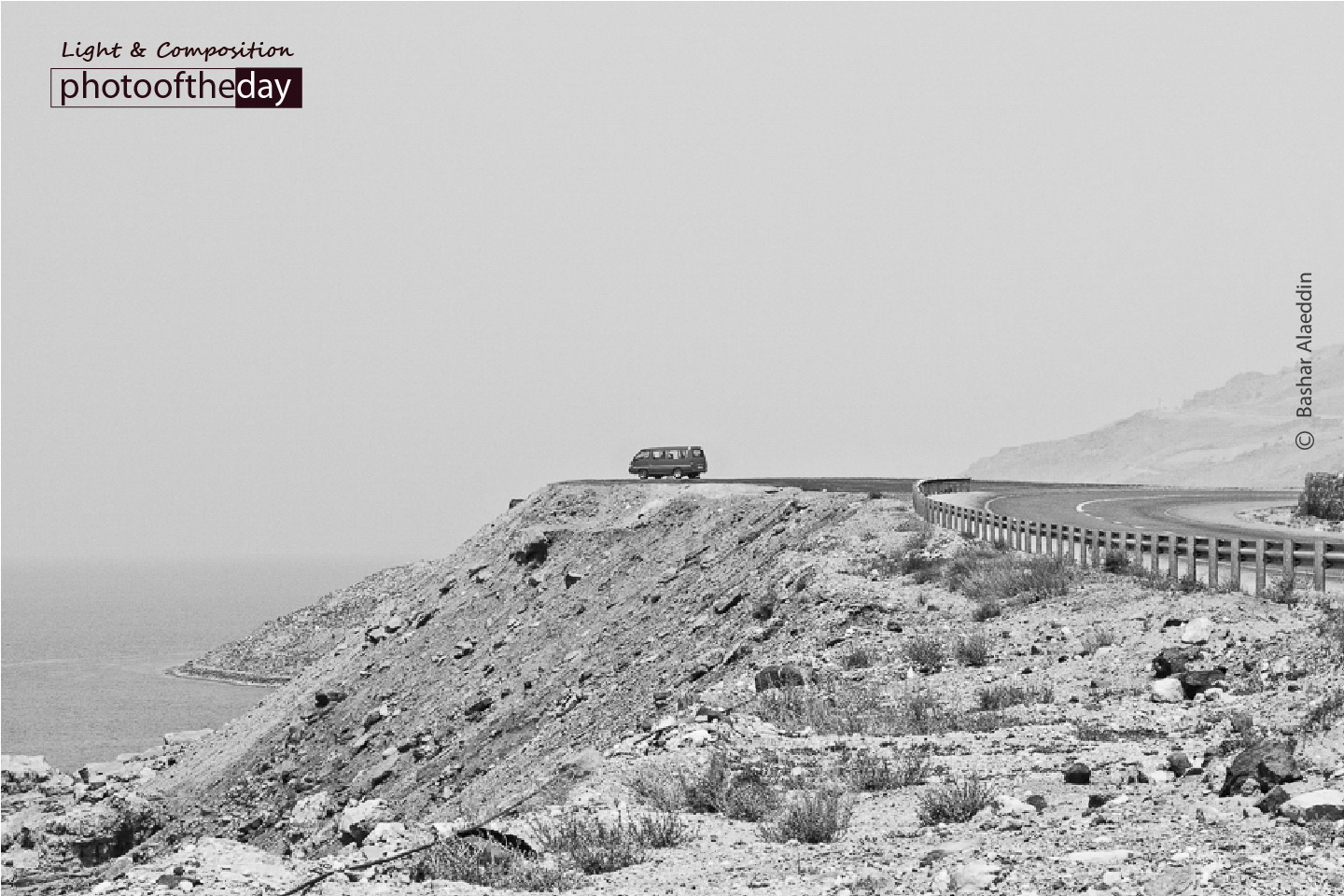
the Edge, by Bashar Alaeddin
Born in Kuwait City and having spent most of his life between Jordan and Lebanon, Bashar Alaeddin brings over nine years of photographic experience to his craft. After beginning his journey with a simple digital camera during university, he transitioned into a professional career as the founder of a studio in Amman, where he specializes in commercial food, interior, and portrait photography. Beyond his commercial work, Alaeddin is a dedicated amateur astronomer who frequently travels across the Middle East to document the intersection of Arabian landscapes and the night sky through long-exposure photography.
Resonance Score Breakdown
Transparency Note: The resonance score (11.6/20) is calculated based on social engagement metrics collected before the award announcement.
Expert Photography Reviews · 5
The Weight of Staying
We are taught that movement is the only way to prove we are alive. We pack, we leave, we chase the horizon until the engine cools and the road turns to dust. But there is a different kind of courage in the things that remain.
Read the reflection →The Salt of Stillness
The air near the water always tastes of grit and ancient, drying salt. It clings to the back of the throat, a dry, mineral reminder that everything eventually returns to the earth.
Read the reflection →Reviews & Comments
Share your thoughts about this award-winning photograph. Your reviews contribute to the community engagement score.
Of the thousands of roadside captures I’ve reviewed, most are merely snapshots of decay. What separates this from the clutter is the van’s precarious, centered placement against that crushing, empty horizon. It’s a quiet, brutal geometry. I felt a genuine shiver looking at it; it’s the kind of stark, lonely permanence that will still haunt viewers in thirty years. It doesn’t just document a wreck; it turns the landscape into a cage. That’s why it won.
You caught that van hanging off the edge like a forgotten ghost. It’s lonely, sure, but there’s a strange, quiet dignity in how it sits against that vast Jordanian sky. I’ve spent enough time on roads like that to know the silence you felt when you stopped. You waited for the light to settle, and it shows. It’s not just a landscape; it’s a feeling of being left behind. I really respect that patience.
It’s a stark, lonely frame, but I can’t help but feel a pang of relief that this isn’t a living subject. When I see a van perched on a cliff, I don’t worry about its stress levels or nesting habits. It’s a relief to critique a composition where the isolation is purely aesthetic rather than a result of human intrusion into a wild creature’s sanctuary. It’s clean, quiet, and mercifully, it’s not breathing.
Before the eye identifies the van, a sudden, heavy stillness settles in the chest. It’s the silence of a place where breath feels too loud. The isolation here isn’t just visual; it’s a physical weight that pulls at my own pulse. When I return to this frame, I don’t see a vehicle anymore. I see the quiet ache of being left behind. It’s a haunting, hollow space that I’ve started carrying into my own sleep.
The jury’s obsession with clarity here misses the point. By anchoring that van in such stark, high-contrast isolation, Alaeddin flirts with the void. It’s not just a landscape; it’s a meditation on stillness. I’m genuinely unsettled by how the horizon dissolves into the grain. Why resolve the cliff’s edge when the blur tells a deeper truth? It’s closer to Sugimoto’s long-exposure theatres than to standard travelogue. I’d trade that technical perfection for more of this haunting ambiguity.