A Simple Lighthouse by Fabrizio Bues
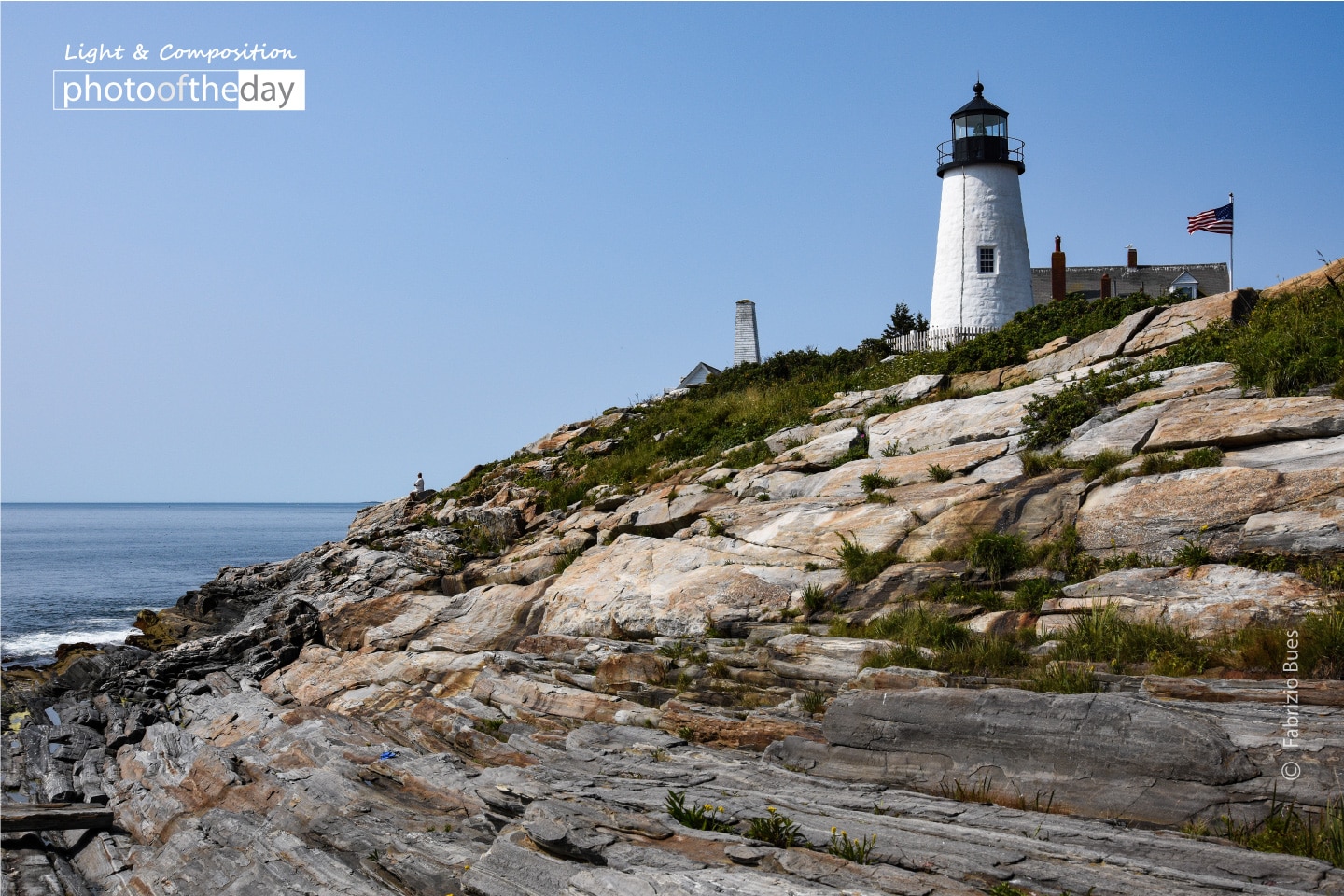
Perched on the rugged, descending slopes of the American East Coast, this lighthouse stands as a solitary sentinel against the horizon. The photographer captures the structure’s isolated beauty, emphasizing the challenging, winding path required to reach such a remote vantage point. Beyond the technical composition, the image evokes a sense of nostalgia, inviting the viewer to imagine a quiet, rhythmic life where a keeper ascends the steps each sunset to ignite the beacon. It is this blend of atmospheric storytelling and the stark, architectural prominence of the lighthouse that earns the work its place as a celebrated travel photograph.
Fabrizio Bues
Born in Turin, Italy, in 1972, Fabrizio Bues balances a professional career as an IT Project Manager with a dedicated passion for travel photography. His frequent international business trips provide the perfect backdrop for his creative pursuits, allowing him to document diverse landscapes through his Nikon camera. A committed student of Light and Composition, he continuously refines his technical skills with the long-term ambition of achieving advanced academic recognition in the field. Fabrizio resides in Turin with his wife, Enrica, and remains focused on capturing the quiet, evocative moments he encounters during his global travels.
Resonance Score Breakdown
Transparency Note: The resonance score (11.7/20) is calculated based on social engagement metrics collected before the award announcement.
Expert Photography Reviews · 5
The Salt on the Skin
The air near the water has a specific weight, a dampness that clings to the back of the throat like cold wool. I remember the taste of salt on my lips after a long day spent walking the shoreline, the way the wind pulls at your hair until it feels stiff and tangled with brine.
Read the reflection →The Keeper of the Quiet
I keep a small, rusted brass key in a velvet-lined box, though I have long since forgotten which door it once opened. It is heavy for its size, worn smooth by the friction of a pocket or the nervous rubbing of a thumb.
Read the reflection →Reviews & Comments
Share your thoughts about this award-winning photograph. Your reviews contribute to the community engagement score.
The Maine coast doesn’t give up its secrets to the casual tourist. One suspects Bues spent a fair few shivering mornings here before the light finally hit that granite just right. It’s a lonely, salt-crusted sort of frame. I’ve stood on those jagged rocks myself, and my knees ache just looking at the composition. He didn’t just find this; he endured it. It’s a proper bit of work, earned through sheer, stubborn patience.
The horizon pulls the eye, a slow pan across Maine’s jagged edge. It’s a quiet, lonely frame. I feel the salt spray on my own skin just looking at that beacon. The composition holds its breath, waiting for a light that’s already gone. It’s the shot an editor keeps because the cut would have been a mistake. Bues understood the rhythm of isolation here. It’s a film that refused to move, and I’m glad it didn’t.
You’ve captured the weight of that silence perfectly. I’ve spent enough time on those Maine cliffs to know that wind, and you’ve managed to make it feel cold against my own skin. It’s not just a building; it’s the loneliness of the job that hits me. You waited for the light to soften, and it paid off. There’s something honest happening here. You didn’t just take a picture; you felt the isolation of that coast.
The lighthouse anchors the frame with necessary gravity. Its verticality cuts the horizon, creating a rigid fulcrum against the chaotic Maine coastline. The negative space doesn’t merely exist; it pushes back, forcing the eye toward the structure’s sharp geometry. It’s a disciplined arrangement that avoids the usual travel-brochure sentimentality. I’m genuinely annoyed by the distracting foreground clutter, yet the structural integrity holds. The composition succeeds because it refuses to soften its edges for the sake of nostalgia.
Most lighthouse shots are just postcards, but this one lingers. Of the thousands I’ve reviewed, it’s the way the jagged Maine rock forces the eye upward that saves it from cliché. It’s not just a building; it’s a quiet, stubborn defiance against the Atlantic. I’ll admit, looking at those cold, grey stones makes me feel a sudden, sharp ache for solitude. It’s going to endure because it captures the loneliness of the coast perfectly.