A Rower at the Floating Village by Ryszard Wierzbicki
Captured at the iconic Inle Lake in Myanmar, this photograph highlights the region's unique cultural heritage: the traditional one-legged rowing technique. The photographer utilized a 200mm focal length to isolate the rower against the serene, expansive waters, emphasizing the rhythmic, circular motion of the paddle. The composition masterfully balances the subject’s physical exertion with the tranquil environment of the floating village. This image is award-worthy for its authentic documentation of a vanishing tradition, demonstrating a keen eye for travel storytelling and the ability to freeze a fleeting, culturally significant moment with technical precision.
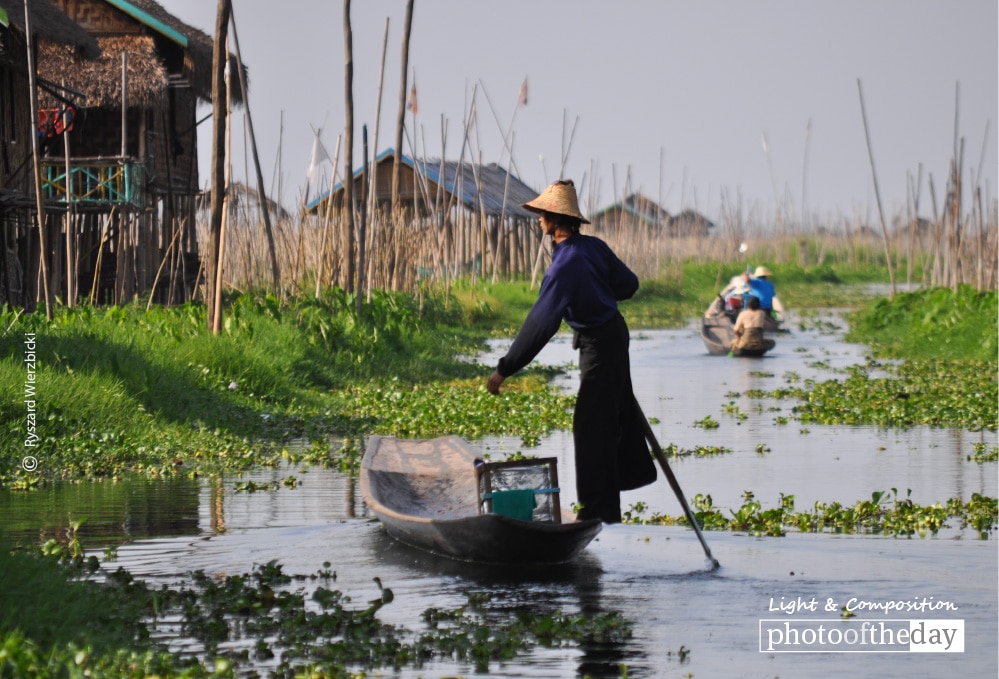
Exposure 1/750sec @ f/6.7 | ISO 200 | Focal Length 200mm
Ryszard Wierzbicki
Born in Poland in 1963, Ryszard Wierzbicki is a dedicated traveler and photographer currently based in Swindon, United Kingdom. After a diverse career in social sciences and marketing, he transitioned into a life of exploration, focusing his lens on the landscapes and cultures of South-East Asia. His work is deeply informed by his passion for scuba diving and his commitment to humanitarian efforts, including volunteering for orphanages in Thailand and Myanmar. Through his platforms, Instant Travelling and World Around, he shares his unique perspective on the world's most remote and vibrant destinations.
Resonance Score Breakdown
Transparency Note: The resonance score (11.1/20) is calculated based on social engagement metrics collected before the award announcement.
Expert Photography Reviews · 6
The Weight of the Water
I remember a fisherman in a small village near the coast who told me that the water never asks for anything in return. He spent his mornings standing on the edge of his wooden boat, balancing with a grace that seemed to defy the shifting currents beneath him.
Read the reflection →The Weight of Water
We move across the surface, believing we are masters of the crossing. We measure the distance in strokes, in the rhythm of wood against water, in the small, necessary labor of staying afloat. But the water does not care for our direction.
Read the reflection →Reviews & Comments
Share your thoughts about this award-winning photograph. Your reviews contribute to the community engagement score.
You waited for that exact moment when the paddle sliced the water, didn’t you? I can feel the stillness of the lake in your frame. It’s not just a technique; it’s a man’s life carved into a single, rhythmic motion. And honestly, looking at his balance, I felt a sudden, sharp ache for the quiet dignity of his work. You didn’t just document a tradition. You caught a human being breathing in the silence.
The shutter speed snaps the paddle mid-arc, freezing the kinetic energy of that one-legged stance. It’s a perfect cut. At 200mm, the compression flattens the lake into a stage, turning the rower into a silhouette against the void. I’ve watched this motion a thousand times, but here, the stillness hits me. It’s the frame the editor keeps because the rhythm is absolute. You don’t need the next shot; the story is already finished right here.
The rower’s silhouette against the lake’s silver expanse isn’t just a cultural relic; it’s a confrontation with the void. I’m struck by how the deep, ink-stained shadows clinging to the boat refuse to dissolve into the bright water. It’s a stubborn, heavy darkness that reminds me of Tarkovsky’s belief that time is the artist’s only true material. Wierzbicki doesn’t just capture a man rowing; he captures the weight of a vanishing world refusing to fade.
Before the eye identifies the rower, a sudden stillness pulls at my lungs. It’s the suspension of the paddle that does it—that precarious, one-legged balance against the vast, indifferent water. I feel a phantom ache in my own hip, a sympathetic tension. When I return to this frame, the silence feels heavier, more isolating. It’s a quiet, rhythmic haunting that follows me home, reminding me how easily we drift when we stop holding on.
It’s a clean shot, though one wonders if the shutter was pressed on the first pass. The composition is tidy, but the water lacks the texture of a morning spent shivering in a skiff. I’ve spent enough hours on stagnant lakes to know when a photographer has merely happened upon a scene rather than lived it. It’s technically sound, yet it doesn’t quite ache. I’d have preferred to see the rower after the sun had truly earned its keep.
Of the thousands of travel shots I’ve reviewed, most are just postcards. What separates this is the compression of the 200mm lens; it flattens the distance, forcing the rower into a fragile, lonely geometry against the water. It’s not just documentation; it’s a quiet ache for a rhythm that’s disappearing. I find myself holding my breath, hoping he doesn’t lose his balance. That tension is why this will still matter in thirty years.