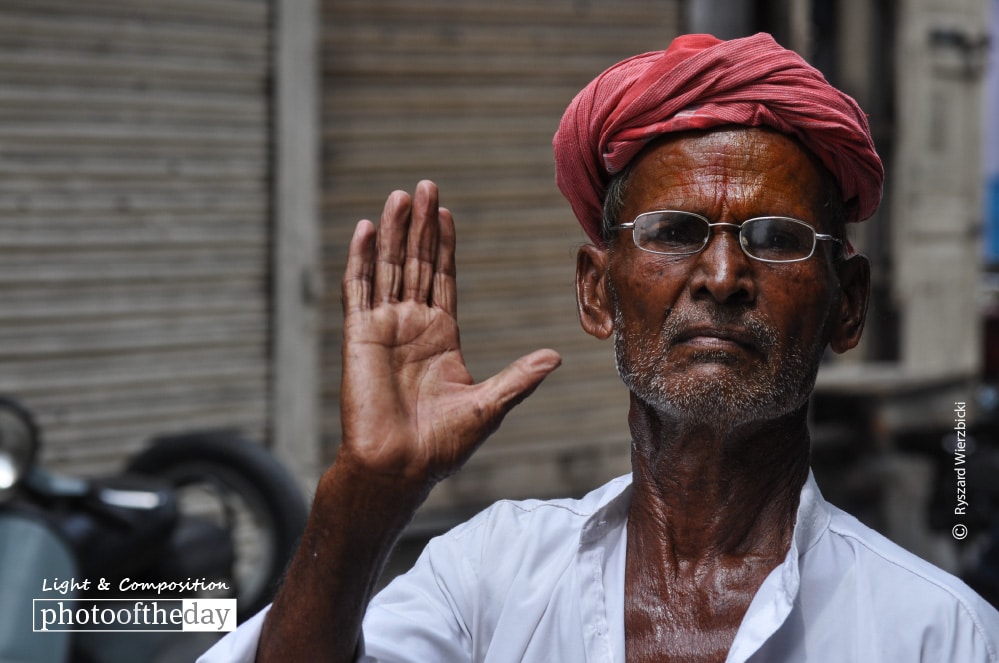
A Local Man in Pune by Ryszard Wierzbicki
Captured amidst the vibrant streets of Pune, India, this portrait serves as a testament to the city's rich tapestry of color and human character. The photographer expertly isolates the subject against the bustling backdrop, utilizing natural light to highlight the textures and expressions that define the local experience. This image is award-worthy for its authentic connection to the subject and its ability to transform a fleeting street encounter into a profound visual narrative. By focusing on the unique spirit of the individual, the photographer captures the essence of travel photography, turning a simple portrait into a compelling study of humanity.
Ryszard Wierzbicki
Born in 1963, Ryszard Wierzbicki is a dedicated traveler and photographer currently based in Swindon, United Kingdom. After a diverse career in education and marketing, he transitioned into a life of exploration, focusing his lens on the cultures and landscapes of South-East Asia. His work is deeply influenced by his commitment to humanitarian efforts and his passion for documenting the world, which he shares through his established photography forums and his ongoing adventures as a PADI scuba instructor.
Resonance Score Breakdown
Transparency Note: The resonance score (2.0/20) is calculated based on social engagement metrics collected before the award announcement.
Expert Photography Reviews · 4
The Archive of the Skin
We carry our history in the geography of our faces. Every line is a riverbed where a worry once flowed, every fold a valley carved by the slow, persistent weight of years.
Read the reflection →The Weight of a Name
In the nineteenth century, the practice of physiognomy suggested that the face was a map of the soul, a ledger where every sorrow and triumph was etched into the skin.
Read the reflection →Reviews & Comments
Share your thoughts about this award-winning photograph. Your reviews contribute to the community engagement score.
The light here isn’t just illumination; it’s a conversation between the man and the dust of Pune. He stood in that soft, diffused glow, waiting for the world to stop rushing. I’ve felt that stillness myself, where the noise of the street simply dissolves into the texture of a face. It’s a quiet, holy patience. I find myself wanting to sit beside him, just to breathe in the same heavy, golden air he’s holding.
The jury’s obsession with clarity here feels stifling. Wierzbicki’s Pune portrait settles for a conventional sharpness that leaves me cold. Why resolve every pore when you could have embraced the kinetic chaos of the street? It’s technically competent, sure, but it lacks the courage to blur the edges of identity. I’d have preferred a long exposure that dissolved this man into the city’s rhythm, closer to Sugimoto’s theatres than this safe, static documentation. It’s just too polite.
Pune’s light doesn’t just illuminate; it interrogates. Wierzbicki’s subject emerges from the gloom, yet the shadows here feel thin, almost apologetic. I’ve spent hours staring at the way the darkness clings to his skin, wishing it held more weight. It’s a portrait that flirts with depth but retreats into clarity too quickly. It doesn’t haunt me. I wanted the abyss to swallow the edges, but instead, it’s just a man standing in the sun.
Before the eye identifies the man in Pune, a sudden stillness settles in the chest. The light catching his weathered skin triggers a sharp, visceral recognition of time’s weight. I’ve found myself returning to his gaze; it’s an anchor that pulls at my own pulse. When I look away, the texture of his expression lingers, haunting the periphery of my vision. It’s not just a portrait; it’s a quiet, persistent ache I carry into sleep.