The Gentleman’s Path by José J. Rivera-Negrón
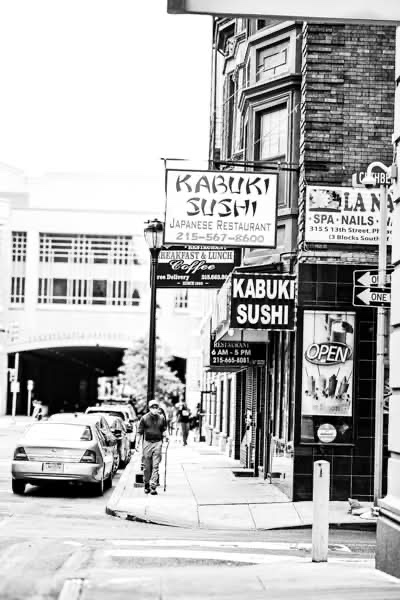
While exploring the vibrant streets of Philadelphia's Chinatown, I spotted a gentleman with his walking cane preparing to cross the road. The setting sun cast a warm glow, and the neon sign of a Japanese restaurant flickered in the background. It seemed like a perfect moment, a candid shot that captured the essence of the neighborhood. The scene unfolded like a quiet movie, a brief encounter that made me reach for my camera.
José J. Rivera-Negrón
José J. Rivera-Negrón was born in Puerto Rico and later moved to the United States, where he faced years of addiction, poverty, and life on the streets. After reaching a personal turning point, he sought help, completed rehabilitation, and made a firm decision to change his life. Those difficult experiences deeply shaped his perspective and eventually led him to photography—a medium through which he could express truth, struggle, and hope.
Today, Jose is a photographer whose work reflects resilience, recovery, and human connection. Through his travels, he documents diverse cultures and tells stories that carry messages of awareness, especially around addiction recovery and mental health. Working with Light and Composition has allowed him to share his vision with a wider audience. His journey stands as a reminder that even after the darkest chapters, it is always possible to start again and pursue one’s purpose.
Resonance Score Breakdown
Transparency Note: The resonance score (4.4/20) is calculated based on social engagement metrics collected before the award announcement.
Expert Photography Reviews · 8
The Weight of the Step
We walk because the earth requires it. Each step is a small negotiation with gravity, a quiet insistence that we are still here, moving through the space allotted to us.
Read the reflection →The Rhythm of Worn Stone
The smell of damp pavement after a sudden rain always pulls me back to the feeling of uneven ground beneath my feet. It is a specific, gritty texture—the way a sidewalk feels when it has been smoothed by a thousand soles, cold and unyielding against the arch of the foot.
Read the reflection →Reviews & Comments
Share your thoughts about this award-winning photograph. Your reviews contribute to the community engagement score.
The neon flicker against the pavement doesn’t merely illuminate; it interrogates the gentleman’s solitude. Rivera-Negrón captures a man navigating the threshold of a fading day, where the shadows aren’t just absences, but heavy, silent witnesses to his passage. I’ve stared at this frame for an hour, feeling the crushing weight of his cane against the encroaching dark. It’s a quiet, brutal reminder that we are all just walking toward our own inevitable, unlit corners.
At 74mm and f/4.5, the focal plane is razor-thin, isolating the gentleman against the chaotic bokeh of the Chinatown street. The lens struggles slightly with the diffraction limit near those flickering neon highlights, yet that softness feels intentional, almost cinematic. I’m genuinely moved by how the glass renders the texture of his cane against the asphalt. It’s a delicate balance of optics and atmosphere; you’ve captured a fleeting, microscopic slice of Philadelphia’s light perfectly.
The low, raking light of a Philadelphia sunset catches the gentleman’s path, turning asphalt into a stage for a quiet, fleeting grace. He stood there in the cooling hour, waiting for the neon to hum against the dusk. I feel a sudden, sharp ache in my chest seeing his steady stride. It’s not just a street scene; it’s a prayer of patience. He didn’t rush the light, and because of that, the land finally spoke.
It’s a pleasant enough stroll through Chinatown, though one suspects the shutter was pressed the moment the gentleman wandered into frame. It’s a snapshot, not a study. I’ve spent enough hours shivering on street corners to know that true composition requires more than just spotting a subject. It’s a clean capture, certainly, but it lacks the grit of a long wait. I’d have preferred to see the photographer return until the light truly earned its keep.
Before the eye identifies the cane or the neon flicker, something in the chest tightens. It’s the stillness of a man caught between the city’s pulse and his own slow rhythm. I feel a sudden, sharp ache for the time he’s carrying. When I return to this, I don’t see Philadelphia; I see the quiet weight of persistence. It’s a held-breath moment that lingers, following me into sleep like a half-remembered, solitary walk home.
The neon glow in Philadelphia’s Chinatown is a mere flicker compared to the ancient photons I usually track. Rivera-Negrón’s choice of a 74mm focal length compresses the street, grounding this gentleman in a fleeting, human scale. It’s a quiet, terrestrial contrast to the vast, silent void above. I find myself strangely moved by the warmth of that light; it’s a brief, fragile spark against the encroaching dark. It’s a beautiful, humble anchor in time.
You waited for the light to catch his cane, and I appreciate that patience. It’s a quiet, dignified frame. Because you didn’t rush, the neon glow feels like a companion to his walk rather than a distraction. I’ve spent enough time on city streets to know that feeling when a stranger’s rhythm matches the light. You caught a real human moment here. It’s honest, and that’s why I’m still looking at it. Good work.
There’s a distance here that bothers me. You caught a man mid-stride, but he’s clearly unaware he’s being watched. It’s a clean composition, sure, but it feels like a theft. I don’t see a conversation; I see a bystander. When I look at his hands gripping that cane, I want to know his story, not just his silhouette against a neon sign. It’s a pretty frame, but it’s missing the soul of a real encounter.