A Perspectives by Aman Raj Sharma
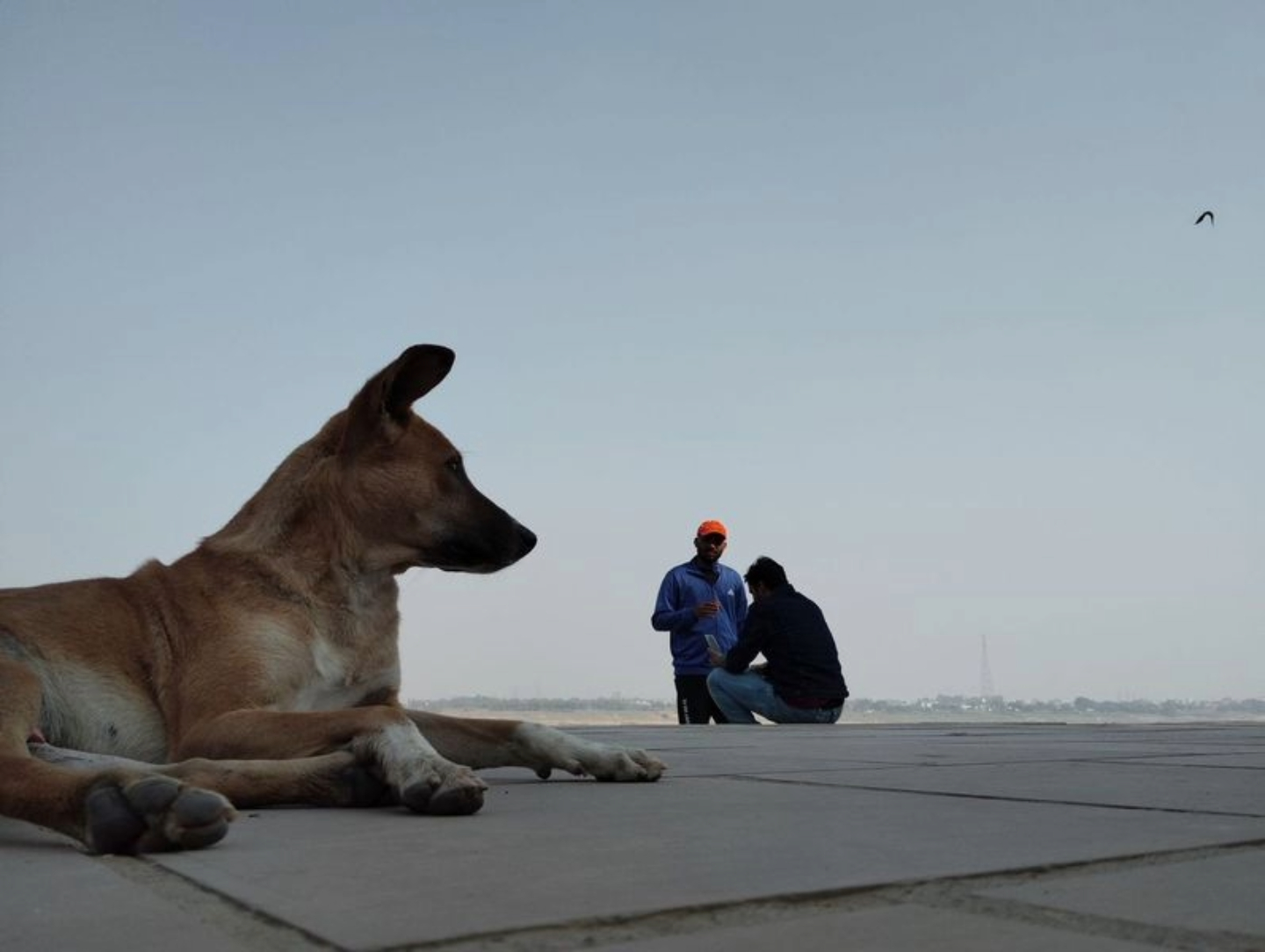
In this whimsical snapshot, a playful twist of perspective transforms an ordinary scene into a fantastical tableau. The dog, appearing as a gentle giant, looms protectively over the tiny human figures, creating a captivating illusion. This imaginative framing invites viewers to reflect on how perspective shapes our reality, reminding us that scale is relative and imagination limitless. The juxtaposition of the colossal canine and miniature humans sparks curiosity and wonder, encouraging us to look beyond the obvious and embrace the magic in everyday moments. It's a delightful reminder that sometimes, a shift in perspective is all it takes to see the world anew.
Aman Raj Sharma
Based in Bangalore, Karnataka, Aman Raj Sharma is a dedicated photographer who specializes in capturing the intrinsic beauty and essence of unique locations. With a keen eye for detail and a creative approach to his subjects, he consistently seeks to document the world through a lens of discovery. His work reflects a deep appreciation for the natural environment, aiming to translate his personal experiences into evocative visual narratives for an international audience.
Resonance Score Breakdown
Transparency Note: The resonance score (7.1/20) is calculated based on social engagement metrics collected before the award announcement.
Expert Photography Reviews · 7
The Play of Scale
As children, we lay on our stomachs in the backyard grass and imagined we were exploring an Amazonian jungle where ants were tigers and blades of crabgrass were giant bamboo stalks.
Read the reflection →The Geometry of Solitude
I have always been suspicious of the quiet. We are taught that silence is a void, a space that needs to be filled with noise or meaning to justify its existence.
Read the reflection →The Gentle Titan
Change your angle by six inches, and the entire hierarchy of the world is upended. A pebble becomes a boulder; a flower becomes a towering tree; a loyal house dog becomes a gentle titan surveying its kingdom with benevolent authority.
Read the reflection →The Weight of Small Things
When I was seven, my uncle took me to the edge of the marshlands behind his house. He told me to stand perfectly still and watch the mud. I thought he was joking, because mud is just dirt and water, a thing to be walked over or washed away.
Read the reflection →Reviews & Comments
Share your thoughts about this award-winning photograph. Your reviews contribute to the community engagement score.

The frame’s geometry relies on the sandpiper’s placement at the lower-third intersection. It’s a calculated anchor against the vast, horizontal mudflat. The negative space isn’t merely empty; it’s a heavy, grey expanse that dictates the bird’s isolation. I’m genuinely struck by the tonal austerity here. The composition doesn’t falter, though the horizon line lacks the necessary tension to fully lock the picture plane. It’s a disciplined study in spatial weight, held together by sheer restraint.
The focal plane here is razor-thin, perfectly isolating the sandpiper’s plumage against the mud’s complex texture. At this aperture, the bokeh renders the Sundarbans’ water into a soft, chromatic wash that doesn’t distract from the bird’s sharp eye. I’m genuinely moved by how the diffraction of light across those wet ripples reveals details our eyes usually miss. It’s a rare, precise capture where the glass has finally met the subject’s quiet, fleeting reality.
Before the eye identifies the sandpiper, a sudden stillness settles in the chest. It’s the silence of the Sundarbans mud, a vast, cooling emptiness that slows my pulse. I’ve returned to this frame three times today; each time, the bird’s isolation feels less like loneliness and more like a necessary exhale. It’s a quiet, rhythmic anchor. When I close my eyes, I can still feel that damp, grey horizon pulling the tension right out of my shoulders.
The sandpiper’s stride is caught just as the tarsus hits the mud, but the weight hasn’t shifted forward yet. It’s a fraction too early. I’ve spent my life watching for that precise instant where kinetic energy transfers into movement, and here, the bird is still static. It’s technically clean, but it lacks the snap of a true peak moment. I wanted to see the muscle tension of the push-off. It’s a pretty frame, but it’s missing the fire.
The Sundarbans mudflats act as a raw, horizontal datum, stripping away the verticality I usually crave. It’s a study in void; the sandpiper is just a punctuation mark in an endless, shifting tectonic plate of silt. I’m struck by how the light flattens the depth, turning the landscape into a fragile, monochromatic sketch. It doesn’t feel like a wild habitat—it feels like an unfinished floor plan, waiting for the tide to define its final threshold.
In the Sundarbans, light doesn’t reveal; it interrogates. Sharma’s sandpiper isn’t merely navigating mud; it’s caught in a silent, existential friction between the encroaching tide and the void. I’ve stared at these dark, viscous textures until my eyes ached, feeling the bird’s isolation as a profound, heavy weight. It’s a bleak, necessary confrontation. When the shadows swallow the horizon, we finally see the creature’s fragility. It’s not beauty—it’s a desperate, quiet resistance against the dark.
The Sundarbans don’t wait for anyone, and neither does that sandpiper. I love the way the bird cuts through the mud; it’s pure, quiet tension. But is it the decisive moment? One tenth of a second later and the bird’s posture shifts, the geometry breaks. It’s a clean frame, sure, but I’m left wanting more grit. It’s beautiful, but does it pulse? I’ve seen the street bite harder than this. It’s close, but just shy.