Circular Quay by Leanne Lindsay
Captured from the vantage point of the Cahill Expressway, this photograph offers a dynamic perspective of Sydney’s iconic Circular Quay. By choosing a high-angle composition, the photographer transforms a familiar harbour scene into a rhythmic dance of urban movement and maritime activity. The technical decision to use a narrow aperture of f/20 ensures deep focus, allowing the viewer to appreciate both the grand scale of the harbour and the intricate details of the vessels below. This image is award-worthy for its ability to distill the chaotic energy of a bustling city into a cohesive, intimate narrative of connection and modern life.
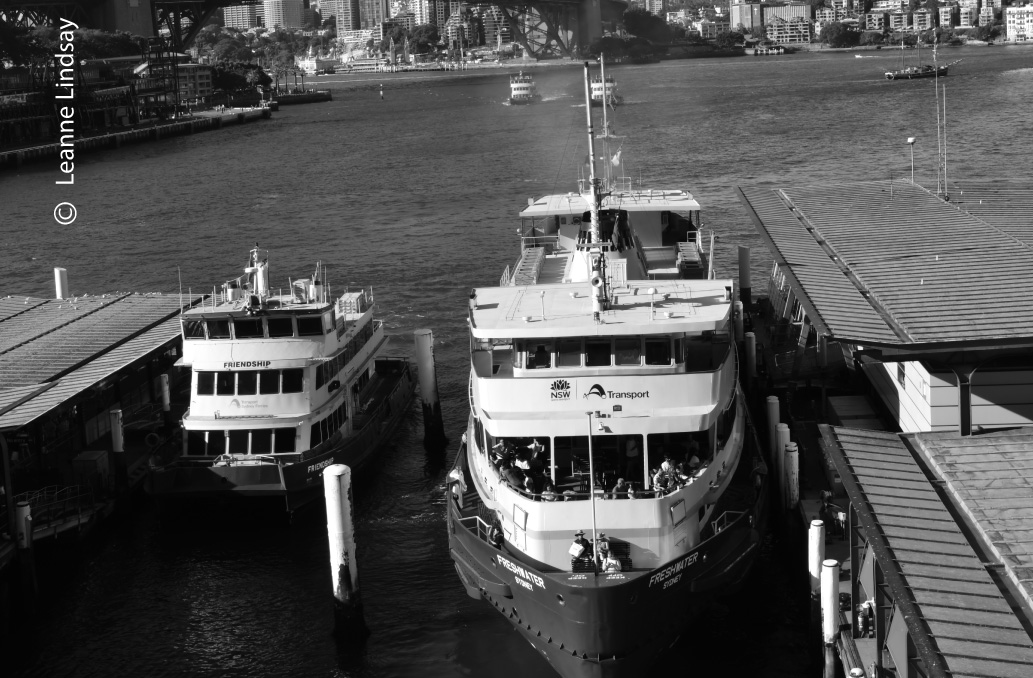
Exposure 1/30sec @ f/20 | ISO 64 | Focal Length 36mm
Leanne Lindsay
Born in Adelaide in 1962, Leanne Lindsay relocated to Sydney during her youth, a city that now serves as the primary backdrop for her creative work. After a decades-long hiatus from photography following the loss of her early equipment, she rediscovered her artistic passion in her late fifties. Today, Lindsay balances a professional focus on family and newborn portraiture with a deep-seated enthusiasm for capturing the architectural beauty and expansive landscapes of the Australian urban environment.
Resonance Score Breakdown
Transparency Note: The resonance score (7.3/20) is calculated based on social engagement metrics collected before the award announcement.
Expert Photography Reviews · 7
The Geometry of Transit
There is a peculiar rhythm to the way we navigate the edges of water. Cities built against the sea are never truly static; they are perpetually caught in a state of departure or arrival, a constant folding of land into the infinite blue.
Read the reflection →The Weight of Transit
Arrival is a fiction. We are always in the middle of a crossing. The water pulls at the edges of the land, a constant, restless tugging.
Read the reflection →Reviews & Comments
Share your thoughts about this award-winning photograph. Your reviews contribute to the community engagement score.
The concrete edge cuts the frame. Below, the ferry leaves a wake. It’s a rhythmic pulse against the harbor’s stillness. I’ve spent minutes watching that water. It doesn’t rush. The deep focus pulls the eye toward the void between the vessels. Nothing here is accidental. The empty corner is not empty. It’s the breath before the city speaks. I find myself holding my own breath, waiting for the boat to drift into the silence.
F/20 at 1/30sec? It’s a safe, clinical choice that renders the Quay with a suffocating, digital crispness. I’m bored by this obsession with deep focus. Why resolve every rivet on those ferries? I’d have preferred a long exposure to dissolve the urban geometry into something ethereal, closer to Hiroshi Sugimoto’s theatres than this postcard precision. It’s technically competent, sure, but it lacks the courage to let the city’s chaotic energy actually breathe through a blur.
Stripped of chromatic distraction, the Quay’s monochrome architecture reveals a tonal architecture reminiscent of Morandi’s dust-laden still lifes, where the absence of hue forces one to confront the sheer weight of light against the harbour’s concrete skin. It’s a stark, rhythmic meditation on silver-grey shadows that I find deeply haunting. One feels the cool, metallic breath of the Pacific rising through the frame, turning the bustling terminal into a silent, ghostly dance of light and shadow.
At f/20, the diffraction limit begins to soften the micro-contrast, yet it’s a necessary trade-off for such expansive depth. The Nikon’s sensor resolves the harbor’s geometry with clinical precision, though I’m genuinely moved by how the light dances across the ferry wakes. It’s an optical tightrope walk; she’s pushed the glass to its physical threshold to capture the city’s pulse. I’ve rarely seen Circular Quay rendered with such sharp, rhythmic clarity. It’s technically demanding, and frankly, quite beautiful.
At f/20, the diffraction is palpable, yet it’s the stillness that haunts me. While I usually track photons that have traveled eons, here, the light is merely milliseconds old, bouncing off Sydney’s steel and salt water. It’s a strange, terrestrial quiet. I find myself holding my breath, waiting for the harbor to drift into the void. It doesn’t, of course. It just sits there, anchored in the dark, waiting for the stars to return.
The Cahill Expressway is a noisy, wind-battered perch, and I’ve spent enough hours there to know it’s no place for the faint-hearted. Leanne’s f/20 aperture suggests she held her ground while the city blurred beneath her. It’s a sharp, disciplined frame, though I wonder if she returned for the light or simply caught a lucky break. Still, the composition holds a rhythmic tension that makes me miss the bite of a Sydney winter. It’s earned.
We look down from the Cahill Expressway and see a city breathing. It’s a rhythmic pulse of ferries and commuters, captured with such stillness that we can almost hear the water lapping against the quay. Leanne hasn’t just mapped a harbour; she’s listened to the heartbeat of Sydney’s transit. I find myself leaning into the frame, searching for the stories of those tiny, blurred figures. It’s a quiet, beautiful ache of modern connection. I’m truly moved.