Ikra by Derya Yazar Atasever
Captured within the ancient, weathered walls of a ruined mosque in Cappadocia, this evocative image portrays a young woman immersed in quiet devotion. As the sun dips below the horizon, the fading light enhances the profound mysticism of the setting, casting a serene glow over her prayer rug and rosary. The title, 'Ikra,' meaning 'read,' serves as a poignant nod to the origins of the Quran. The photograph is award-worthy for its masterful use of natural light and its ability to distill a complex, historical atmosphere into a singular, deeply intimate moment of spiritual reflection.
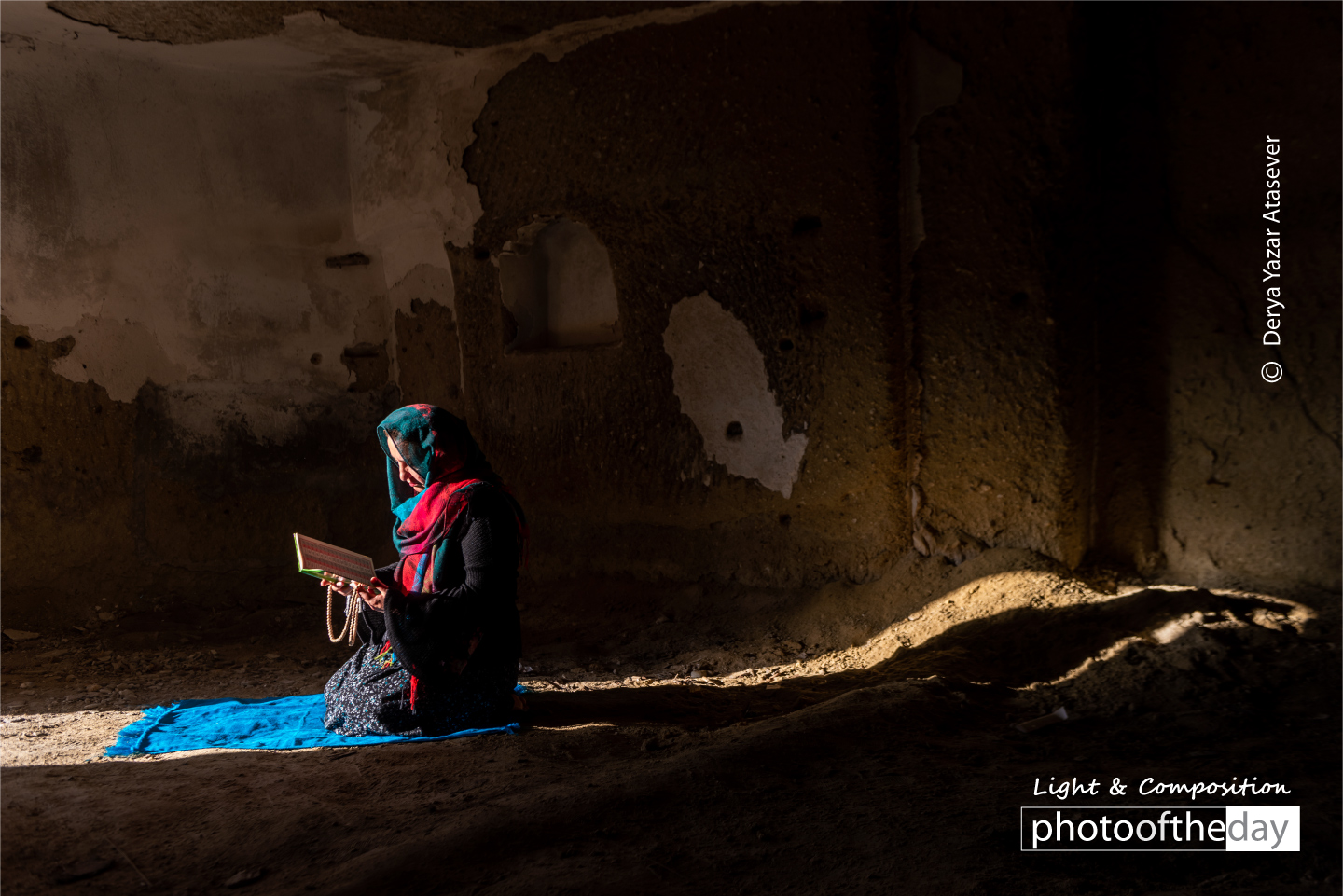
Exposure 1/80sec @ f/4 | ISO 100 | Focal Length 32mm
Derya Yazar Atasever
Born in Erzurum, Turkey, in 1971, Derya Yazar Atasever is a distinguished Master of Fine Arts and EFIAP recipient currently based in Cappadocia. Beyond her professional background in health management and nursing, she has dedicated her life to the intersection of art and healing, notably utilizing art therapy for patients with mental health conditions. As an active member of the international photography community, she serves as a competition juror, educator, and advocate for the medium, while her academic research explores the historical development of photography within the medical sector.
Resonance Score Breakdown
Transparency Note: The resonance score (8.1/20) is calculated based on social engagement metrics collected before the award announcement.
Expert Photography Reviews · 6
The Weight of a Whisper
The stone remembers the knee. It remembers the weight of a body seeking something beyond the reach of the hand. We build walls to hold the sky, but the sky always finds a way to leak through the cracks.
Read the reflection →The Weight of the Unspoken
We are taught that prayer is a conversation, but perhaps it is merely a way to endure the silence. There are rooms where the air feels older than the stone, where the dust settles on thoughts we have not yet dared to name.
Read the reflection →Reviews & Comments
Share your thoughts about this award-winning photograph. Your reviews contribute to the community engagement score.
At f/4, the 32mm focal plane renders the prayer rug’s texture with a crispness that defies the fading ambient light. I’m genuinely moved by how the lens resolves the rosary’s subtle highlights; it’s a delicate dance of diffraction against the mosque’s weathered stone. The bokeh, a function of that wide aperture, softens the ancient architecture into a gentle, spiritual blur. It’s rare to see such technical precision capture the quiet, ephemeral weight of human devotion so perfectly.
Before the eye identifies the ruined stone, something in the chest softens. It’s the silence of the light, I think. Watching the woman, I feel my own breath hitch, mirroring her stillness. It’s a quiet activation of the nerves, a recognition of something ancient. When I return to this a year from now, I’ll still feel that cooling shadow on my skin. It’s not just a prayer; it’s the weight of time settling into the marrow.
The jury’s obsession with clarity here misses the point. By pinning the subject to the wall with such clinical sharpness, Atasever ignores the potential for the mosque’s history to bleed into the present. I’d have preferred a slower shutter to let the light dissolve the architecture into pure spirit. Why resolve the rosary beads so precisely? It’s a missed opportunity for abstraction. I find myself wanting the dust to dance, not just sit there, perfectly still.
You waited for that light to hit the prayer rug just right, and it pays off. There’s a quiet weight in this room that I’ve felt in places where history feels heavy. You didn’t just photograph a woman praying; you caught the stillness of her breath. It’s rare to see such intimacy in a ruin. Because you were patient, the camera didn’t intrude. You captured a moment of genuine surrender. That’s a rare, honest thing.
Cappadocia’s light here evokes the soft, diffused luminosity found in Julia Margaret Cameron’s late portraits, yet it’s grounded by the stark, ruinous geometry of the mosque. Atasever’s framing of the prayer rug recalls the intentional stillness in Kertész’s interiors. I’ve spent decades tracing this intersection of faith and architecture, but the way the 32mm lens pulls the viewer into that intimate, quiet devotion genuinely caught my breath. It’s a rare, haunting dialogue with the past.
Most spiritual photography feels staged, but this captures a genuine stillness I haven’t seen in years. The way the light clings to the prayer beads, rather than just the subject, creates a tactile sense of devotion. It’s the restraint that wins here; many photographers would have over-lit the shadows, but Derya let the ruin swallow the edges. I’d bet this image will still feel quiet and profound in thirty years. It’s a rare, honest grace.