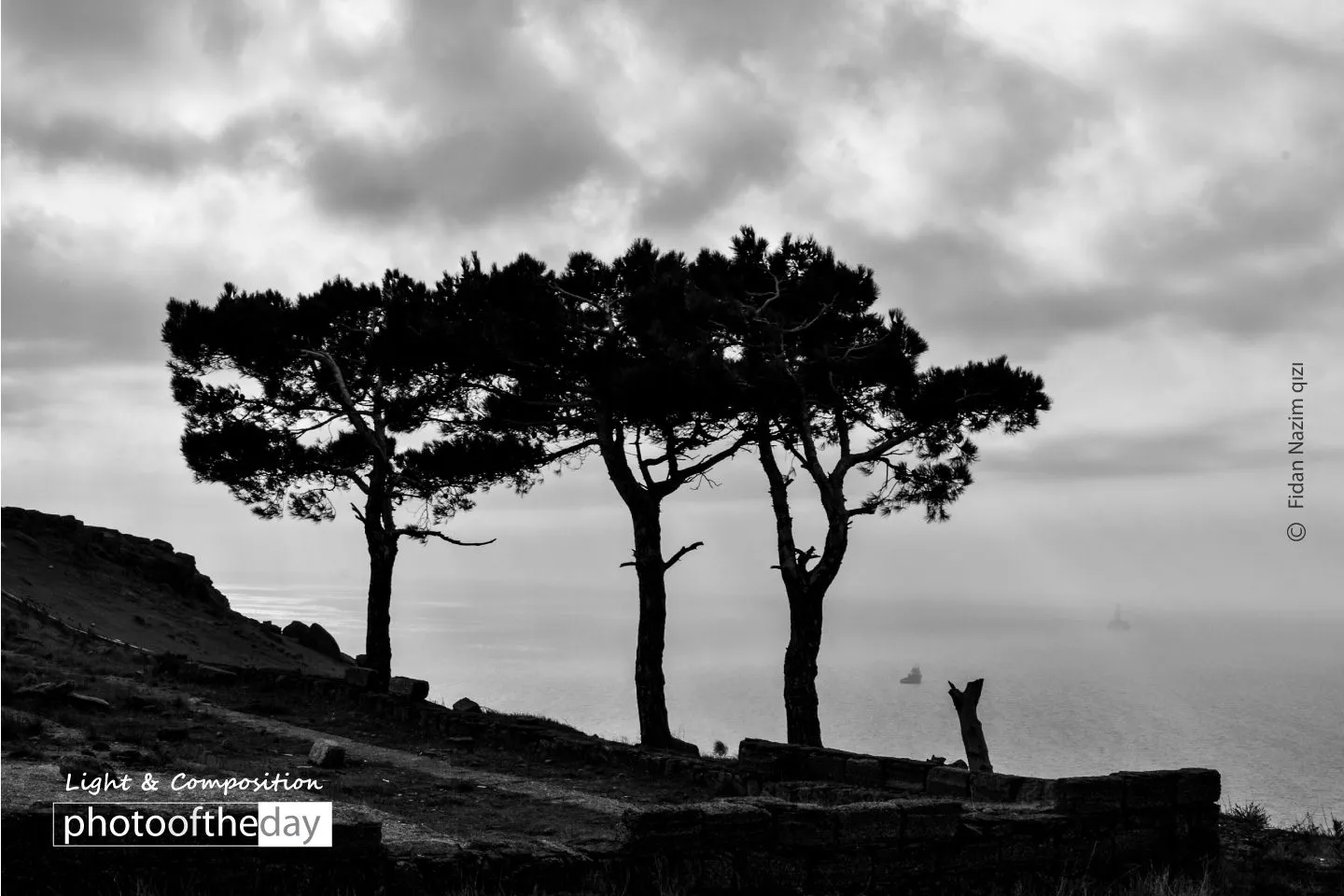
Bibiheybat by Fidan Nazim Qizi
Captured from a vantage point overlooking the Bibiheybat Motorway, this photograph documents a landscape defined by both industrial history and modern urban renewal. The image highlights the site where the world’s first exploratory oil well was drilled in 1846, now transformed into a vibrant community space featuring a reconstructed stadium, park, and modern residential housing. The photographer skillfully balances the historical weight of the region with the contemporary development of Baku, framing the scene to emphasize the evolution of the landscape. This thoughtful composition serves as a poignant visual record of how a historic oil-drilling site has been reclaimed for public recreation and cultural life.
Aude-Emilie Dorion
Freelance photographer and writer Aude-Emilie Dorion was born in France in 1980. Sensitive to the effect of globalization on modern cultures and the inequity of the world’s economic development, tensions and transformations are at the heart of her creative work. Working in the live performance industry, photography from time to time became the best vector of communication. Aude-Emilie loves artistic photography but has always been attracted by social documentary and photojournalism. When the Art becomes more social and political it reaches one of its primary functions: raising public awareness, acting as a catalyst for political changes. Award Winner Photo of the Day Camera Gears Digital: Canon 5D Mark II Film: Canon Eos 3, Canon 85mm f1.8 Current Location Paris, France Website http://www.aedphoto.com/ Facebook http://www.facebook.com/AedPhoto/ Twitter http://twitter.co
Resonance Score Breakdown
Transparency Note: The resonance score (8.0/20) is calculated based on social engagement metrics collected before the award announcement.
Expert Photography Reviews · 7
The Skin of the Earth
We are always walking over the ghosts of our own intentions. The ground beneath our feet is not merely soil or stone, but a layered manuscript of everything we have ever hungered for and eventually discarded.
Read the reflection →Layers of the Ground
I spent this morning digging in my small garden patch, trying to clear out the weeds that had taken over while I was away. My hands were covered in dirt, and I kept hitting bits of old brick and rusted metal buried just beneath the surface.
Read the reflection →Reviews & Comments
Share your thoughts about this award-winning photograph. Your reviews contribute to the community engagement score.
Bibiheybat’s transformation from oil field to playground feels sanitized. I’m unsettled by how the frame prioritizes clean, modern geometry over the scarred earth beneath. Does this aesthetic polish erase the environmental cost of our history? Who benefits when we turn industrial ruins into manicured parks? It’s a pretty view, but I can’t shake the feeling that we’re looking at a ghost story told in pastels. Is this progress, or just a very expensive way to forget?
f/8 at 1/500s, ISO 100, 35mm. A sharp, calculated aperture for a landscape demanding deep focus. The shutter speed freezes the motorway’s motion, stripping away the chaos of the commute. It’s a clean execution. I’ve spent years looking at industrial decay, but this reclamation actually feels honest. The technical discipline here doesn’t hide the history; it clarifies the transition. You’ve made the right choice by prioritizing the geometry of the stadium over the atmospheric haze.
It’s a sterile, concrete sprawl where nature has been entirely evicted. Looking at this stadium, I feel a hollow ache for the creatures that once moved through these hills before the oil rigs and asphalt took over. There’s no life here to photograph, just the cold architecture of human progress. I’ve spent weeks in silence waiting for a single bird to land; here, there’s nothing left to wait for. It’s a graveyard of habitat.
Before the eye identifies the oil rigs or the stadium, something in the chest tightens. It’s the weight of history pressing against the present. I feel a strange, cold vertigo looking at Bibiheybat; it’s as if the earth itself is exhaling. When I return to this, the industrial lines feel less like progress and more like scars. It’s haunting how the landscape holds its breath, waiting for us to decide if it’s healing or just hiding.
Stripped of chromatic distraction, the monochrome palette here evokes the dust-choked, silvered light of a Morandi still life, where the industrial grit of Bibiheybat dissolves into a haunting, charcoal-grey silence. It’s a stark, textural meditation on progress that I find deeply melancholic, as if the very air were heavy with the ghosts of oil derricks. One can’t help but ache for the lost warmth of the earth, now rendered in such cold, precise, and unforgiving tones.
Bibiheybat’s lights hum with the ghosts of ancient carbon, pulled from the earth to illuminate our fleeting modern nights. I’m struck by the contrast; the sensor’s noise floor captures the glow of a stadium where once there was only the silence of deep time. It’s a strange, beautiful collision. The photographer has framed this industrial evolution against the vast, indifferent dark. It makes me feel small, and honestly, I find that quite comforting.
We look at this landscape and we don’t just see a motorway; we hear the ghosts of the first oil drillers. Fidan has listened to the earth here, capturing how Baku’s industrial scars have healed into a playground. It’s a portrait of a city that’s finally catching its breath. I find myself moved by the quiet dignity of those new homes. It’s a photograph that asks to be returned to, over and over again.