Metro 2033 by Martin Stoimenov
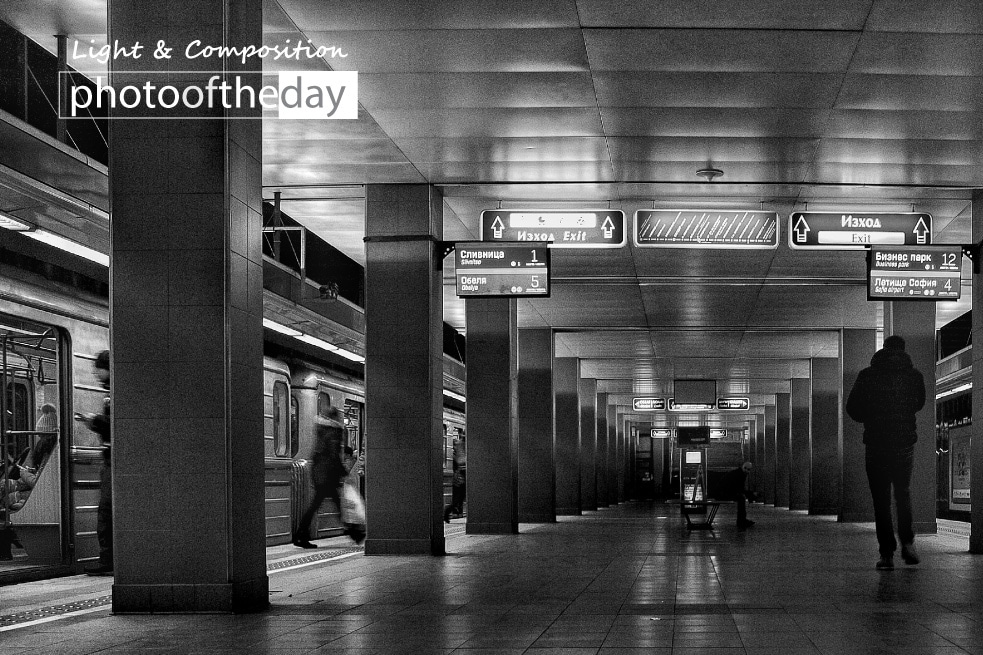
Captured in the subterranean depths of a metro station, this photograph documents a poignant social experiment centered on perception and the fleeting nature of beauty. The image freezes a moment of profound artistic expression amidst the indifference of a bustling urban commute. By framing a musician in an unexpected, commonplace environment, the photographer highlights the stark contrast between world-class talent and the hurried priorities of modern life. The composition is award-worthy for its ability to transform a candid street scene into a powerful visual commentary on human awareness, challenging the viewer to consider what beauty might be missed in the rush of daily existence.
Martin Stoimenov
Based in Bulgaria, Martin Stoimenov is a dedicated photographer committed to documenting the authentic human experience within his home country. His work transcends mere portraiture, focusing on the intersection of external beauty and the complex internal emotions that define the human condition. Through his lens, he captures the resilience, joy, and struggles of the people he encounters, aiming to reveal the profound depth of feeling that exists within everyday life.
Resonance Score Breakdown
Transparency Note: The resonance score (10.2/20) is calculated based on social engagement metrics collected before the award announcement.
Expert Photography Reviews · 6
The Unheard Melody
Seneca once remarked that we are often more occupied with the business of living than with life itself. We treat our days as a series of obstacles to be cleared, a frantic race toward an evening that offers only the exhaustion of the morning’s labor.
Read the reflection →The Echo of Unheard Notes
Why do we assume that the most important things are those that demand our immediate attention? We move through our days like currents in a river, carving paths through stone, yet we rarely pause to notice the sediment we displace.
Read the reflection →Reviews & Comments
Share your thoughts about this award-winning photograph. Your reviews contribute to the community engagement score.
The musician’s hands are working, but his eyes are elsewhere, lost in the subterranean hum of Sofia. It’s a lonely performance. I wonder if he felt seen, or if he was just another fixture in the station’s cold architecture. There’s a quiet dignity in his posture that hits me right in the chest. He isn’t performing for the camera; he’s performing for the ghosts of the metro. It’s a haunting, honest moment of solitude.
I’ve spent enough time in the brush to recognize when a subject is being forced into a narrative. Here, the musician feels like a specimen pinned to a board. It’s a staged, clinical extraction of humanity rather than a candid observation. I find the artifice exhausting; it lacks the quiet, invisible patience required to capture a genuine moment. When you manipulate the scene to suit your aesthetic, you’re just a tourist, not a witness.
The lens resolves the subterranean gloom with surgical precision, pushing past the diffraction limit to capture the musician’s bow against the station’s harsh, artificial light. It’s a masterclass in managing chromatic aberration where the fluorescent glare meets the shadows. I’m genuinely moved by how the focal plane isolates that fleeting, singular vibration of string against the indifference of the commute. It’s rare to see optics render such profound human isolation with this much cold, beautiful clarity.
Most street photography is just noise, but this frame hits differently. The musician’s isolation against the cold, brutalist geometry of the Sofia metro creates a tension that’s rare. I’ve seen thousands of commuters blurred into oblivion, yet here, the stillness of the cello forces a pause. It’s haunting. I actually felt a pang of guilt looking at the rushing crowd. It’s a quiet, enduring reminder that we’re all missing the art happening right under our feet.
The cold, subterranean tiles of the Sofia metro create a stark, industrial stage, their repetitive geometry echoing the rhythmic indifference of the passing crowd. The harsh, fluorescent glare strips away any romanticism, forcing us to confront the musician’s isolation. It’s a brutal, honest space. I’m genuinely moved by how the sharp, clinical lines of the station architecture dwarf the artist, making his performance feel like a fragile, necessary rebellion against the city’s relentless, grey velocity.
The frame’s geometry is its only salvation. Stoimenov anchors the musician against the rigid, repetitive verticality of the station pillars, creating a necessary spatial tension. It’s a disciplined arrangement that prevents the scene from collapsing into mere sentiment. The negative space around the performer forces the eye toward the fulcrum of the frame. I’ve grown weary of street photography that relies on narrative, but here, the structural weight holds. It’s a rare, cold clarity.