Leave a Reply
Want to join the discussion?Feel free to contribute!

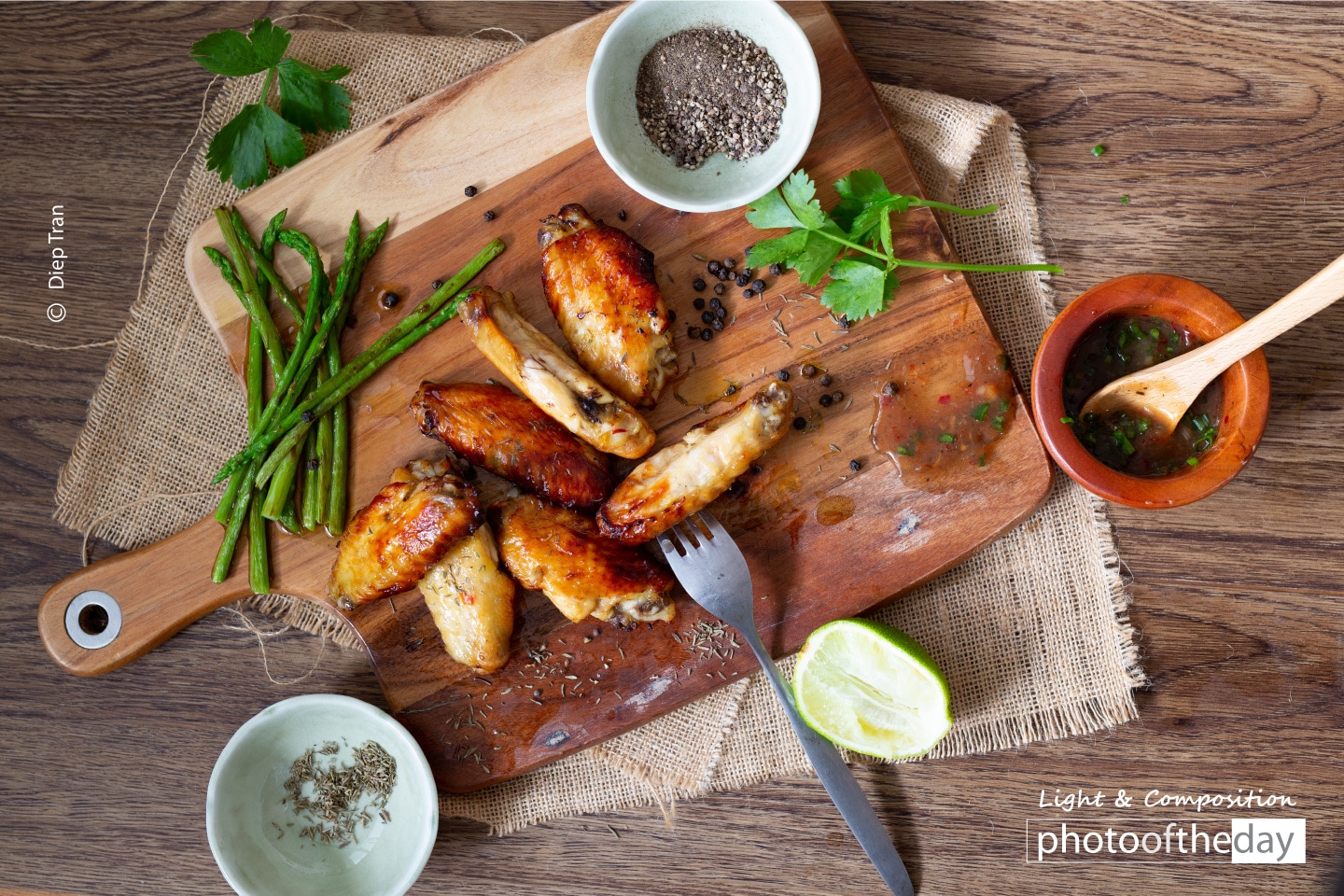
Inspired by a family dinner, the photographer sought to capture the vibrant textures and rich, caramelized hues of Asian-marinated chicken wings fresh from the oven. By intentionally arranging the surrounding ingredients to create a deliberate, artistic disarray, the photographer transformed a simple meal into a compelling visual narrative. This image is award-worthy for its masterful use of color and composition, which elevates everyday culinary preparation into a sophisticated study of light, texture, and appetite appeal, successfully turning a chaotic kitchen moment into a polished, evocative food photograph.
Born in Vietnam and currently based in Brisbane, Australia, Diep Tran finds artistic inspiration in the simplicity of domestic life, travel, and the people around her. Her work is deeply influenced by a Buddhist upbringing, which fosters a profound appreciation for the natural beauty and inherent quality of objects. Recently, Tran has dedicated her practice to exploring the nuances of pure photography, specifically focusing on the interplay of light and shadow to create evocative, creative compositions that reflect her global perspective.
Transparency Note: The resonance score (9.9/20) is calculated based on social engagement metrics collected before the award announcement.
I spent an hour cleaning my kitchen this morning, but by noon, it looked like a storm had passed through again. Flour was dusted across the counter, a stray onion skin sat near the sink, and the remnants of lunch were scattered everywhere.
Read the reflection →My grandmother used to say that a kitchen without a little chaos was a kitchen where nothing of consequence had happened.
Read the reflection →
 The Weight of Waiting
Share your thoughts about this award-winning photograph. Your reviews contribute to the community engagement score.