Perfume Shop by Aude-Emilie Dorion
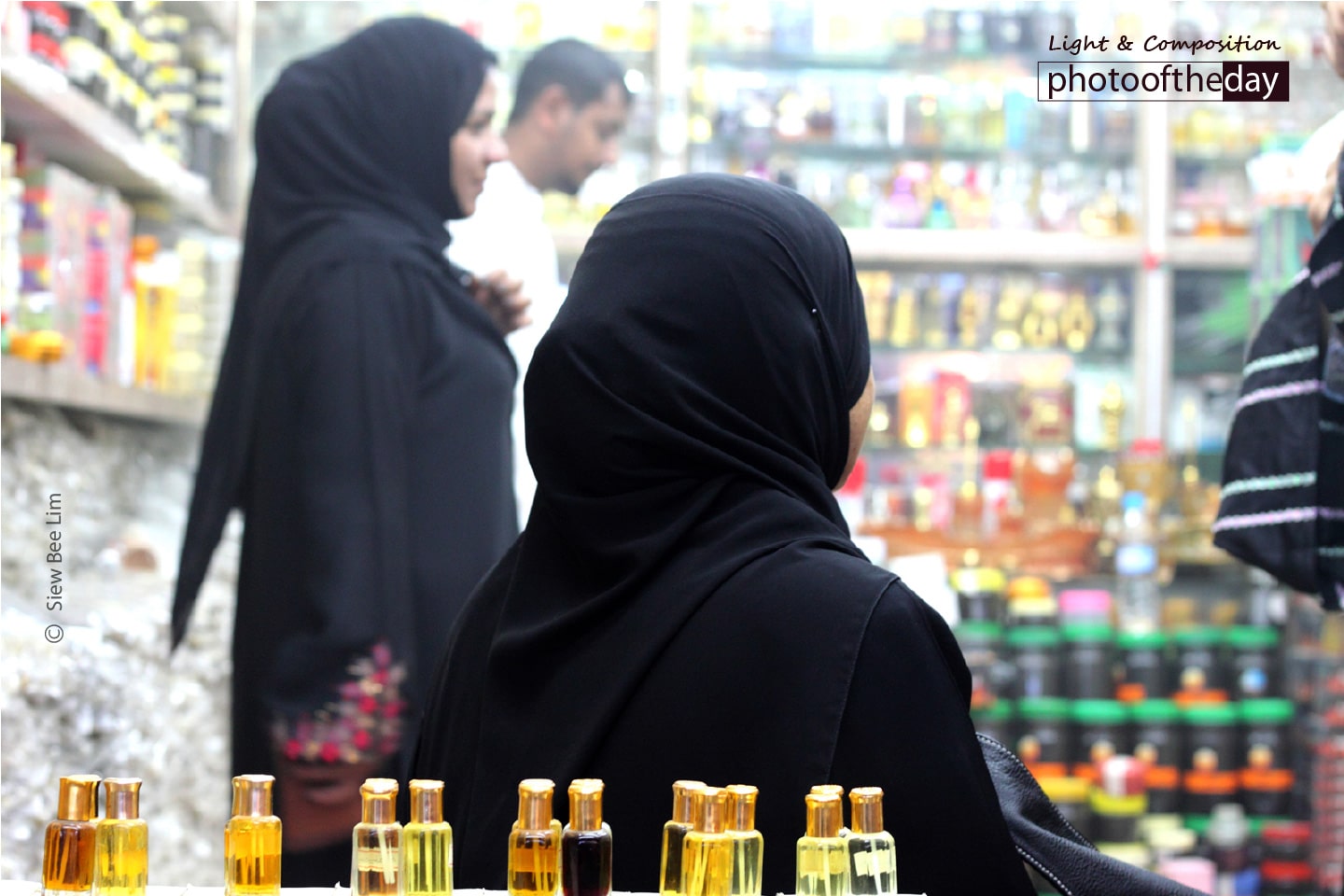
In the vibrant souks of Muscat, Aude-Emilie Dorion captures a candid moment of cultural heritage within a local perfume shop. The image highlights women in traditional abayas, their eyes accentuated with kohl, as they engage in the timeless ritual of sampling scents. By focusing on these intimate interactions, the photographer documents the living traditions of the Sultanate of Oman. The photograph is award-worthy for its authentic portrayal of human connection and its ability to elevate a simple, daily activity into a compelling narrative of cultural identity and social grace.
Aude-Emilie Dorion
Born in France in 1980, Aude-Emilie Dorion is a freelance photographer and writer whose work explores the intersection of globalization, cultural transformation, and social inequity. With a background in the live performance industry, she utilizes photography as a powerful medium for communication and social advocacy. Her creative practice is deeply rooted in documentary photography and photojournalism, driven by the belief that art serves as a vital catalyst for public awareness and political change.
Resonance Score Breakdown
Transparency Note: The resonance score (13.2/20) is calculated based on social engagement metrics collected before the award announcement.
Expert Photography Reviews · 4
The Architecture of Scent
We often speak of memory as if it were a visual archive, a gallery of snapshots we pull from a dusty shelf. But the brain is a fickle curator. It is the nose, that most ancient and direct of our senses, that truly holds the keys to the past.
Read the reflection →The Weight of Scent
We carry our histories in the air. A sudden sharpness, a trace of resin or dried flower, and the mind is pulled backward, unbidden, to a room we thought we had left behind. Memory is not a map; it is a vapor.
Read the reflection →Reviews & Comments
Share your thoughts about this award-winning photograph. Your reviews contribute to the community engagement score.
The ochre dust of Muscat’s souk bleeds into the deep, velvet obsidian of the abayas, creating a chiaroscuro that would make Vermeer weep with envy. It’s the scent of burnt amber and shadow that lingers here, a chromatic weight that feels almost physical against the skin. I’m utterly breathless watching how the kohl-rimmed eyes catch that sliver of golden, desert-warmed light; it’s a symphony of earth tones that doesn’t just sit there—it breathes, it aches, it lives.
It’s easy to snap a shutter in a bustling souk, but capturing the stillness of these women requires more than a quick trigger finger. One suspects Dorion didn’t just wander in; she likely sat until the air grew heavy with incense and the shopkeepers forgot she was there. I’ve spent enough hours waiting for a scene to settle to recognize that patience. It’s a quiet, earned intimacy. I’d have liked to stay for a tea myself.
In the Muscat souk, light doesn’t just illuminate; it interrogates. Dorion’s frame traps these women in a suffocating, beautiful gloom where the kohl-rimmed eyes become anchors of resistance against the encroaching dark. It’s a heavy, scent-laden silence that I find deeply unsettling. When the shadows swallow the edges of the shop, they aren’t hiding the ritual—they’re protecting it. It’s a rare, somber truth: we only truly see the soul when the light finally decides to quit.
Most street photography from the souks relies on tired tropes of exoticism, but this avoids that trap. By focusing on the kohl-rimmed eyes and the deliberate, tactile ritual of scent sampling, Dorion captures a quiet intimacy that feels permanent. I’ve seen thousands of market shots, yet this one lingers because it’s not about the place; it’s about the grace of the gesture. It’s a rare, honest glimpse of humanity that I’m certain will still matter in thirty years.