Shadow Boy by Arif Hossain Sayeed
In the constellation of family bonds, he shines as a cherished star, my cousin. With shared memories woven into the fabric of our lives, he stands as a beacon of kinship and understanding. Through laughter and tears, triumphs and trials, our connection deepens, rooted in the soil of shared experiences. Together, we navigate the journey of life, hand in hand, knowing that in each other, we find solace and strength. As the chapters of our lives unfold, he remains a constant presence, a pillar of support and love in the grand narrative of family.
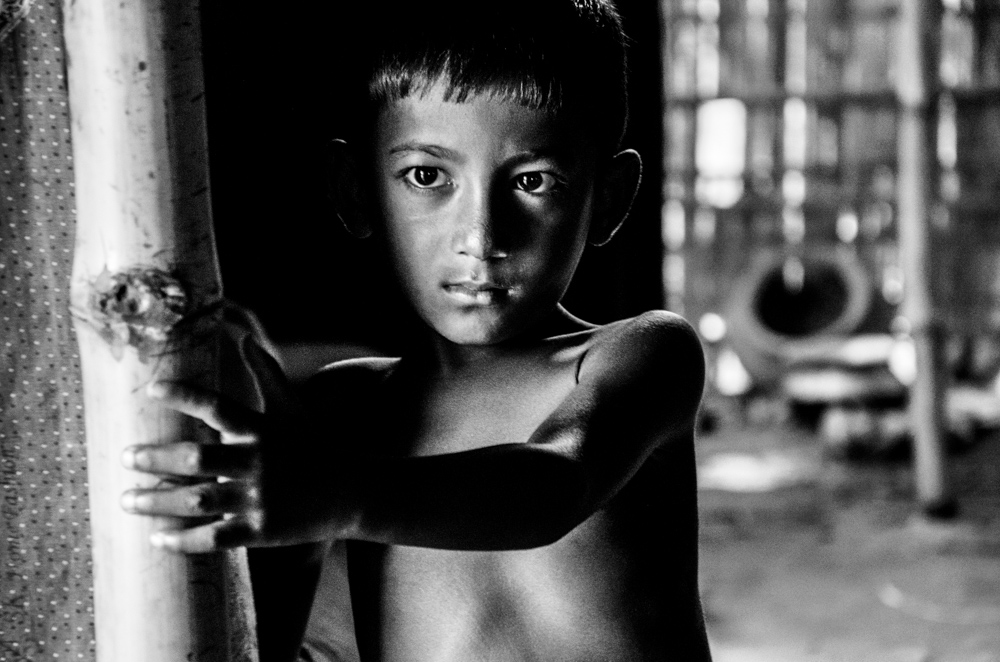
Exposure 1/60sec @ f/5.6 | ISO 640 | Focal Length 105mm
Arif Hossain Sayeed
Born in 1989 in a village in Cumilla, Bangladesh, Arif Hossain Sayeed discovered a profound creative calling through the lens of a camera. Currently based in Siddhirganj, Narayanganj, he has cultivated a deep passion for documentary and street photography, consistently centering his work on the human experience. Influenced by renowned photographers such as Munem Wasif and Steve McCurry, Sayeed continues to document the world around him with a keen eye for authentic, storytelling moments.
Resonance Score Breakdown
Transparency Note: The resonance score (7.0/20) is calculated based on social engagement metrics collected before the award announcement.
Expert Photography Reviews · 7
The Architecture of Silence
We often mistake stillness for an absence of life, as if the world only breathes when it is running or shouting. But there is a profound labor in the quiet.
Read the reflection →The Language of Sunlight
In the late afternoon across the old alleys of our childhood cities, shadows stretch like memories across the warm stone.
Read the reflection →The Geometry of Solitude
I am generally wary of the solitary figure in a vast space. It feels like a shortcut, a way to manufacture profundity by simply placing a small thing against a large background.
Read the reflection →A Silhouette on the Wall
I found myself staring at the wall of my kitchen this evening, watching the silhouette of the window frame slowly climb the cabinet as the sun dipped behind the opposite roof. For a brief ten minutes, the ordinary room became a canvas of dramatic contrast.
Read the reflection →Reviews & Comments
Share your thoughts about this award-winning photograph. Your reviews contribute to the community engagement score.

Before the eye identifies the sandpiper, something in the chest settles. The vast, muddy expanse of the Sundarbans pulls the breath thin, forcing a stillness I haven’t felt in weeks. It’s the isolation that hits hardest; that tiny, fragile silhouette against the void triggers a sudden, sharp ache of loneliness. When I return to this later, I suspect the bird’s quiet persistence will feel less like nature and more like a mirror for my own endurance.
The Sundarbans mud becomes a painterly abstraction here, far more compelling than the bird itself. I’m genuinely struck by how the 1/60sec shutter speed softens the movement into a ghostly smear. It’s closer to Hiroshi Sugimoto’s long-exposure theatres than conventional wildlife documentation. Why resolve the sandpiper’s feathers when the blur captures the frantic energy of the tide? Sayeed chose to abandon clinical sharpness for something visceral, and frankly, it’s a relief to see.
The frame breathes. It’s a wide, low-angle tracking shot that stops dead. The Sandpiper isn’t just standing; it’s waiting for the edit that never arrives. I love the way the mud pulls at the light, creating a texture that feels like film grain under pressure. At 1/60th, there’s a ghost of motion in the stillness. It’s a perfect, lonely cut. I’d keep this frame in the final reel forever. It’s quiet, precise, and absolutely essential.
In the Sundarbans, we often look for the human face, but here, the bird becomes our protagonist. Arif Hossain Sayeed hasn’t just captured a creature; he’s listened to the silence of the mudflats. We watch this sandpiper navigating the vast, lonely expanse and it’s impossible not to feel a sudden, sharp ache of recognition. It’s a portrait of solitude. I’ve found myself returning to this frame, wondering what story the bird told before the shutter clicked.
The Sundarbans mud is a miserable place to stand, yet here we are. One suspects Sayeed didn’t just stumble upon this sandpiper; he likely spent hours sinking into the silt, waiting for the bird to stop its frantic pacing. It’s a quiet, disciplined frame. I’ve spent enough time in similar muck to know the chill that sets in when you’re committed to the shot. He earned this stillness. It’s a rare, honest bit of patience.
The Sundarbans mud doesn’t wait for anyone. Arif caught this sandpiper right as it hit the frame’s edge. It’s a clean, sharp slice of life. I love the way the bird’s reflection anchors that messy, shifting terrain. One tenth of a second later and the bird’s posture would’ve lost its tension. The frame would’ve collapsed into just another nature shot. Instead, it’s alive. You were paying attention, Arif. That’s the only thing that matters.
The Sundarbans mud doesn’t just hold the bird; it holds a silence I’ve spent lifetimes chasing. Arif stood there in the damp, cooling air, waiting for the sandpiper to find its rhythm. It’s not about the bird, but the way the light touches the silt. I feel a sudden, sharp ache in my own knees just looking at it. He didn’t rush the shutter. He let the land dictate the moment, and that’s everything.