A Actions of Dark Shadows by Karthick Saravanan
Captured in the quiet stillness of dawn, this photograph depicts a worker engaged in the rhythmic, manual labor of shifting sand on a rooftop. The photographer masterfully utilizes the early morning sun to cast long, dramatic silhouettes, transforming a simple act of toil into a monochromatic symphony of light and shadow. By focusing on the interplay between the worker's form and the awakening cityscape, the image elevates a mundane task into a poignant study of human dedication. Its award-worthy quality lies in the stark, clean composition and the evocative use of contrast to highlight the beauty of persistent, quiet endeavor.
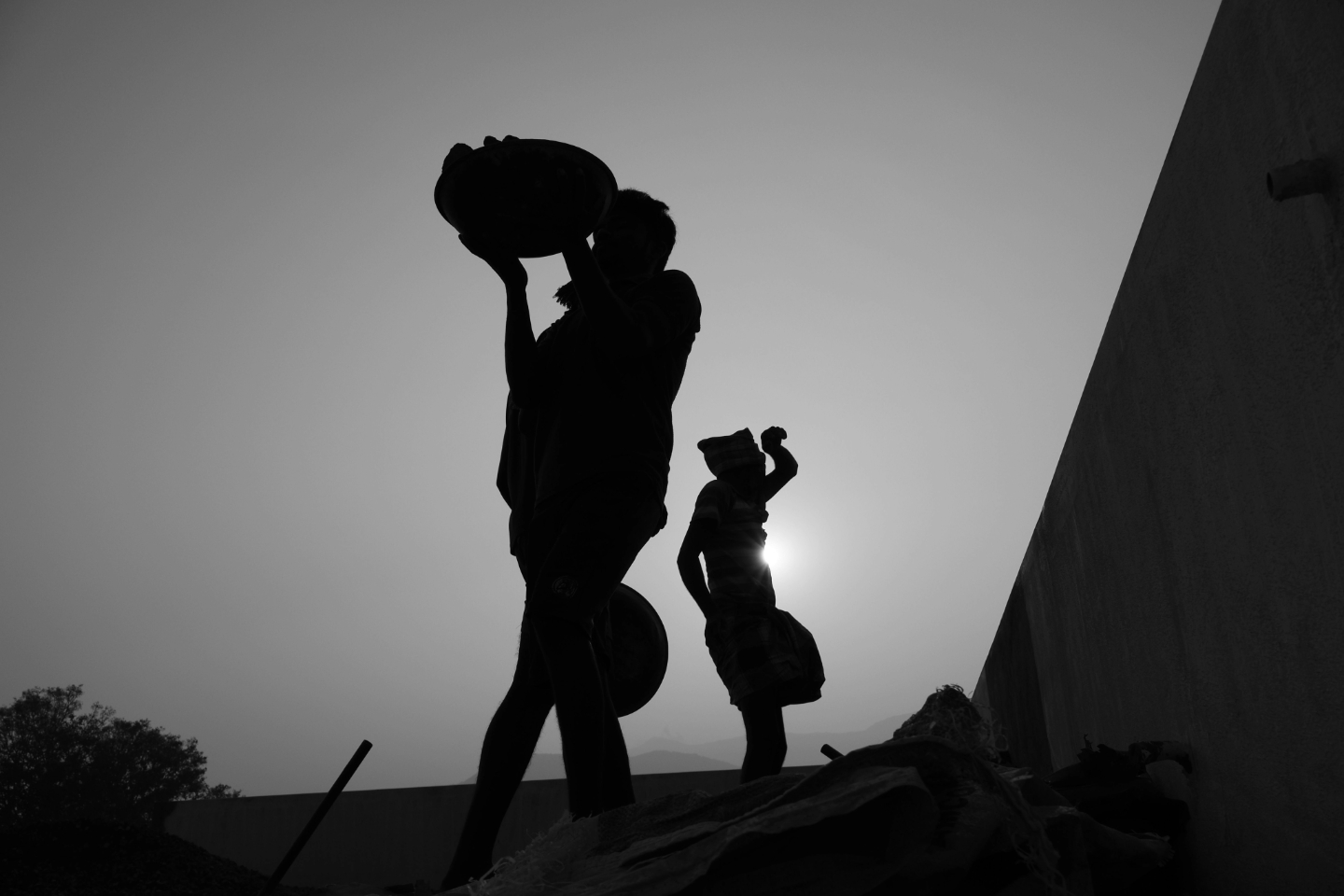
Exposure 1/600sec @ f/7.1 | ISO 100 | Focal Length 18mm
Karthick Saravanan
Based in Chennai, India, Karthick Saravanan is a dedicated photographer celebrated for his evocative monochrome work. His artistic journey began in his youth, eventually leading him to specialize in the timeless depth of black and white imagery, a craft he further refined while documenting life on his farmland during the pandemic. Today, he explores the streets with a keen eye for emotion, capturing the essence of both living and non-living subjects through a unique, narrative-driven perspective that resonates with audiences worldwide.
Resonance Score Breakdown
Transparency Note: The resonance score (6.9/20) is calculated based on social engagement metrics collected before the award announcement.
Expert Photography Reviews · 8
The Weight of Morning
I keep a small, rusted iron key in a velvet pouch, though I have long forgotten which door it once opened. It is heavy for its size, cold to the touch, and carries the faint, metallic scent of a house that no longer exists.
Read the reflection →The Geometry of Toil
In the deep forest, the mycelial network functions as a silent, subterranean infrastructure, moving nutrients across vast distances to sustain the health of the entire grove.
Read the reflection →Reviews & Comments
Share your thoughts about this award-winning photograph. Your reviews contribute to the community engagement score.
Shadow isn’t merely the absence of light; it’s the architecture of human endurance. In this rooftop labor, the darkness doesn’t hide the worker—it defines his weight against the void. I’ve stared at these long, jagged silhouettes until my own pulse slowed to match the rhythm of the sand. It’s a brutal, honest geometry. When the light finally yields to such deep, encroaching black, it’s not beauty I feel, but the crushing gravity of existence itself.
The sun hasn’t yet warmed the concrete, but the light is already listening. He stood here in the cooling hour, waiting for the shadows to stretch long across the rooftop. It’s a quiet, rhythmic labor, and I feel a sudden, sharp ache in my own shoulders watching him. The way the light carves that silhouette from the dust—it isn’t just a scene. It’s a prayer of persistence, caught exactly when the world finally held its breath.
The light hits that rooftop and suddenly, it’s not just labor; it’s geometry. I love how the shadow stretches, pulling the worker into the city’s pulse. One tenth of a second later and the silhouette would’ve lost its tension against the skyline. It’s sharp, it’s rhythmic, and it’s honest. You caught the exact heartbeat of the morning. Winogrand would’ve tipped his hat to this. You were paying attention, and that’s everything. Keep shooting.
The shovel is mid-arc, but the worker’s spine hasn’t reached full extension. It’s a fraction of a second early. I’ve spent my life watching bodies hit that singular point of maximum torque, and here, the kinetic energy is still trapped in the shoulders. It’s frustrating because the light is perfect. I wanted to see the full release of the load, that weightless instant of total exertion. Instead, it’s just a shadow of the effort.
At f/7.1, the 18mm focal length achieves a deep focal plane, rendering the rooftop’s granular texture with remarkable sharpness. The diffraction of light across those sand particles is, in the strictest physical sense, extraordinary. It’s rare to see such clean separation in the shadows without chromatic aberration bleeding into the highlights. I’m genuinely moved by how the lens resolves the worker’s silhouette against the dawn; it’s a precise, cold beauty that makes my breath hitch.
The curator calls this a symphony, but I see a dangerous aestheticization of labor. Why does the worker’s back become a mere geometric shape against the Chennai skyline? It’s unsettling how the harsh contrast erases the man’s identity to serve a clean composition. Does the beauty of these shadows justify turning manual toil into a prop? I feel a sharp, cold discomfort looking at this. Whose dignity are we actually celebrating here, and at what cost?
The rooftop becomes a datum for human endurance. By framing the worker against the stark fenestration of the distant skyline, Saravanan captures the tension between solid labor and the void of the city. I’m struck by how the low-angle light defines the texture of the sand, turning grit into a sculptural element. It’s a quiet, honest sequence of movement. The frame omits the surrounding chaos, yet it perfectly conveys the weight of that morning toil.
The frame’s geometry relies on the sharp diagonal of the rooftop edge. It’s a rigid anchor for the worker’s silhouette. The negative space above the figure creates a necessary vacuum, preventing the composition from collapsing into mere narrative. I’m genuinely unsettled by how the shadow bleeds into the frame’s lower quadrant. It’s a precise, brutal disruption of the horizontal plane. The structure holds, though the tension barely survives the weight of the subject’s posture.