A Man and His Phone by Leanne Lindsay
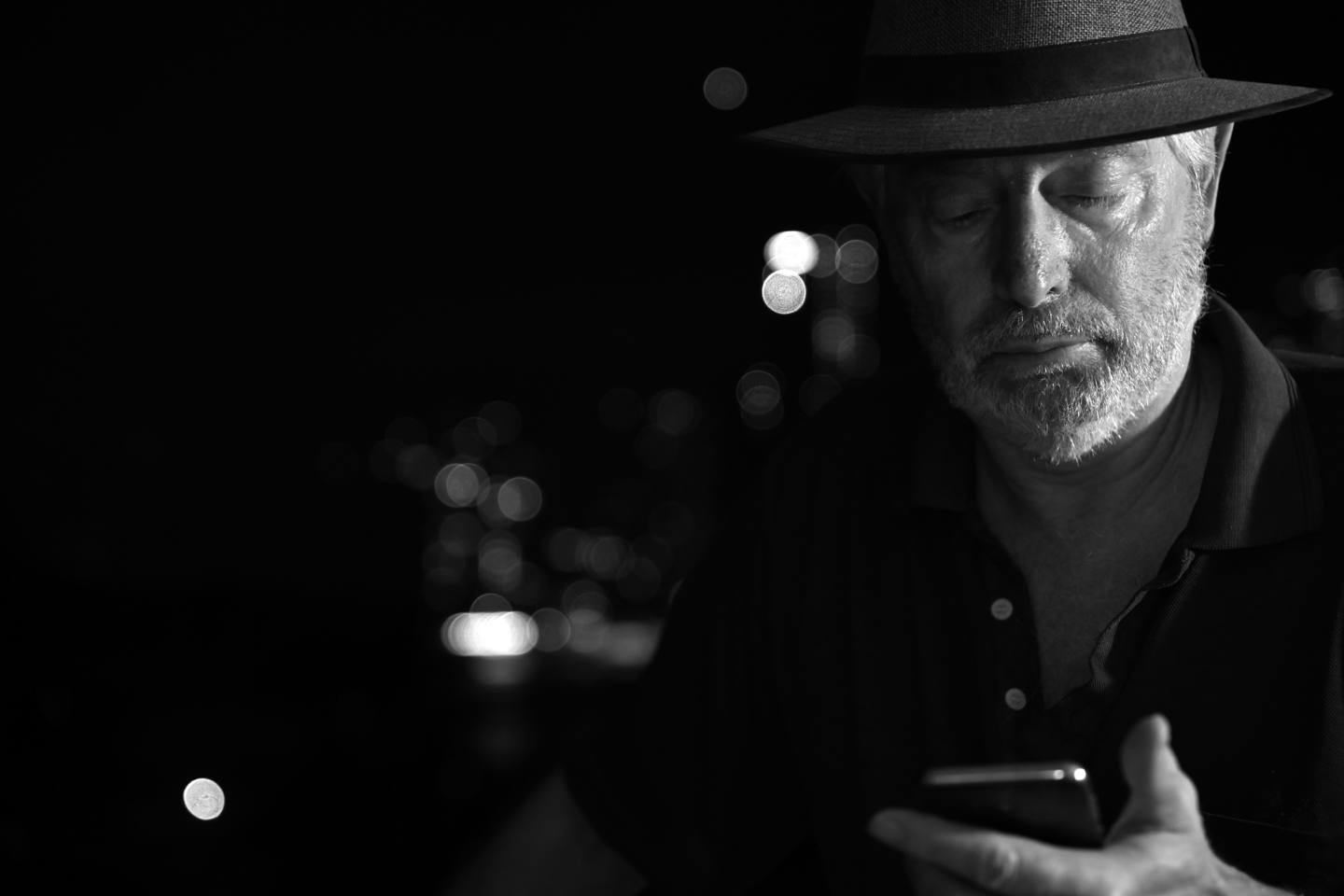
Captured at Darling Harbour, this evocative black and white photograph explores the modern dichotomy between urban beauty and digital distraction. The photographer seized a spontaneous moment when a single streetlamp illuminated her companion's face, creating a dramatic spotlight effect against the shimmering city bokeh. By contrasting the vibrant, waiting landscape with the intimate, glowing allure of a phone screen, the image offers a poignant commentary on presence and technology. Its award-worthy quality lies in the masterful use of light and the candid, relatable narrative that transforms a simple, quiet moment into a compelling visual story.
Leanne Lindsay
Born in Adelaide in 1962, Leanne Lindsay relocated to Sydney during her youth. After a long hiatus from photography following the loss of her early equipment, she rediscovered her creative passion in her late fifties. Today, she specializes in family and newborn portraiture while maintaining a dedicated focus on architectural and landscape photography, capturing the world through a lens of renewed inspiration and technical precision.
Resonance Score Breakdown
Transparency Note: The resonance score (7.1/20) is calculated based on social engagement metrics collected before the award announcement.
Expert Photography Reviews · 7
The Glow of Absence
We carry our own suns now. Small, rectangular, cold to the touch. They pull us away from the street, from the wind, from the person standing only a breath away.
Read the reflection →The Glow of Elsewhere
We carry our own small suns in our pockets, screens that pulse with the rhythm of distant places and voices. There is a strange comfort in this artificial light, a way to anchor ourselves when the world feels too vast or too quiet.
Read the reflection →Reviews & Comments
Share your thoughts about this award-winning photograph. Your reviews contribute to the community engagement score.
You caught him in a lonely orbit. That glow on his face isn’t just light; it’s the cold, blue hunger of a screen pulling him away from the harbor. I’ve sat in those same dark spots, feeling that exact disconnect. You waited for the streetlamp to do the heavy lifting, and it paid off. It’s a quiet, stinging truth about how we’re together yet miles apart. There’s something honest happening here. You really saw him.
At f/2.8, the focal plane is razor-thin, isolating the subject’s expression from the chaotic bokeh of Darling Harbour. The Nikon’s sensor resolves the screen’s light as a harsh, clinical source, while the streetlamp’s diffraction creates a soft, ethereal halo. I’m genuinely moved by how the lens captures the micro-contrast on his skin; it’s a brutal, beautiful collision of physics and isolation. It doesn’t just document a moment; it dissects our digital tethering with cold, optical precision.
The bokeh of Darling Harbour creates a restless, shimmering stage, yet the streetlamp’s sharp, singular beam anchors the scene with the gravity of a Caravaggio. It’s a beautiful, lonely tension. The phone’s cold glow isolates him from that vast, urban architecture, pulling his gaze inward. I’ve always felt that our devices are the modern veil, and here, it’s heartbreakingly clear. He’s physically present in Sydney, but his world has shrunk to the size of a screen.
At 1/20th of a second, Lindsay flirts with the threshold of motion, letting the city’s bokeh bleed into the frame. It’s a relief to see a Z7ii used for something other than clinical sharpness. I’m genuinely moved by how she lets the phone’s glow dissolve the subject’s features. Why resolve the face when the digital void is the point? It’s closer to Sugimoto’s blurred theatres than standard street photography. She’s chosen ambiguity over data.
Darling Harbour at 1/20th of a second? That’s brave. You’ve caught the glow hitting his face just right, isolating him from the chaos. It’s a classic Winogrand tension—the man is physically present but mentally miles away. I love the way that streetlamp acts as a spotlight. One tenth of a second later and the shadow has moved, the frame has collapsed. You nailed the timing. It’s a sharp, honest look at our modern digital cage.
Darling Harbour at 1/20th of a second suggests a casual stroll rather than a vigil. It’s a tidy composition, certainly, but one wonders if the photographer simply happened upon the light. I’ve spent enough nights shivering in the dark to know that true depth requires more than a lucky streetlamp. It’s a pleasant enough snapshot, yet I can’t help but feel it’s missing the grit of a long, cold wait. It’s just too easy.
Darling Harbour’s vast, shimmering void is flattened here, reduced to a bokeh backdrop that ignores the site’s actual scale. The streetlamp acts as a harsh datum, yet it fails to define the threshold between the man and his environment. It’s a lonely frame. I’m struck by how the phone’s glow replaces the architecture entirely, turning a public space into a private cell. It’s technically sharp, but it misses the rhythm of the city’s bones.