Sunlit Shadows by Karthick Saravanan
Captured during a World Water Day photo walk at the historic Kilpack waterworks in Chennai, this image highlights the intersection of heritage and light. The photographer utilized the early morning sunrise to cast dramatic shadows across the century-old structure, emphasizing its architectural significance. By employing monochrome mode, the composition strips away distraction to focus on the interplay of light and texture. The image is award-worthy for its ability to transform a functional heritage site into a timeless, evocative study of form, demonstrating a keen eye for historical narrative and the subtle power of natural morning illumination.
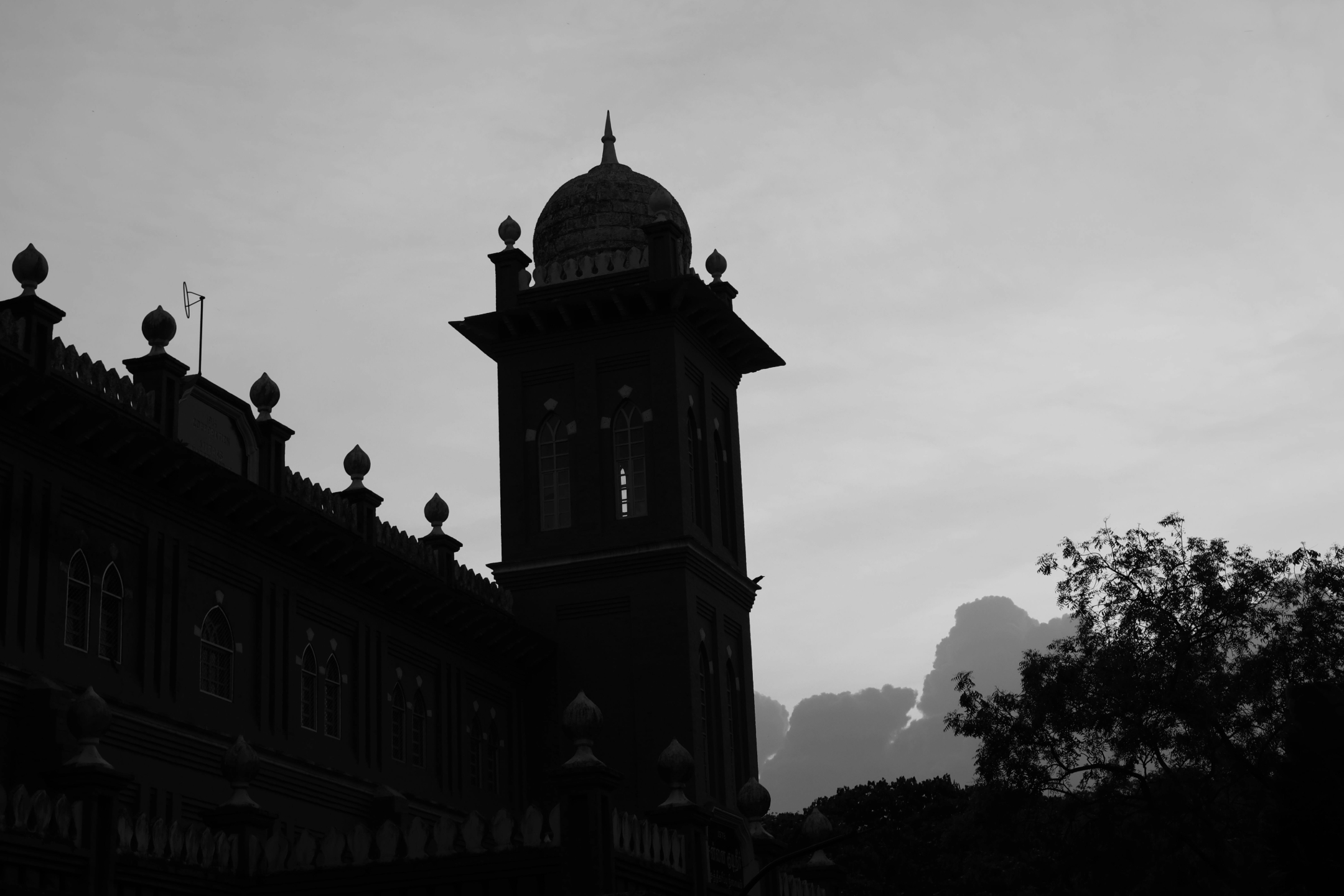
Exposure 1/200sec @ f/6.3 | ISO 200 | Focal Length 37mm
Karthick Saravanan
Based in Chennai, India, Karthick Saravanan is a dedicated photographer celebrated for his evocative monochrome work. His artistic journey, which began in his youth, evolved into a profound mastery of black and white photography, a medium he uses to explore the essence of both urban life and natural landscapes. From documenting quiet moments on his farmland during the pandemic to capturing the vibrant energy of city streets, Karthick’s work is defined by a unique perspective that transforms everyday subjects into timeless visual stories.
Resonance Score Breakdown
Transparency Note: The resonance score (7.4/20) is calculated based on social engagement metrics collected before the award announcement.
Expert Photography Reviews · 5
The Architecture of Absence
The wall remembers the sun. It does not speak of the heat, only of the shape it leaves behind. We build structures to hold our lives.
Read the reflection →The Geometry of Morning
When I was ten, my grandfather taught me how to read the time by the way the shadows stretched across our porch in Enugu. He didn't use a watch; he used the angle of the sun against the stone pillars.
Read the reflection →Reviews & Comments
Share your thoughts about this award-winning photograph. Your reviews contribute to the community engagement score.

You’ve captured the bones of that waterworks, and there’s a quiet dignity in how the light carves through the stone. It’s clean, sure, but I find myself looking for the people who built this place. Where are the hands that laid these bricks? You’ve got the architecture down, but I’m still waiting for the pulse. And honestly, I’d trade some of that perfect shadow for a single human trace left behind in the dust.
Stripping away the chromatic spectrum feels like a daring, almost ascetic surrender, yet here, the absence of hue reveals a silver-grey luminosity reminiscent of a Morandi still life. It’s a quiet, rhythmic dance of light against the Kilpack stone, and honestly, I’m breathless at how the shadows possess the weight of velvet. One finds that by abandoning the riot of Chennai’s sun, the architecture finally breathes, revealing a grayscale depth that feels profoundly, achingly eternal.
Sunlight doesn’t merely illuminate the Kilpack waterworks; it interrogates the stone. Saravanan understands that shadow isn’t an absence, but the architecture’s subconscious. Watching these jagged, encroaching voids crawl across the masonry, I’m struck by a sudden, cold loneliness—the feeling of time eroding our own foundations. It’s a brutal, honest dialogue between the sun’s fleeting arrogance and the endurance of brick. Most photographers fear this darkness, but here, the shadows finally allow the structure to think.
Kilpack’s colonial architecture looms large, yet I’m left wondering who actually inhabits these shadows. By stripping away color, Saravanan renders a functional waterworks into an abstract aesthetic exercise. It’s technically sharp, but does this erasure of context serve the site’s history or merely the photographer’s ego? I feel a strange coldness here. Why prioritize the geometry of light over the people whose lives depend on this water? It’s a beautiful frame, but it’s hollow.
The interplay of light here echoes the stark geometry of Moholy-Nagy’s New Vision, yet it’s grounded in the tactile decay of Chennai’s industrial past. While the composition flirts with the high-contrast drama of Brandt, it’s the subtle, rhythmic repetition of the Kilpack arches that truly caught me off guard. It’s rare to see such a functional site rendered with this much poetic restraint. I’ve seen a thousand waterworks, but this one feels remarkably, hauntingly alive.