Life in Qriz by Fidan Nazim Qizi
Captured at an elevation of over 2,000 meters, this photograph documents the rugged, isolated beauty of Qrız, a village nestled within the dramatic landscapes of the Quba Rayon in Azerbaijan. The photographer utilized a 55mm focal length to frame the vast, mountainous plateau, emphasizing the unique cultural and geographical seclusion of a community that preserves its own distinct language. This image is award-worthy for its evocative portrayal of remote life, balancing the harsh, expansive terrain with the quiet resilience of the village, offering viewers a rare glimpse into a vanishing world defined by its high-altitude isolation.
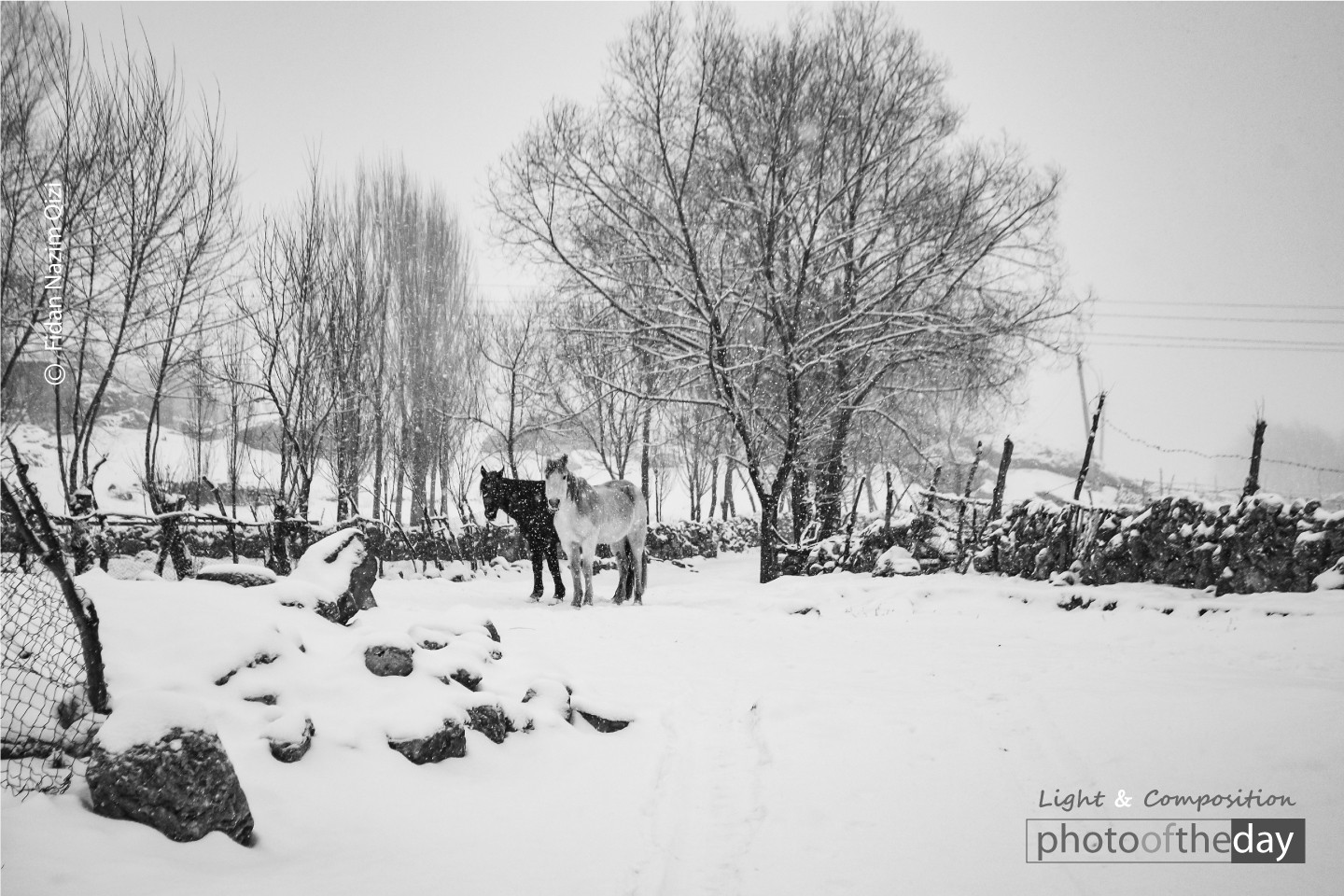
Exposure 1/320sec @ f/5.6 | ISO 280 | Focal Length 55mm
Fidan Nazim Qizi
Born in Baku, Azerbaijan, Fidan Nazim Qizi is a dedicated photographer who draws profound inspiration from the natural world and the challenge of mountain hiking. Heavily influenced by the evocative black-and-white aesthetic of Vivian Maier, she specializes in capturing the raw energy and emotional depth of her subjects. Based in Baku, she frequently travels to document remote landscapes, believing that photography serves as a vital source of inspiration and human connection.
Resonance Score Breakdown
Transparency Note: The resonance score (9.2/20) is calculated based on social engagement metrics collected before the award announcement.
Expert Photography Reviews · 5
The Breath of Thin Air
There is a specific sharpness to the air at high altitudes, a cold that tastes like iron and wet stone. It settles in the back of your throat, crisp and unforgiving, reminding you that oxygen is a privilege here.
Read the reflection →The Weight of High Places
I once spent three days in a village so high that the air felt thin enough to swallow whole. An old man named Idris sat on a stone wall, his hands stained with the dark soil of the mountain, watching the clouds drift below his boots.
Read the reflection →Reviews & Comments
Share your thoughts about this award-winning photograph. Your reviews contribute to the community engagement score.
Before the eye identifies the jagged peaks of Qrız, the breath hitches. There’s a cold, thin pressure here that settles behind the ribs. It’s the silence of high altitude, a stillness that demands you slow your pulse. I’ve returned to this frame three times, and each time, the isolation feels heavier, more personal. It doesn’t just document a village; it forces a quiet, lonely ache in my chest that lingers long after I look away.
The air up there is thin, and you feel it in the frame. It’s a wide, breathless shot that refuses to blink. At 55mm, the compression pulls those jagged Quba peaks tight against the village, creating a tension that a wider lens would have killed. I’ve spent hours staring at these slopes; it’s haunting how the stillness holds. The cut would’ve been a mistake. This is the frame the editor keeps, perfectly capturing a world suspended in time.
At two thousand meters, the air thins, and the light loses its weight. Fidan stood here as the mountain plateau exhaled, waiting for the shadows to settle into the crevices of Qrız. I’ve felt that same stillness, where the shutter doesn’t click until the land finally trusts you. It’s a quiet, aching beauty. Looking at these slopes, I feel a sudden, sharp longing for that silence—the kind that only exists when the world is left behind.
High-altitude isolation hits different when the light catches those jagged Qrız peaks. It’s raw. I’m looking at the frame, waiting for the pulse of life. Is it decisive? Almost. The composition holds the weight of that plateau, but I’m hunting for the human spark—a gesture, a shadow, something fleeting. One tenth of a second earlier and the wind might have told a different story. It’s a quiet, haunting beauty that makes me want to climb.
At two thousand meters, the light doesn’t reveal; it interrogates. Qrız exists in the tension between the stone’s indifference and the encroaching dark. I’ve stared at these shadows until my eyes ached, feeling the crushing weight of that isolation. It’s not just a village; it’s a silence held against the sky. Fidan hasn’t captured a landscape, but a refusal to vanish. It’s haunting, really. When I look at those deep, jagged crevices, I feel utterly, profoundly small.