The Loneliness by Kirsten Bruening
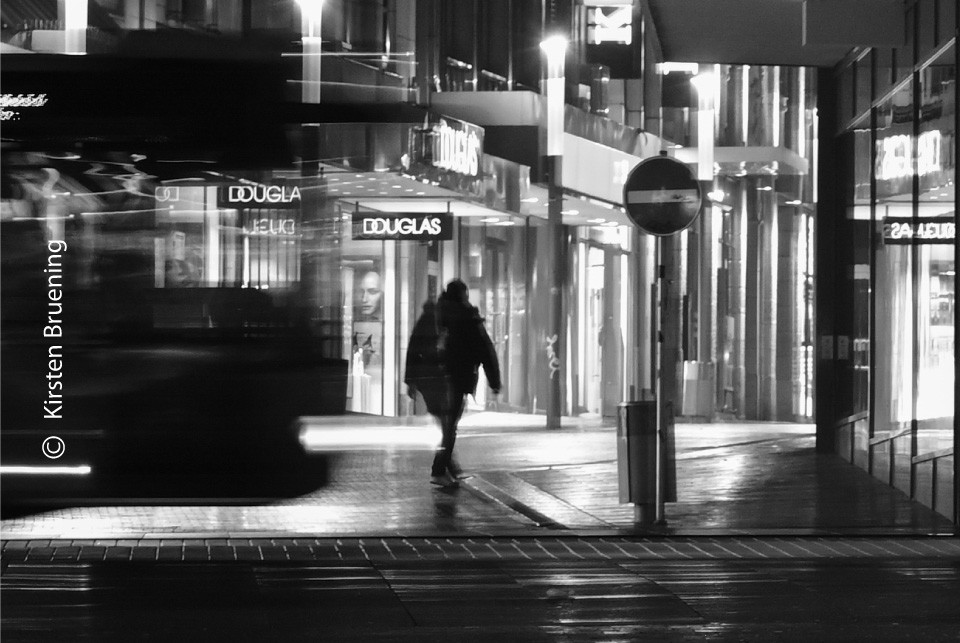
Captured during the quiet stillness of the Covid-19 pandemic, this photograph documents a city transformed by lockdown. Kirsten Bruening frames the late afternoon light to emphasize the absence of the bustling crowds that typically define urban life. By focusing on the stark emptiness of the streets, the image serves as a poignant historical record of a unique moment in time. The composition is award-worthy for its ability to transform a scene of isolation into a evocative narrative, using the interplay of light and shadow to highlight the profound silence of a city temporarily stripped of its human rhythm.
Kirsten Bruening
Based near Cologne, Germany, Kirsten Bruening is an amateur photographer whose creative journey began in childhood with an exploration of analogue techniques. Following a fifteen-year hiatus, she returned to the craft with a renewed focus on black and white photography, specializing in nature, portraiture, and wildlife. She is deeply committed to the expressive power of light and shadow and is currently pursuing formal studies to further refine her technical expertise and artistic vision.
Resonance Score Breakdown
Transparency Note: The resonance score (9.2/20) is calculated based on social engagement metrics collected before the award announcement.
Expert Photography Reviews · 6
The Echo of Empty Rooms
We are taught that a city is a living, breathing lung, defined by the frantic pulse of footsteps and the collision of voices. But there is a secret geography to be found when the tide of humanity recedes, leaving behind only the architecture of our own absence.
Read the reflection →The Echo of Empty Pavements
I often find myself thinking about the rhythm of a city when the heartbeat stops. There is a particular street in Bochum, or perhaps it is just a street in my own memory, where the cobblestones usually hum with the friction of hurried lives.
Read the reflection →Reviews & Comments
Share your thoughts about this award-winning photograph. Your reviews contribute to the community engagement score.
Bochum’s urban fabric usually relies on the friction of bodies to define its scale, but here, the architecture is left to speak for itself. The low-angled light rakes across the masonry, turning the fenestration into hollow, rhythmic voids. It’s haunting. I’ve spent years studying how shadows anchor a building, and seeing this silence makes me ache for the human movement that’s missing. The frame captures the structure’s bones, but it’s the emptiness that feels most honest.
Bochum’s emptiness here feels almost too clinical, too resolved. I’m left craving a fracture in that stillness. Why settle for such crisp, conventional clarity when the subject is the dissolution of human rhythm? It’s technically competent, sure, but it lacks the visceral ache of a long-exposure blur that might actually capture the ghost of a crowd. I’d have loved to see Bruening abandon the sharp edges to truly inhabit the loneliness she’s documenting.
It’s strange to look at these dry, Bochum streets. There’s no backscatter to fight, no refractive index distorting the lines, and the light hasn’t been robbed of its warmth by the water column. I’m used to chasing colour that disappears at five metres, yet here, the shadows hold their depth perfectly. It’s hauntingly still. I find myself holding my breath, waiting for the current to shift, forgetting for a moment that I’m not submerged.
The geometry of the Bochum streetscape dictates the frame. Shadows slice the pavement into rigid, geometric planes, forcing the eye toward the vanishing point. It’s a disciplined exercise in negative space. The architecture doesn’t just contain the silence; it constructs it. I’ve rarely seen such cold, structural precision in a street study. It’s clinical, almost surgical. The frame holds because the light refuses to soften the hard edges of the urban void. It’s perfect.
Bochum’s empty streets feel curated, almost too clean. Why does the pandemic’s trauma look so aesthetic here? Bruening captures the light beautifully, but I’m left cold by the lack of grit. It’s a sanitized silence that ignores the people actually living through the lockdown. Does this frame exclude the struggle to prioritize a pretty shadow? It’s technically sharp, sure, but it feels like a hollow performance of isolation rather than the real thing. I’m just not buying it.
Most pandemic photography feels like a tired cliché, but this frame hits differently. I’ve seen thousands of empty street shots, yet Kirsten’s choice to let the harsh, low-angled light carve deep, jagged shadows across the pavement creates a genuine sense of abandonment. It doesn’t just document a lockdown; it captures the cold, hollow ache of a city holding its breath. I felt a shiver looking at it. That’s why it’ll still matter in thirty years.