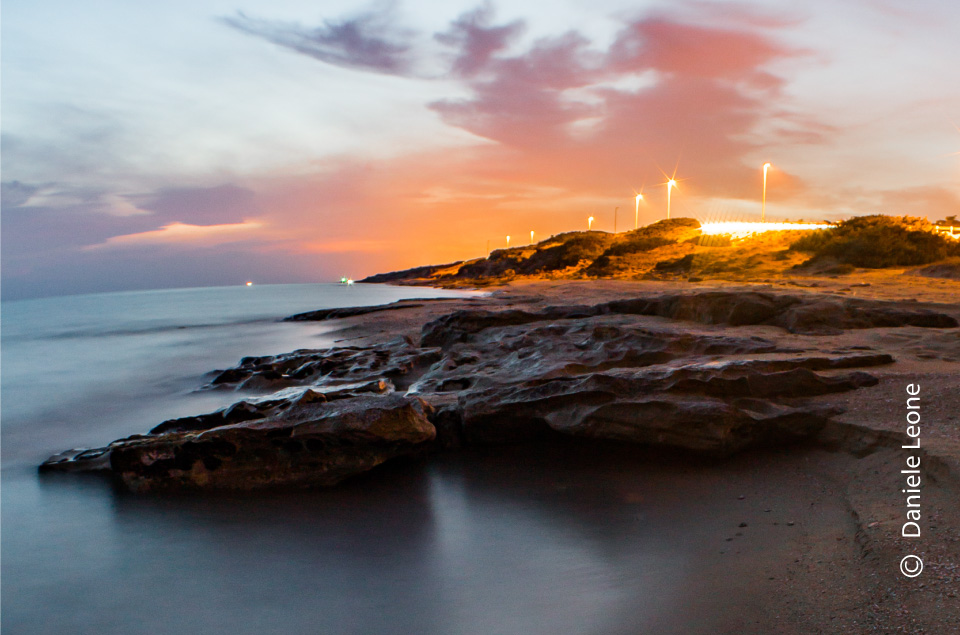
An Eye from the Sea at Night by Daniele Leone
Captured under the challenging, humid conditions of a winter night on the shores of Puglia, this image showcases the photographer's creative experimentation with vintage optics. By utilizing an M42 Super Fish-Eye-Takumar 17mm lens on a full-frame Canon body, the photographer successfully navigated the heavy coastal mist to produce a striking night composition. The resulting photograph is award-worthy for its technical mastery over difficult atmospheric conditions and the unique, ethereal aesthetic achieved through the use of specialized vintage glass, which transforms a familiar shoreline into a compelling nocturnal landscape.
Daniele Leone
Born in Milan in 1974, Daniele Leone is an Apulian photographer whose artistic journey began during childhood travels across Italy. Influenced by his uncle, a technical designer and traveler, Leone developed a profound interest in the intersection of architecture and photography. Now based in Lecce, he continues to refine his craft, often experimenting with vintage lenses to capture the unique landscapes and cultural essence of his adopted home.
Resonance Score Breakdown
Transparency Note: The resonance score (8.6/20) is calculated based on social engagement metrics collected before the award announcement.
Expert Photography Reviews · 3
Where the Dark Meets Breath
Dear stranger, I have been sitting here in the quiet, wondering if you ever feel the weight of the dark. We spend so much of our lives trying to illuminate the corners, to push back the shadows until everything is sharp and known.
Read the reflection →The Breath of the Tide
There is a rhythm to the darkness that we often forget when the sun is high. In the deep hours, the world sheds its sharp edges and returns to a state of fluid grace.
Read the reflection →Reviews & Comments
Share your thoughts about this award-winning photograph. Your reviews contribute to the community engagement score.

Technical mastery of vintage glass doesn’t excuse a lack of context. While the ethereal glow of the Puglia coast is undeniably haunting, I’m left wondering about the subject. Was this creature disturbed by the artificial light required for such a wide-angle nocturnal shot? I’ve spent enough nights in the damp sand to know that proximity like this isn’t free. It’s either earned through hours of stillness or it’s simply extracted. I fear it’s the latter.
The mist swallows the horizon. It’s a heavy, velvet weight. Leone’s lens pulls the dark inward, curving the shore into a singular, unblinking gaze. I feel a sudden, sharp chill against my skin. The frame doesn’t crowd the eye. It breathes. Nothing here is accidental. The empty corner isn’t empty; it’s a vessel for the tide’s quiet pulse. I’ve spent hours watching this black water. It’s enough. The silence is finally absolute.
We stand on the dark edge of Maruggio, where the sea doesn’t just reflect the night; it watches us. Daniele’s lens bends the horizon into a curved, heavy gaze, turning the mist into a living presence. I’ve spent hours staring into this frame, and it’s unsettling—the way the water feels like a pupil dilating in the dark. It’s a portrait of a shoreline that’s finally decided to look back. I find it hauntingly beautiful.