Pigeons by Fidan Nazim Qizi
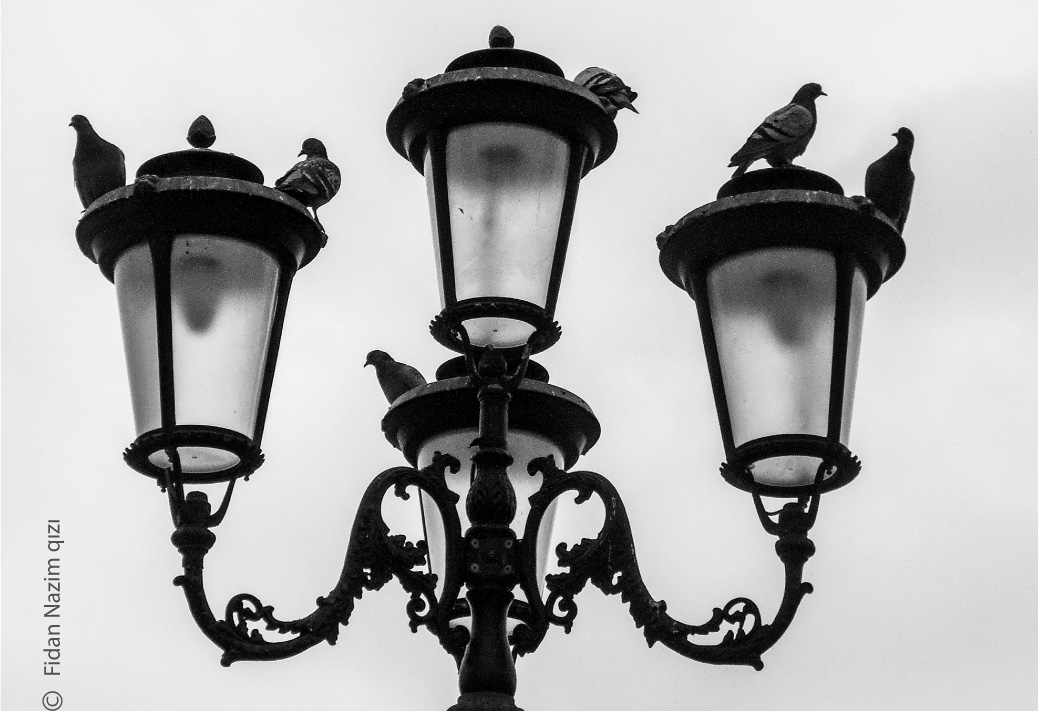
In this evocative study of urban wildlife, Fidan Nazim Qizi captures the rhythmic movement of a pigeon, highlighting the species' characteristic grace and powerful form. By isolating the subject against a stark background, the photographer emphasizes the bird's elegant posture and the intricate textures of its plumage. The choice of a monochromatic palette strips away distraction, focusing the viewer’s attention on the bird’s innate energy and the quiet dignity of a common creature. This image is award-worthy for its ability to transform a familiar, everyday subject into a compelling portrait of movement and stillness, reflecting the photographer's deep appreciation for the natural world.
Fidan Nazim Qizi
Born in Baku, Azerbaijan, Fidan Nazim Qizi maintains her home base in her native city while frequently traveling abroad to explore new landscapes. Her passion for hiking and the outdoors deeply informs her artistic vision, leading her to specialize in black and white photography. Inspired by the legendary work of Vivian Maier, she utilizes the medium to capture raw emotion and inspiration. Through her lens, she seeks to distill the energy of her subjects, creating timeless images that resonate with viewers on a profound, human level.
Resonance Score Breakdown
Transparency Note: The resonance score (10.3/20) is calculated based on social engagement metrics collected before the award announcement.
Expert Photography Reviews · 6
The Weight of Common Wings
Why do we reserve our wonder for the rare and the distant, while ignoring the pulse of the familiar that beats right beside us? We walk through our days surrounded by lives that intersect with our own, yet we rarely pause to acknowledge the dignity of their existence.
Read the reflection →The Architecture of the Wing
Rock doves possess a remarkable internal compass, utilizing the earth’s magnetic field to navigate across vast, unfamiliar landscapes back to a singular, ancestral ledge.
Read the reflection →Reviews & Comments
Share your thoughts about this award-winning photograph. Your reviews contribute to the community engagement score.
You’ve caught a quiet, lonely rhythm here. Most people walk right past these birds, but you stopped. I can feel the stillness you found in that Baku street. It’s not just a pigeon; it’s a small, breathing life caught in a monochrome pause. And that’s what gets me—the way you honored the mundane. You waited for the grace to reveal itself. There’s something honest happening here. You didn’t just take a picture; you listened.
Pigeons are the rats of the sky, usually captured with a hurried shutter and little thought. Yet, here, one senses the photographer didn’t just stumble upon this bird. The texture in those wings suggests a long, shivering wait on a Baku street corner. I’ve spent enough hours in the damp to recognize the patience required for such stillness. It’s a quiet, earned moment. I find myself genuinely impressed by the discipline it took to wait.
Baku’s stone facades usually dictate the rhythm of the street, but here, the architecture is reduced to a blurred datum. The pigeon’s flight disrupts the static fenestration, turning the void into a stage. I’m struck by how the monochromatic light catches the wing’s arc, momentarily softening the harsh urban mass. It’s a fleeting, honest collision of creature and structure. I’d love to see the threshold it’s escaping, but perhaps the omission is the point.
There’s a quiet dignity in how this bird holds itself, but I find myself looking for a pulse that isn’t there. It’s a clean, sharp study, sure, but it lacks the messy, lived-in intimacy I crave. When I look at a portrait, I want to feel the subject’s consent. Here, the pigeon is just a prop in a frame. It’s technically sound, but it doesn’t invite me into a life. It’s just a bird.
The pigeon’s wings are fully extended, but the primary feathers haven’t yet locked into the downstroke’s resistance. It’s a fraction of a second early. I’ve spent my life chasing that specific millisecond where the muscle fibers snap into total tension, and this isn’t quite it. It’s close, and I’ll admit, the blur in the wingtips makes my own shoulders ache with phantom fatigue. Still, the peak moment is missing. It’s a near miss, not a hit.
It’s a challenge to photograph the common pigeon without falling into the trap of Victorian ornithological illustration. Qizi avoids the static taxidermy of the past, instead channeling the kinetic blur of Eadakwe Muybridge’s motion studies. The stark isolation recalls the minimalist rigor of Bill Brandt’s nudes, yet it’s the bird’s ruffled, tactile plumage that truly caught me off guard. I’ve spent decades looking at avian studies, but this rhythmic, monochromatic grace feels surprisingly, refreshingly alive.