Ruins by Jabbar Jamil
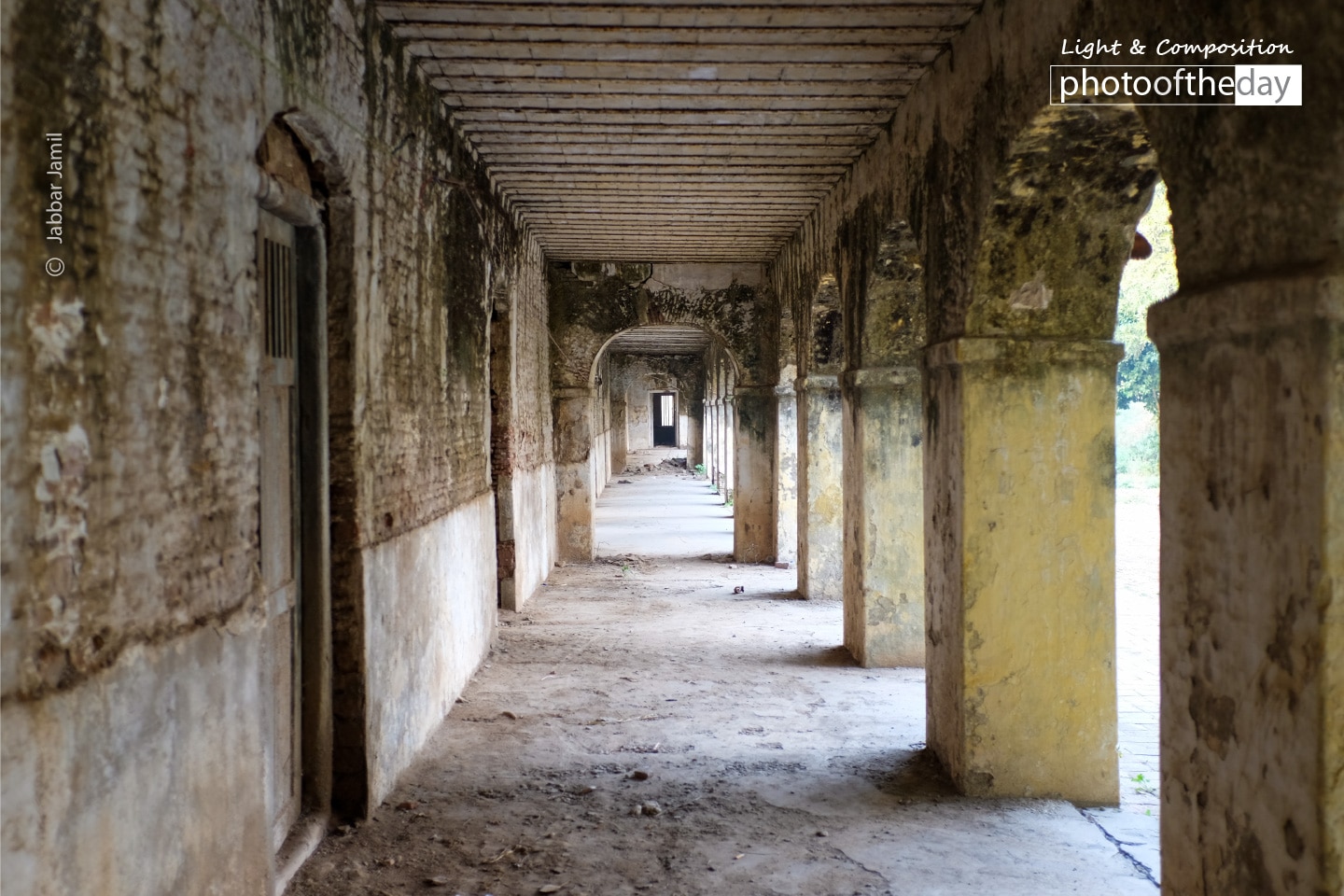
Captured within the decaying corridors of a local police station in Sialkot, this photograph documents the stark reality of architectural neglect. The photographer focuses on the crumbling infrastructure, where even the roof has succumbed to time and lack of maintenance. By framing this site—historically significant yet physically hollowed out—the image explores the tension between a storied past and a dilapidated present. The composition is award-worthy for its raw, unflinching portrayal of urban decay, transforming a forgotten, rough space into a poignant visual narrative about the passage of time and the fragility of historical structures.
Jabbar Jamil
Based in Sialkot, Pakistan, Jabbar Jamil is a dedicated street photographer who views his craft as a vital bridge to the world beyond his comfort zone. His work prioritizes human connection and creative expression, serving as both a therapeutic outlet and a lens through which he documents the unfiltered realities of his surroundings. By capturing scenes that are not always aesthetically conventional, Jamil provides a candid perspective on the environment, consistently seeking the stories hidden within the everyday landscape.
Resonance Score Breakdown
Transparency Note: The resonance score (11.8/20) is calculated based on social engagement metrics collected before the award announcement.
Expert Photography Reviews · 7
The Architecture of Memory
In the quiet corners of an old house, the wallpaper begins to curl like the edges of a dried leaf. It is a slow surrender.
Read the reflection →The Grit of Yesterday
The smell of wet limestone always pulls me back to the cellar of my childhood home, where the air felt thick and heavy, like a wool blanket left out in the rain. It is a scent of slow surrender, of mortar turning back into sand between the fingers.
Read the reflection →Reviews & Comments
Share your thoughts about this award-winning photograph. Your reviews contribute to the community engagement score.
Before the eye identifies the crumbling plaster of Sialkot, something in the chest tightens. It’s the sudden, hollowed-out silence of a roofless room. I feel a phantom draft against my skin, a cold reminder of institutions left to rot. When I return to this a year later, the decay feels less like architecture and more like a forgotten memory. It’s an unsettling, visceral weight; I’ve never quite been able to shake the dust of it.
Most architectural shots of decay feel like hollow aesthetic exercises, but this one hits differently. I’ve seen thousands of crumbling walls, yet Jamil’s choice to frame the sky through that collapsed roof forces a confrontation with the void. It’s haunting. The way the light spills onto the debris makes the neglect feel intentional rather than accidental. I’m genuinely unsettled by it, which is exactly why it’ll still matter in thirty years. It’s a brutal, necessary record.
The light here doesn’t just fall; it sighs through the broken roof, illuminating the dust of a Sialkot afternoon. Jabbar stood in the cooling shadows, listening to the silence of these crumbling walls. It’s a heavy, hollow stillness that makes my own breath hitch. He waited for the sun to find the decay, turning neglect into a quiet prayer for what’s lost. You can feel the weight of time pressing against the stone. It’s haunting.
The ochre of these Sialkot walls, a dusty, sun-bleached pigment reminiscent of Morandi’s most melancholic still lifes, bleeds into the shadows with a haunting, bruised violet intensity that I’ve rarely encountered in such decay. It’s a chromatic ache, really; the way that pale, crumbling plaster catches the light makes my heart stutter, as if the very air in this hollowed room were thickening with the ghosts of a long-forgotten, sun-drenched afternoon.
The vertical axis here is anchored by the jagged, triangular void of the collapsed ceiling, creating a perfect inverse pyramid. It’s a brutal geometric tension. The crumbling walls provide a 3:1 ratio of textured mass against the negative space of the sky. I’m genuinely unsettled by how the diagonal shadows slice through the frame, forcing the eye toward the center of gravity. It’s a cold, precise equation of decay that I find absolutely brilliant to dissect.
Light spills across the cracked floor. It’s heavy. The roof is gone, yet the sky doesn’t feel like an intrusion. It’s a weight. I’ve spent minutes staring at that single, jagged shadow near the wall. It’s not just decay. It’s a breath held in stone. I feel a strange, cold ache in my chest looking at it. Nothing here is accidental. The empty corner is not empty. It’s a quiet, hollowed-out grace.
Staring at these crumbling walls, I can’t help but feel a cold, hollow ache. It’s a graveyard of human history, yet I find myself searching for a nesting bird or a stray cat in the debris. If you’re going to document a ruin, you must respect the silence it demands. This composition is technically sound, but it feels extracted. It lacks the quiet, patient reverence I’d expect from someone truly inhabiting such a fragile space.