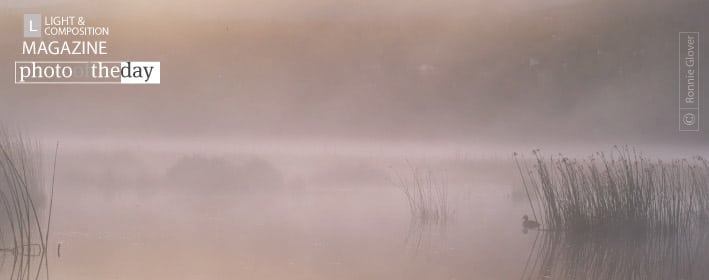
Misty Morning Duck by Ronnie Glover
Captured on a crisp, atmospheric morning at Potter Marsh in Anchorage, Alaska, this image highlights the fleeting beauty of a duck emerging through the mist. The photographer, initially prepared with a medium-format camera, had to pivot quickly to a 35mm Nikon to seize the moment before the subject vanished into the reeds. This photograph is award-worthy for its masterful capture of a transient, ethereal scene, demonstrating the photographer's ability to adapt technical settings under pressure to preserve a delicate, natural interaction that would have otherwise been lost to the fog.
Ronnie Glover
Based in Gig Harbor, Washington, Ronnie Glover is a versatile photographer whose journey began with formal training at the Southeastern Center for the Arts in Atlanta. His extensive fourteen-year residence in Alaska profoundly shaped his connection to the natural world, fueling a deep passion for nature, sports, and travel photography. Dedicated to fostering cultural understanding and appreciation for the outdoors, Glover continues to evolve his craft, recently expanding his creative repertoire to include mobile photography while documenting athletic events.
Resonance Score Breakdown
Transparency Note: The resonance score (12.6/20) is calculated based on social engagement metrics collected before the award announcement.
Expert Photography Reviews · 4
The Architecture of the Unseen
In the quiet hours before the world fully wakes, there is a thickness to the air that feels almost solid. It is a veil, a soft erasure of the sharp edges that define our daily lives.
Read the reflection →The Weight of Breath
The morning does not arrive all at once. It comes in layers, a slow thinning of the grey. You stand at the edge of the water, and the air is heavy with the dampness of things not yet awake.
Read the reflection →Reviews & Comments
Share your thoughts about this award-winning photograph. Your reviews contribute to the community engagement score.
Mist isn’t merely weather here; it’s a veil between being and nothingness. Glover’s duck doesn’t just emerge; it fights the grey void, a fragile assertion of life against the encroaching silence of Potter Marsh. I’ve stared at this Velvia grain until my eyes ached, feeling the cold seep into my own bones. It’s a haunting reminder that we are all just fleeting shapes, desperately trying to hold our form before the shadows reclaim us entirely.
Most wildlife shots are just trophies, but this one breathes. I’ve seen thousands of ducks in the marsh, yet Glover’s choice to stick with Velvia film gives the mist a tactile, heavy quality that digital sensors usually strip away. It’s the grain that makes this endure; it feels like a memory rather than a record. I’d hang this in my own home because it captures the exact moment the world goes quiet. It’s hauntingly still.
The mist at Potter Marsh doesn’t just hide; it breathes. I’ve spent enough mornings in the damp cold to know that feeling—the sudden, frantic shift from medium format to the Nikon when the world finally decides to reveal itself. Watching this duck emerge, I feel a quiet ache in my chest. It’s a fleeting grace, captured before the reeds swallowed the light again. He didn’t force this. He simply waited until the marsh allowed him in.
The frame’s architecture relies on the duck’s placement against the encroaching fog. It’s a precarious balance. The negative space doesn’t just surround the subject; it actively compresses the subject’s mass, forcing a singular, sharp focal point. I’ve rarely seen such disciplined restraint in a landscape. The reeds provide a necessary vertical anchor, preventing the composition from dissolving into the mist. It’s cold, calculated, and frankly, it’s the only way to make this scene function.