Burritos Vegetarianos by Rodrigo Aliaga
In this meticulously crafted food photograph, the photographer captures the rustic appeal of burritos for a commercial menu project. To emphasize the intricate textures of the tortillas and the accompanying fried potatoes, the photographer employed a strategic lighting setup featuring a hard backlight paired with a subtle fill light. By placing the meal on a clean white plate against a dark wooden surface, the composition creates a striking visual contrast that draws the viewer's eye. This image stands out for its technical precision and ability to elevate a simple culinary subject into a sophisticated, award-worthy display of commercial food photography.
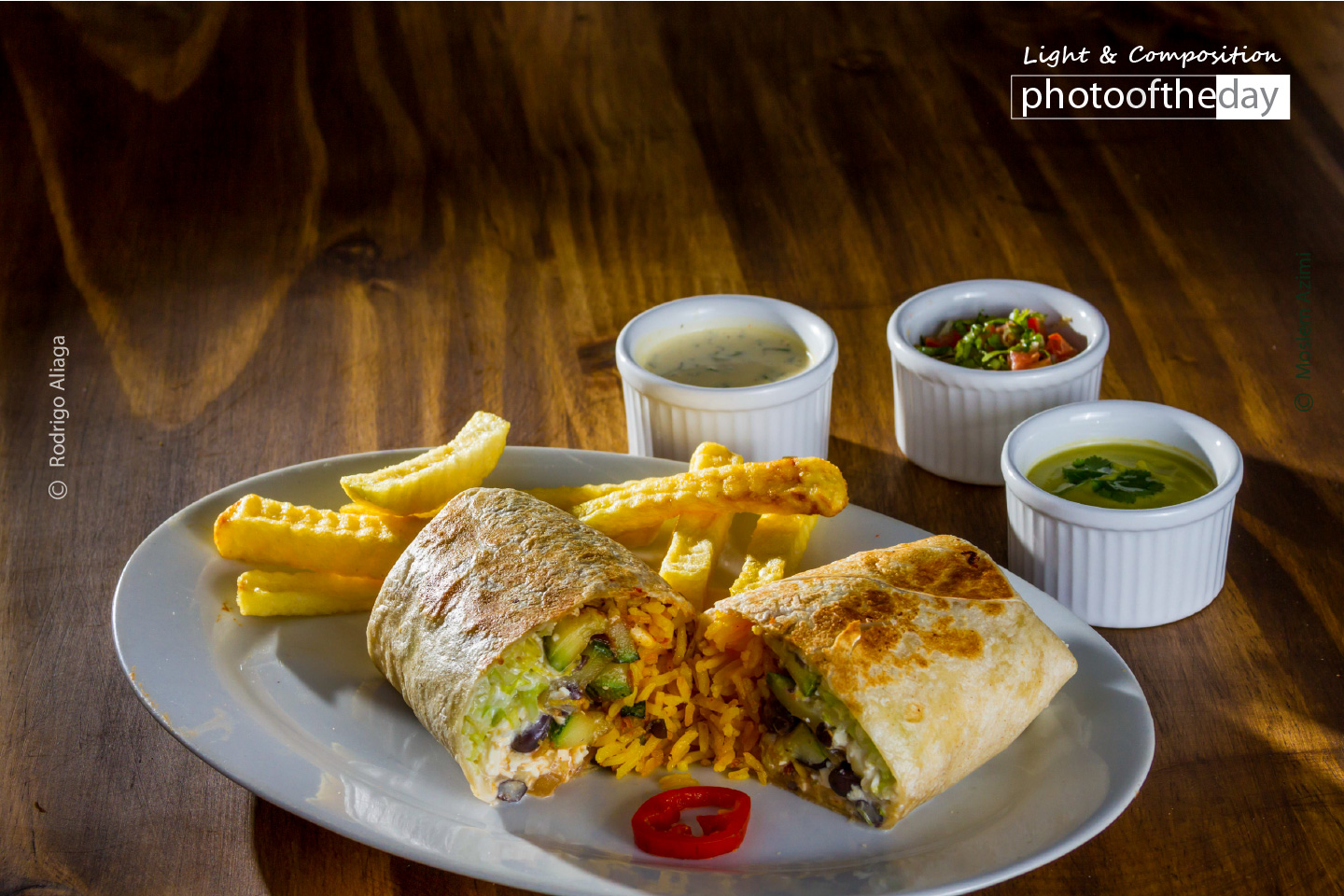
Exposure 1/100sec @ f/8 | ISO 250 | Focal Length 53mm
Rodrigo Aliaga
Born in La Paz, Bolivia, Rodrigo Aliaga has dedicated his career to the mastery of visual storytelling. Initially establishing himself as a director of photography for television advertisements using traditional film, he eventually transitioned into the digital realm to further refine his craft. He now specializes in food photography, where he expertly blends technical precision with creative flair to produce exquisite, high-impact imagery that captures the essence of his culinary subjects.
Resonance Score Breakdown
Transparency Note: The resonance score (11.1/20) is calculated based on social engagement metrics collected before the award announcement.
Expert Photography Reviews · 5
The Architecture of Hunger
We often forget that the earth is a generous architect. Before a meal reaches the table, it has traveled through the dark, cool silence of the soil, drinking the rain and reaching for the sun.
Read the reflection →The Geography of the Table
We often mistake the city for its skyline, for the grand gestures of steel and glass that dominate our maps. But the city is actually built in the quiet, repetitive rituals of the kitchen and the stall.
Read the reflection →Reviews & Comments
Share your thoughts about this award-winning photograph. Your reviews contribute to the community engagement score.
The stark chiaroscuro here recalls the Dutch masters, yet the hard backlight feels like a nod to the clinical precision of early commercial studio work. It’s technically sound, but I’m left wanting more than just a menu shot. Where’s the grit of La Paz? I’ve seen this exact lighting on a thousand plates. It’s competent, sure, but it doesn’t push the conversation forward. I’m still waiting for someone to capture food with real, visceral history.
The dark wood recedes. It’s a void, holding the plate in suspension. I find myself leaning in, searching for the edges of the frame. The light hits the potato, then stops. It doesn’t reach the corners. That’s where the quiet lives. Nothing here is accidental. The empty corner is not empty. It’s a breath. I’ve spent minutes just watching the shadows settle. It’s rare to find such stillness in a meal. I’m grateful for it.
The hard backlight carves the tortilla’s edge, yet the darkness beneath the plate remains shallow, almost apologetic. It’s a commercial exercise that fears the void. I’ve spent my life chasing shadows that swallow the subject whole, but here, the wood grain is merely a stage. It doesn’t invite the abyss; it hides from it. I feel a strange, cold hunger looking at this—not for the food, but for a darkness that actually dares to think.
The lighting here is technically precise, but it feels sterile. Why strip a La Paz street food staple of its context, isolating it on a dark, generic surface? It’s a commercial exercise that erases the messy, vibrant reality of the city where it was born. I’ve eaten these burritos on the street, and this clinical presentation leaves me cold. Whose appetite is this really serving? It’s a beautiful plate, but it’s a hollow representation.
It’s technically sharp, sure. The lighting makes those potatoes pop, but I’m looking for the hands that rolled these burritos. Where’s the steam, the grease, the life of a La Paz market? You’ve captured a product, but you’ve left the human story in the kitchen. I don’t feel the hunger or the heat of the street here. And that’s a shame. You’ve got the skill, but next time, try to find the soul behind the plate.