The Geography of the Table
We often mistake the city for its skyline, for the grand gestures of steel and glass that dominate our maps. But the city is actually built in the quiet, repetitive rituals of the kitchen and the stall. Every meal is a social contract, a manifestation of what the land provides and what the hands can afford. When we look at a plate, we are looking at a map of supply chains, of labor, and of the specific cultural rhythms that dictate who eats, what they eat, and where they are allowed to pause. A meal is never just sustenance; it is a claim to space in a landscape that is often indifferent to the individual. It represents the intersection of private survival and public commerce, a fleeting moment of stability in the constant churn of urban life. Who decides which flavors are worthy of being served, and who is left to find their nourishment in the shadows of the formal economy?
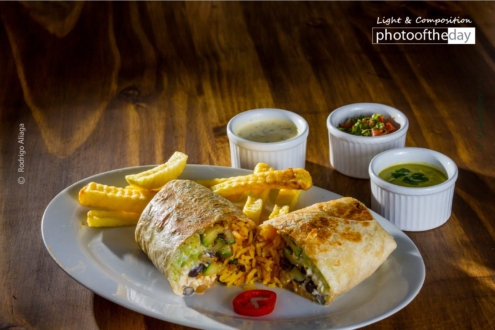
Rodrigo Aliaga has captured this tension in his work titled Burritos Vegetarianos. By elevating a simple, everyday meal, he invites us to consider the dignity of the local food culture in La Paz. Does the way we present our food change the way we value the people who make it?