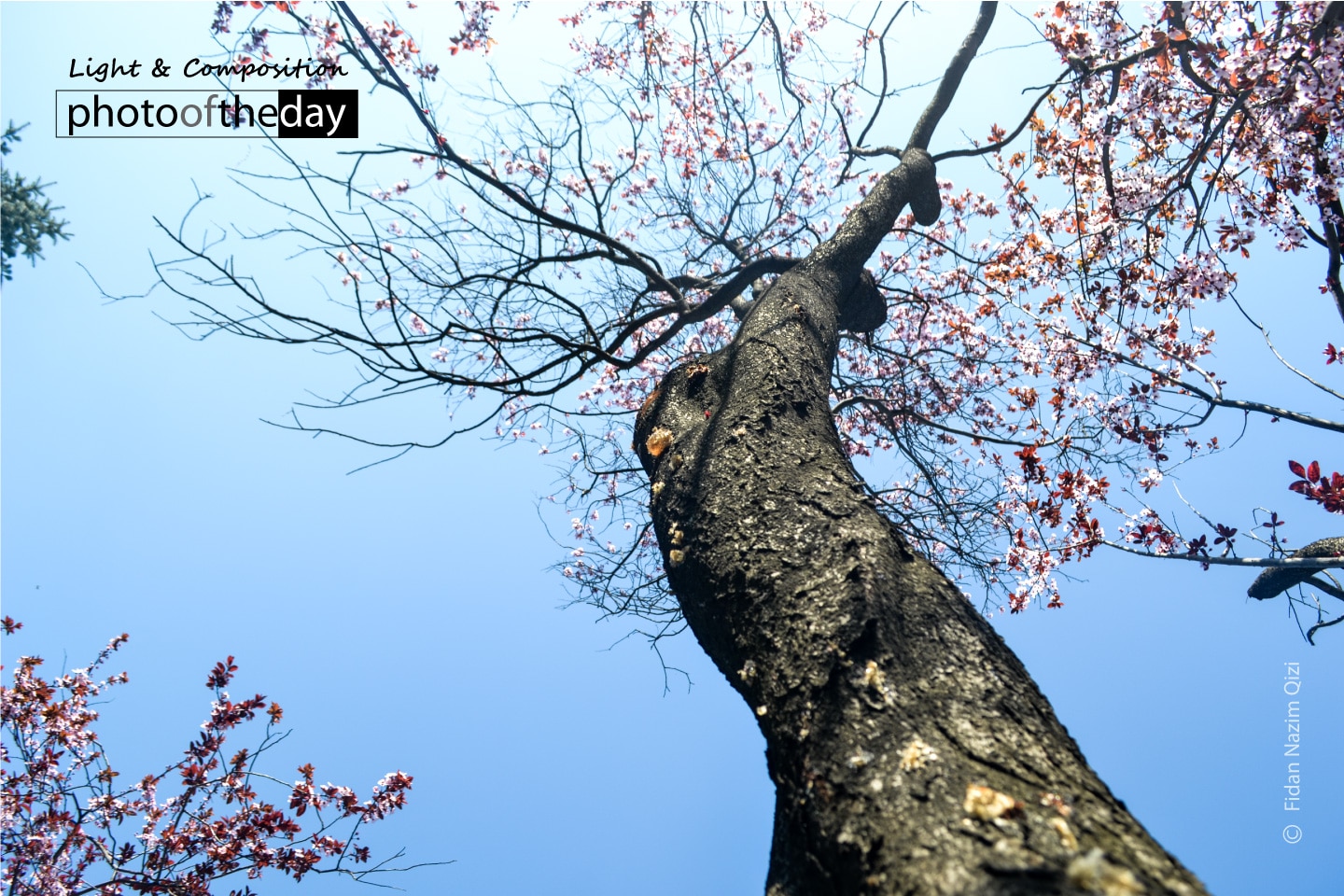
Spring and the Tree by Fidan Nazim Qizi
Spring and the Tree captures the essence of seasonal transition, embodying the universal themes of rebirth and rejuvenation. The photographer focuses on the delicate interplay between the awakening landscape and the solitary tree, highlighting the quiet resilience of nature as it emerges from the winter slumber. By isolating the subject against the backdrop of the Azerbaijani terrain, the composition draws the viewer into a moment of profound stillness. This image is award-worthy for its evocative narrative, turning a simple natural scene into a poetic reflection on the cyclical beauty of life and the promise of renewal.
Fidan Nazim Qizi
Based in Baku, Azerbaijan, Fidan Nazim Qizi is a dedicated photographer whose work is deeply rooted in her passion for nature, mountains, and the spirit of exploration. Inspired by the iconic black-and-white imagery of Vivian Maier, she specializes in monochromatic photography as a means to convey raw energy and profound human emotion. Her artistic practice is driven by the belief that photography serves as a vital source of inspiration, allowing her to document the quiet, transformative power of the natural world.
Resonance Score Breakdown
Transparency Note: The resonance score (10.2/20) is calculated based on social engagement metrics collected before the award announcement.
Expert Photography Reviews · 8
The Weight of Winter
I keep a small, dried sprig of lavender inside the pages of a book I rarely open. It was plucked years ago, when the frost was still biting at the edges of the garden, yet it held onto a stubborn, dusty scent of summer.
Read the reflection →The Thaw Beneath the Skin
The smell of damp earth after a long frost is a sharp, metallic sweetness that settles at the back of the throat. It is the scent of waking up.
Read the reflection →Reviews & Comments
Share your thoughts about this award-winning photograph. Your reviews contribute to the community engagement score.
There’s a quiet integrity here that I rarely find in modern landscape work. It’s easy to manipulate a scene for dramatic effect, but Fidan has resisted that urge. Looking at the way the light catches those emerging buds, I feel a genuine sense of calm—a rare gift. She didn’t force the narrative; she simply let the tree exist. It’s an earned stillness, and frankly, it’s a relief to see such restraint.
The parched, pale earth of Baku stretches out, a neutral canvas that makes the tree’s sudden, vibrant green feel like a heartbeat. It’s a quiet, rhythmic tension. I’m struck by how the barren ground anchors the branches, grounding that fragile rebirth in a harsh reality. The environment doesn’t just frame the tree; it defines its struggle. It’s a beautiful, lonely dialogue between the soil’s memory of winter and the sudden, insistent promise of spring.
There’s a quiet ache in this solitary tree, standing against the Baku horizon. It’s a landscape, sure, but I find myself searching for a pulse in the branches. It’s lonely, almost waiting for someone to walk into the frame and offer it company. I’ve spent my life looking for the human spark in everything I shoot; here, the silence feels heavy. It’s beautiful, but it’s missing the conversation that happens when two souls finally meet.
Before the eye identifies the tree, the chest tightens. It’s the sudden, sharp intake of air that accompanies a thaw. I feel a phantom chill against my skin, a lingering memory of Baku’s winter. When I return to this frame, the stillness doesn’t feel empty; it’s expectant. My pulse slows, syncing with that solitary, budding branch. It’s a quiet ache, really—the realization that we’re all just waiting for our own internal seasons to finally turn.
Baku’s terrain often feels like a harsh datum, but here, the tree acts as a vertical anchor against the void. It’s a study in threshold; the branches reach into the negative space, softening the rigid geometry of the landscape. I’m struck by how the light catches the budding limbs, suggesting a depth that usually escapes the lens. It’s a quiet, honest tension between organic mass and the surrounding emptiness. I’d love to walk through that space.
Most entries in this category rely on saturated greens to signal spring, but this work chooses restraint. It’s the skeletal, lonely reach of the branches against the muted Baku horizon that caught me; I felt a genuine ache for that tree’s quiet patience. What separates this from technically similar work is the refusal to over-romanticize. It doesn’t scream for attention. In thirty years, this stillness will still feel honest, unlike the loud, fleeting trends I’ve rejected.
Most critics obsess over the tree’s crisp edges, but I’m drawn to the soft, atmospheric bleed of the background. It’s a deliberate refusal of resolution that feels like a memory fading in real-time. This approach is closer to Hiroshi Sugimoto’s long-exposure theatres than to conventional landscape practice. Why resolve the horizon when the blur captures the actual vibration of spring? It’s haunting, really. I’d trade a thousand sharp pixels for this kind of intentional imprecision.
You waited for the light to hit that bark just right. It’s quiet, isn’t it? I’ve spent enough time in the field to know that stillness isn’t empty; it’s heavy with what’s coming next. And I felt a genuine shiver looking at how you isolated that solitary trunk against the Baku horizon. You didn’t just document a season; you captured the exact moment the earth decides to wake up. There’s something honest happening here. You felt it.