Along the Shore by Christopher Utano
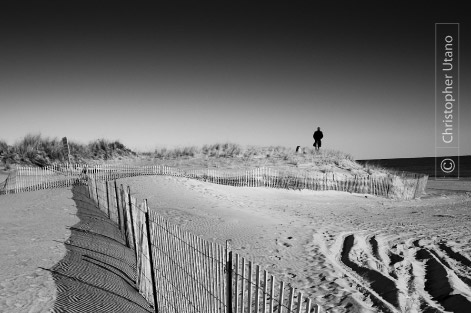
Captured on a crisp mid-winter afternoon along the south shore of Long Island, this photograph masterfully utilizes the interplay of light and geometry. The photographer identified a compelling composition where the harsh, elongated shadows cast by a fence create a rhythmic pattern across the sand, naturally drawing the viewer’s eye toward a solitary figure in the distance. This serendipitous moment, defined by the perfect alignment of subject and setting, highlights the photographer's keen ability to find narrative depth in quiet, coastal landscapes, ultimately earning recognition for its evocative atmosphere and structural precision.
Christopher Utano
Based in Hauppauge, New York, Christopher Utano is a versatile photographer with a profound appreciation for black and white, landscape, still life, macro, and HDR photography. His distinguished portfolio has garnered significant recognition, including publication credits with National Geographic Stock, iStockphoto, and Boating Times Long Island. Through a technical approach that utilizes a wide array of Nikon and specialized marine equipment, Utano consistently captures the nuanced beauty of his surroundings with artistic clarity.
Resonance Score Breakdown
Transparency Note: The resonance score (13.2/20) is calculated based on social engagement metrics collected before the award announcement.
Expert Photography Reviews · 5
The Salt on the Skin
The air near the ocean has a weight to it, a damp, heavy velvet that clings to the back of the throat.
Read the reflection →The Weight of Distance
The tide leaves behind what it no longer needs. We walk the edge of the land, watching the water pull away, taking the warmth with it. There is a specific loneliness in the sand when the sun is low and the shadows stretch longer than the objects that cast them.
Read the reflection →Reviews & Comments
Share your thoughts about this award-winning photograph. Your reviews contribute to the community engagement score.
The fence doesn’t merely divide the sand; it carves the beach into a rhythmic cage of absence. Utano forces us to confront the void between those slats, where the light is brittle and unforgiving. I’ve stared at that solitary figure until my eyes ached, feeling the cold isolation of a winter afternoon. It’s a haunting geometry. When the shadows grow this long, they stop being mere silhouettes and begin to swallow the world whole.
Stripped of chromatic warmth, one finds a monochromatic ache that recalls the austere, dust-laden stillness of a Morandi study. It’s a haunting, silver-grey silence, where the shadows aren’t merely absence but a tactile, charcoal weight pressing against the pale, salt-bleached sand. I’m utterly undone by how the light clings to the fence’s geometry, turning winter’s chill into a rhythmic, melancholic song that resonates deep within the marrow, far beyond the reach of mere sight.
Most entries this year relied on cheap drama, but Utano’s work succeeds through restraint. The fence’s shadows don’t just slice the sand; they dictate the pace of the viewer’s eye, forcing a slow, deliberate march toward that solitary figure. It’s a quiet, cold geometry that feels timeless. I’ve stared at this for twenty minutes, and I still feel that biting winter wind on my own skin. That’s why it’ll still matter in thirty years.
The winter sun hangs low, casting those long, rhythmic shadows that slice through the sand. I’ve spent enough hours on the shore to know the cold bite of that air. He stood there, waiting for the light to stretch the fence into a bridge toward that solitary figure. It’s a quiet, lonely geometry. Looking at it, I feel a sudden, sharp ache for the silence of that afternoon. He didn’t rush; he simply listened.
The fence’s rhythmic shadows slice the sand, establishing a rigid geometric grid. This structural repetition dictates the eye’s path, forcing a deliberate cadence across the picture plane. It’s a disciplined exercise in spatial tension. The solitary figure acts as a necessary fulcrum, anchoring the vast negative space. I’m genuinely unsettled by how the frame’s weight shifts toward that distant point. It doesn’t rely on sentiment; it survives on the sheer, cold precision of its own architecture.