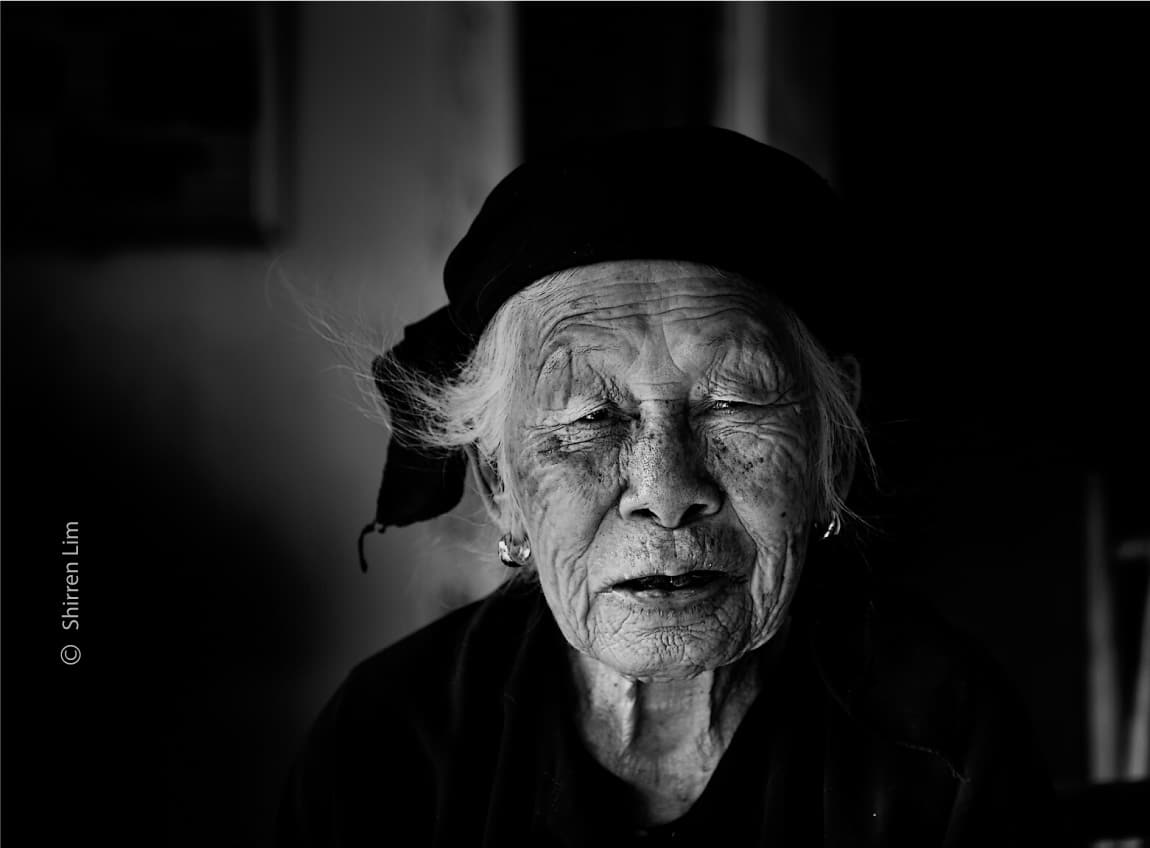
An Old Woman by Shirren Lim
Captured within the historic walls of Duong Lam Ancient Village, this portrait documents a poignant encounter between the photographer and a local resident. After being welcomed into the woman's home for tea, the photographer sought to preserve the warmth of their interaction through a candid, respectful lens. The image is award-worthy for its profound sense of intimacy and the genuine connection it portrays, elevating a simple domestic meeting into a timeless study of human character. The soft lighting and shallow depth of field isolate the subject, ensuring the viewer’s focus remains entirely on the expressive, lived-in features of the woman.
Shirren Lim
Born in Penang Island, Malaysia, in 1970, Shirren Lim is a Jakarta-based photographer who discovered her true passion for the craft in 2009. She specializes in portraiture, driven by a desire to capture the uncovered sincerity and beauty of human expressions. Influenced by the iconic work of Steve McCurry, Lim strives to create intense, earthy imagery that cuts to the heart of her subjects. Her evocative work has been featured in various international web and print publications, reflecting her ongoing ambition to capture moments that resonate deeply with the world.
Resonance Score Breakdown
Transparency Note: The resonance score (11.3/20) is calculated based on social engagement metrics collected before the award announcement.
Expert Photography Reviews · 7
The Map of a Life
I once sat on a porch in a village where the dust seemed to hold the heat of a hundred years. An elderly woman sat across from me, her hands folded like resting birds.
Read the reflection →The Map of Our Years
I keep a small, silver thimble in my desk drawer that belonged to my grandmother. It is dented on one side, a tiny crater formed by years of pushing needles through heavy wool.
Read the reflection →Reviews & Comments
Share your thoughts about this award-winning photograph. Your reviews contribute to the community engagement score.
Tea and conversation aren’t merely social niceties; they’re the price of admission for a portrait that doesn’t feel stolen. Lim clearly sat long enough for the woman to forget the Nikon existed. It’s a rare, quiet intimacy. I’ve spent enough afternoons waiting for a subject to drop their guard to know the effort involved here. It’s not just a face; it’s a hard-won trust. I find myself genuinely moved by that stillness. Well earned.
Most portraits in this category rely on the subject’s age to do the heavy lifting, but Lim avoids that trap. The shallow depth of field at 82mm doesn’t just isolate her; it forces us to confront the specific, weary texture of her skin against the dark interior. I’ve seen thousands of Hanoi portraits, yet this one lingers. It’s the quiet dignity in her gaze that makes me certain we’ll still care about her in thirty years.
The peeling plaster and weathered wood of this Hanoi home create a textured geography that anchors the subject. That soft, directional light catching the grain of the wall feels like a Dutch master’s study, grounding her history in the room’s quiet decay. I’m genuinely moved by how the environment doesn’t just frame her; it explains her. She isn’t merely sitting there; she’s woven into the very architecture of her village. It’s a beautiful, intimate dialogue.
It’s refreshing to see a portrait where the light isn’t fighting the water column. Down here, we’re constantly battling the refractive index and the relentless loss of the red spectrum, but Lim’s Hanoi subject glows with a warmth that never reaches the reef. I’m genuinely moved by the clarity in those deep, etched wrinkles. It’s a stark, beautiful contrast to the murky, backscatter-filled world I usually inhabit. She’s captured a stillness that’s impossible to find submerged.
Shadows here don’t merely frame the subject; they swallow the history of Duong Lam. Lim’s light is too polite, too eager to illuminate the skin, yet it’s the darkness pooling in the corners of that room that truly thinks. I’ve stared at her eyes for an hour, and I’m unsettled by how much she’s hiding from us. It’s a quiet, heavy resistance. She doesn’t want to be seen; she wants to be left in the dark.
You didn’t just take a portrait; you sat for tea. I can see the trust in her eyes. It’s rare to find that kind of stillness in a stranger’s home. Because you waited, you caught the weight of her years without making it a spectacle. It makes me miss my own grandmother’s kitchen. You didn’t force the moment, and that’s why it works. There’s something deeply honest happening here. You were truly present, and it shows.
Before the eye identifies the weathered skin of Hanoi, something in the chest softens. It’s the stillness of that tea-warmed room. I feel a sudden, sharp ache in my own shoulders, a phantom weight of years I haven’t lived. When I return to this portrait, the woman’s gaze doesn’t just hold mine; it demands a quiet accounting of my own history. It’s a rare, haunting intimacy that follows me into the dark.