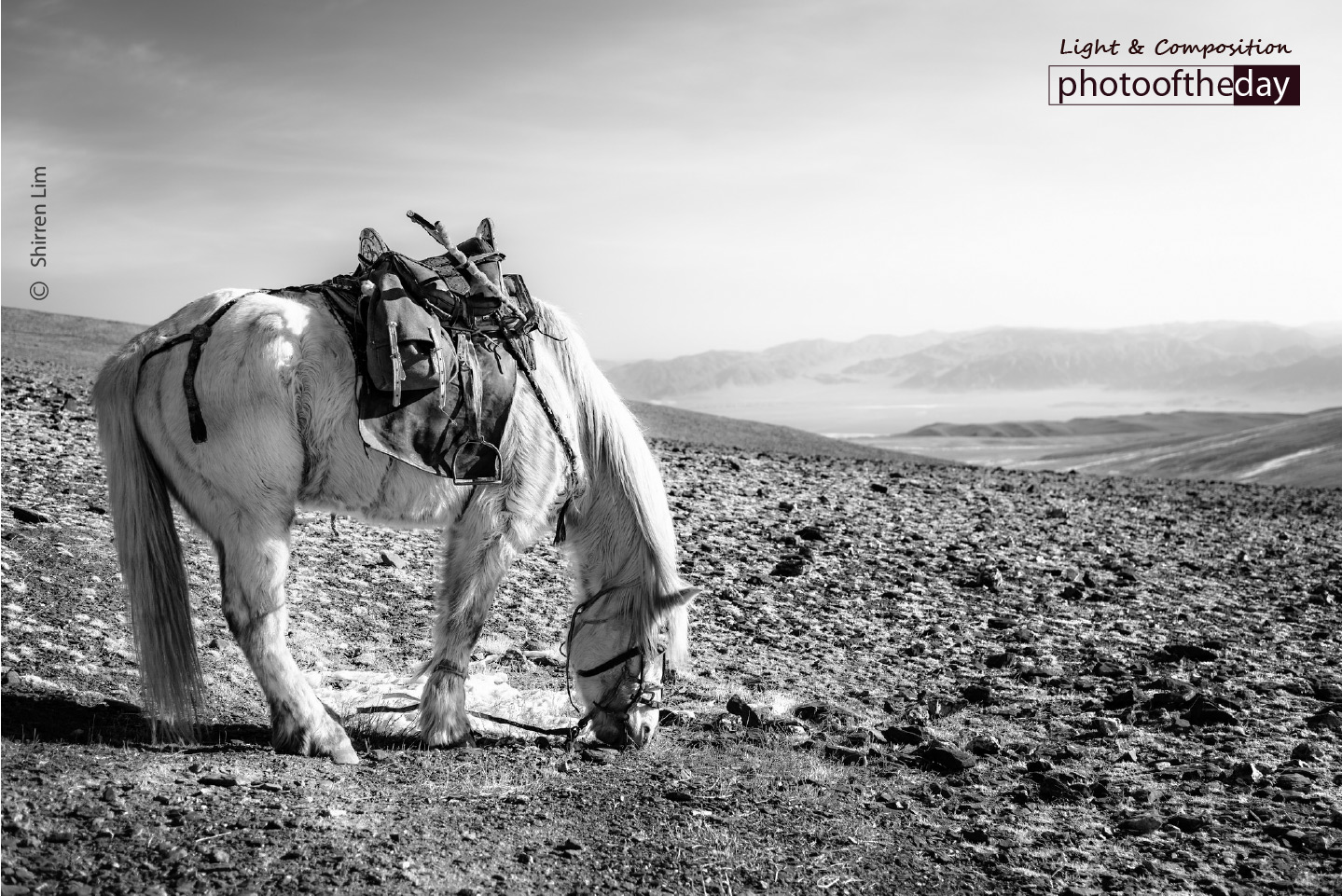
A Horse Grazes on the Mountain by Shirren Lim
Captured during a frigid morning expedition in Western Mongolia, this photograph documents a serene moment at Modon Hoshoo. After a challenging horseback ride through the biting cold, the photographer paused to observe the landscape, finding warmth in a shared cup of coffee. The composition is anchored by a white horse in the foreground, which provides a striking contrast to the meandering mountain terrain behind it. This image is award-worthy for its ability to transform a harsh, freezing environment into a tranquil, evocative scene that highlights the quiet harmony between the animal and the vast, rugged wilderness.
Shirren Lim
Born in Penang Island, Malaysia, in 1970, Shirren Lim is a Jakarta-based photographer who discovered her true passion for the craft in 2009. Her work is celebrated for its intense, earthy aesthetic and a minimalist approach that captures the raw sincerity of human expression. Deeply inspired by the iconic portraiture of Steve McCurry, she strives to create images that resonate with global significance and emotional depth, having seen her photography featured in various international print and digital publications.
Resonance Score Breakdown
Transparency Note: The resonance score (11.8/20) is calculated based on social engagement metrics collected before the award announcement.
Expert Photography Reviews · 5
The Quietude of High Altitudes
In the high alpine, lichen grows at a pace so deliberate it is almost indistinguishable from the stone it inhabits, taking decades to spread a mere few inches across the rock face.
Read the reflection →The Silence of Frozen Breath
There is a specific weight to the air when the temperature drops low enough to turn breath into a visible, lingering ghost. In the high north, we know this stillness well; it is not an absence of movement, but a tightening of the world.
Read the reflection →Reviews & Comments
Share your thoughts about this award-winning photograph. Your reviews contribute to the community engagement score.
The white horse functions as a necessary anchor, grounding the chaotic topography of the Mongolian range. Its placement creates a vital fulcrum against the mountain’s jagged, receding lines. The negative space isn’t merely empty; it’s a calculated void that forces the eye back to the subject. It’s rare to see such discipline in landscape work. Honestly, the structural integrity here is refreshing. The frame holds, and the composition doesn’t collapse under the weight of the terrain.
We look at this white horse, alone against the jagged Mongolian peaks, and we feel the bite of the wind that Shirren Lim endured. It isn’t just a landscape; it’s a conversation between creature and mountain. I’ve spent my life listening to stories, and here, the silence is deafening. The horse’s steady gaze tells me it’s at peace with the cold. It’s a photograph that asks to be returned to, again and again.
That white horse isn’t just a landscape element; it’s a companion in the biting cold. I’ve spent enough time in the saddle to know that silence between a rider and a beast. It’s a gift, not a capture. The way the animal stands against those jagged Mongolian peaks feels like a shared breath. Honestly, looking at this, I can almost feel the frost on my own skin. It’s a quiet, honest piece of work.
The tonal separation between the white horse and the muted Mongolian slopes echoes the stark clarity of early platinum prints, yet it avoids the romanticism of the Pictorialists. It’s a quiet, rigorous study of form against the void. I’ve spent decades cataloging such mountain topographies, but the way Lim captures the horse’s stillness against that jagged, frozen horizon genuinely caught my breath. It’s a rare, honest conversation between the animal’s vulnerability and the landscape’s indifference.
The silence in this frame hits me right in the chest. That horse isn’t just grazing; it’s anchored in a void. If Lim had waited a heartbeat longer, the animal would’ve shifted, breaking that perfect, lonely geometry against the Mongolian slope. It’s a rare, quiet breath in a harsh world. Cartier-Bresson would’ve tipped his hat to this stillness. One tenth of a second later and the tension collapses. You caught the pulse of the mountain. Well done.