Rest after a long day and a long life by Andres Martinoli
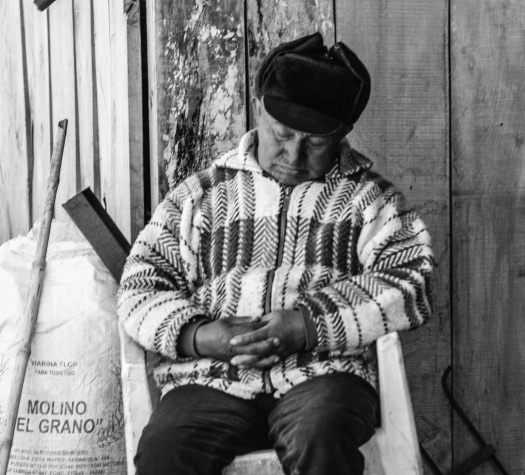
Captured within the Mapuche community of Nehuen in Temuco, Chile, this poignant image documents a moment of stillness following a long day of labor. The photographer, invited to work alongside the community, focused his lens on an eighty-year-old man finding respite after working the earth. The photograph is a testament to the quiet dignity of aging and the physical toll of a life lived close to the land. Its award-worthy quality lies in the raw, empathetic connection between the subject and the viewer, transforming a simple moment of rest into a profound narrative of human endurance and cultural heritage.
Andres Martinoli
Born in Santiago, Chile, in 1989, Andres Martinoli serves as a studio director of film photography. His transition into still photography began as a pursuit to better understand the nuances of light, eventually evolving into a compelling body of work. Martinoli is deeply motivated by the desire to capture the essence of indigenous communities across Latin America, aiming to preserve the unique perspectives and human stories that are increasingly absent from the modern world.
Resonance Score Breakdown
Transparency Note: The resonance score (12.3/20) is calculated based on social engagement metrics collected before the award announcement.
Expert Photography Reviews · 8
The Weight of the Earth
I spent this morning trying to fix the loose stone in my garden path. It took much longer than I expected, and by the time I finished, my hands were stained with dirt and my back felt like it had been folded in two.
Read the reflection →The Weight of the Soil
In the quiet hours of the afternoon, when the shadows begin to stretch their limbs across the floorboards, I often find myself thinking about the things we carry.
Read the reflection →Reviews & Comments
Share your thoughts about this award-winning photograph. Your reviews contribute to the community engagement score.
One doesn’t capture this sort of stillness by merely passing through. You can see the dust of the Mapuche soil in the man’s hands; it’s a weight I’ve felt in my own joints after a week on the moors. Martinoli clearly didn’t just point and click. He earned the man’s trust, and that’s a currency far harder to come by than a fancy lens. It’s a quiet, aching bit of work. I’m impressed.
The focal plane rests precisely on the weathered topography of his hands, where the lens resolves skin texture beyond the limits of my own aging eyes. It’s a masterclass in micro-contrast; the diffraction of light across those deep, calloused furrows is, in the strictest physical sense, extraordinary. I’m genuinely moved by how the bokeh, a function of a wide aperture, isolates his exhaustion from the chaotic earth. It’s optics revealing the weight of a life.
Stripped of chromatic distraction, the silver-grey tones here evoke Morandi’s dust-laden stillness, where the light doesn’t merely illuminate but clings to the weathered skin like cooling ash. It’s a monochromatic ache I’ve felt before in the charcoal shadows of a fading winter. One finds the absence of colour isn’t an emptiness, but a profound, tactile density, rendering the man’s exhaustion as tangible as the grit of the earth he’s spent a lifetime turning over.
The dust settles. The man sits. His hands rest on his knees, heavy with the weight of the earth. It’s quiet here. The frame doesn’t crowd him. It gives him room to breathe, to exist in the stillness of the Mapuche soil. I’ve felt that exhaustion in my own bones. Nothing here is accidental. The empty corner is not empty. It’s the space where a long life finally finds its peace. Silence.
Most entries in this category rely on forced sentimentality, but Martinoli’s work avoids that trap. The way the subject’s calloused hands rest against the worn fabric of his trousers tells the entire story of his labor without needing a single word. I’ve stared at these hands for an hour, and they still ache with a familiar, heavy exhaustion. It’s the honesty of that stillness that ensures this portrait will matter thirty years from now.
The frame’s geometry is its saving grace. The subject’s slumped posture creates a heavy, descending diagonal that anchors the picture plane against the stark, vertical lines of the background. It’s a rigid architecture that prevents the sentiment from collapsing into mere cliché. I’ve rarely seen such a brutal, effective use of negative space to isolate a human form. It doesn’t ask for pity; it demands a cold, structural acknowledgement of the weight of time.
The dust on his skin feels heavy, doesn’t it? I find myself unsettled by the way Martinoli frames this Mapuche elder. Is this rest, or is it exhaustion curated for our consumption? We see the labor, but do we see the man’s autonomy? I’m troubled by how easily we romanticize this struggle. Why does the camera linger on his weathered hands while the context of his land remains so blurred? It’s a beautiful composition, but at what cost?
Before the eye identifies the man, something in the chest tightens. It’s the weight of that soil, etched into his skin, that forces a sudden, shallow breath. I feel a phantom ache in my own joints looking at him. When I return to this a year later, the silence feels heavier, less like rest and more like a final surrender. It’s a quiet, brutal intimacy that follows me into sleep, long after the gallery lights dim.